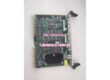
Field Engineer’s Notes (From the Trenches)
The “Gotcha” is Common Mode Voltage & 1-5V Scaling.
Common Mode: Although inputs are “Differential,” they share a common reference plane internally. If you mix groundedsignal sources with different ground potentials (e.g., a transmitter referenced to earth ground 5V away from your DC supply ground), you can get common mode errors or reading shifts. For best accuracy on low-level signals (mV or 1-5V), use shielded twisted pair and land the shield drain only at the terminal block ground(or DIN rail if grounded), not at both ends. Keep the analog common (if used) isolated from high-current 0V returns.
1-5V “Current” Mode: The ALG230 has an internal 250Ω shunt for 4-20mA. If you have a voltagetransmitter (0-10V) but want to use the “4-20mA” range for convenience (scaling 4mA=0%, 20mA=100%), set the channel to “Voltage – 1-5V” and use an external 250Ω shunt across the +Input and -Input if you want to mimic the drop, OR use “0-10V” and apply a linear scale in the PLC (1V=4mA, 5V=20mA). Do notuse “4-20mA” range with a voltage source directly—you’ll read Overrange (10V / 250Ω = 40mA reading) unless the config clips it.
Filter Setting: Default is often “No Filter.” In a VFD-heavy area, set it to 8ms or 16ms. A 0ms filter will make a 4-20mA flow signal look like a sawtooth on trend due to 60Hz ripple. Don’t over-filter fast signals (position feedback); 4ms is usually safe for process vars.
Real-World Applications
- Offshore Platform Chemical Injection (Multi-Variable): An ALG230 on a CHS001 base reads 8 x 4-20mA transmitters: 3 x Flow (Inhibitor, Methanol, Scale), 3 x Pressure (Discharge, Suction, Backpressure), 2 x Density/Temp. The 8-channel density avoids a second $800 I/O module. Open Wire detection caught a corroded terminal on the Methanol flow Tx before the line under-injected.
- Combined Cycle HRSG Drum Level: Distributed I/O station near the drum reads 4 x Drum Level (DP Transmitters 4-20mA), 2 x Feedwater Flow, 2 x Steam Flow—all on one ALG230. The Genius Bus runs 300m back to the MCC. The 15-bit resolution ensures the level control loop doesn’t oscillate due to A/D quantization noise.
High-Frequency Troubleshooting FAQ
Q: Module LED is Blinking, BIU shows “Config Mismatch” or “Fault” for this block.
A: Config Not Downloaded or Station Number Issue.
- Ensure the Station Number set via the BIU/HHP matches the I/O definition in the BIU’s config for this block.
- The stores its config in the BIU’s memory, not on the module. If you replaced a block, the BIU should auto-download the config when it powers up (if “Auto Config” enabled).
- If not, use the Hand-Held Programmer (HHP) to “Send Configuration” from the BIU to the block, or power cycle the BIU station to force a re-download. Verify the Input Range (e.g., 4-20mA vs 0-10V) is set correctly in the config.
Q: Reading “0” or “32767” (Full Scale) on a channel, wiring checks out, transmitter is alive.
A: Range Mismatch or Wiring Mode.
- If set to “4-20mA” but you wired a “Self-Powered” (4-wire) transmitter that outputs 4-20mA (has its own 24V supply): You must land the transmitter’s 24V supply common to the ‘s Input (-) terminal AND to the system 0V. The ‘s internal shunt still measures the current. If the transmitter’s 24V is floating relative to the ‘s 0V, you get a ground loop or offset.
- If set to “0-10V” but measuring a 4-20mA loop (using external 250Ω shunt to make 1-5V): Ensure the shunt is landed correctly (Signal+ to Shunt+, Shunt- to Input-, Input+ to Shunt+). Set range to “1-5V” or “0-10V” and scale in PLC.
- Check Input Range Config: Accidentally setting “0-5V” for a 1-5V signal (4-20mA equivalent) will read 50% low (1V in reads as 20% of 0-5V scale instead of 0% of 4-20mA scale).
Q: “Open Wire” alarm on a channel, but DMM shows continuity through the transmitter (low ohms).
A: Open Detect Current vs Live Transmitter.
- The sources a small test current to check for open circuit when the loop is de-energized or the transmitter is off.
- If the transmitter is powered (loop alive) and you see “Open Wire,” check the loop polarity (swapped + and – can sometimes confuse the detector on certain firmware versions, though usually it just reads negative) or check for a very high source impedance in the transmitter’s output stage (rare).
- More commonly: The “Open Wire” is real, but your DMM on “Ohms” is powering the loop momentarily, showing continuity. Disconnect the transmitter leads from the , measure resistance between + and – terminals on the module(with power off). It should read ~250Ω (the shunt). If open, the module’s shunt is damaged (rare) or the terminal block pin is bent.
Please note: The listed price is not the actual final price. It is for reference only and is subject to appropriate negotiation based on current market conditions, quantity, and availability.