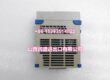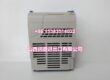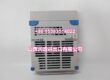
Quick Sizing & Sourcing Snapshot
- Manufacturer: General Electric (GE)
- Part Number: IS200AEADH4ADA
- System Platform: GE Mark VIe / Mark VIeS (VME-based)
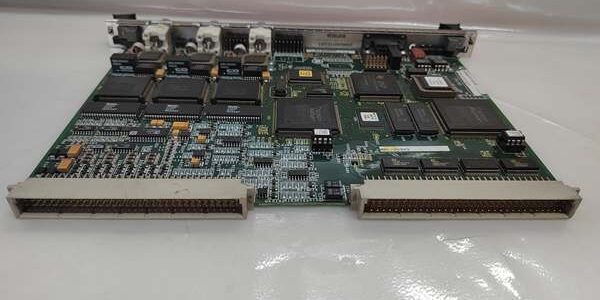
- Hardware Type: AEAD Series Analog Input I/O Pack (Intelligent)
- Architectural Role: This module resides in the Mark VIe I/O Pack slot, interfacing between the field termination boards (e.g., IS200TBAIH) and the controller via the IONet (Industrial Ethernet) backplane.
- Key Specifications: Channel Count: 16 isolated inputs; Signal Support: 4-20mA (HART pass-through), TC, RTD; Isolation: 500V DC channel-to-backplane; Update Rate: 10ms typical scan.
System Architecture & Operational Principle
The isn’t just a dumb A/D converter; it’s an intelligent node in the Mark VIe distributed architecture. Physically, it slides into the front of a standard Mark VIe I/O base (like the IS200TBAIH1C terminal board assembly), connecting via a 64-pin ribbon to the field wiring and a VME-style backplane edge to the rack.
In the Purdue Model, this sits squarely at Level 1 (Field I/O). It communicates upstream to the IS215UCV (Controller) or IS420UCS (Standalone Controller) over GE’s IONet (100Mbps full-duplex Ethernet). Unlike older parallel backplanes, IONet allows this pack to preprocess data. The onboard DSP handles linearization for thermocouples and RTDs locally, only passing scaled engineering units to the controller. This offloads the main CPU and ensures deterministic updates even if the network has minor congestion.
A critical distinction for the “4ADA” revision compared to the older “1A” is the enhanced HART pass-through capability. It doesn’t terminate the HART FSK signal; it provides a high-impedance shunt that lets the digital data travel straight through to the controller or a connected HART multiplexer without needing extra impedance matching components on the terminal board. It receives configuration packets from the controller defining whether CH1 is a K-Type TC or CH2 is 4-20mA, then autonomously manages the sample timing and open-wire detection. If the controller goes offline, the pack holds last known good values or drives failsafe states based on how the ToolboxST logic was compiled.
Core Technical Specifications
- Input Channels: 16, fully independent (differential/single-ended configurable)
- Supported Signals: 4-20mA (Active/Passive), 0-20mA, +/- 10V, RTD (Pt100, Ni), Thermocouple (J, K, T, E, etc.)
- HART Support: Native Pass-through (Bell 202) compatible with HART 5, 6, 7
- Channel Isolation: 500 V DC (Channel-to-Channel and Channel-to-Backplane/Logic)
- Accuracy: +/- 0.1% of Span (Typical at 25°C), +/- 0.2% over full temp
- Resolution: 16-bit ADC per channel
- Input Impedance: 250 Ohms (4-20mA mode), 1 MOhms (Voltage mode)
- Power Requirements: +5 V DC from backplane (Typical 3.5W / 0.7A draw)
- Environmental: -30°C to +65°C operating (Conformal coated for humidity/vibration)
- Diagnostics: Per-channel Open Wire detect, Overrange flags, Module Health LED + Run/FLT
Customer Value & Operational Benefits
Reduced MTTR via Software Configuration
We don’t need to swap hardware to change sensor types. If you’re migrating a 4-20mA pressure transmitter to a HART device, or swapping a J-type to K-type thermocouple, you change it in ToolboxST and re-download. The reconfigures its internal mux and excitation current on the fly. No more hunting for DIP switch settings or cutting jumpers on the board. This cuts changeover time from hours to minutes.
Asset Visibility Through HART Passthrough
The “4ADA” suffix indicates optimized firmware for HART. Since the module passes the digital layer untouched, your AMS (Asset Management) suite can poll valve positioners and smart transmitters directly through the same wire used for control. You get device health (PV, SV, TV, FV) without extra multiplexers. This turns a simple AI card into a predictive maintenance node, catching impulse line clogs before they cause a trip.
Galvanic Isolation for Signal Integrity
Each channel is floating relative to the backplane and each other. In a turbine skid where you have high common-mode noise from VFDs or ground loops between field instruments, this isolation prevents “ghost readings.” We’ve seen standard non-isolated cards read 5% high just because a sensor ground was tied to a noisy skid; the shrugs that off.
Field Engineer’s Notes (From the Trenches)
Don’t mix up the “4ADA” with the older “H1A” or “H1B” versions on a live redundant rack without checking the controller firmware. The “4A” revisions often require a newer version of the I/O Pack firmware image (found in the
packsfolder of your ToolboxST install). If you hot-swap an old H1A for a 4ADA on a Mark VIe running v04.xx software, the controller might reject the hardware ID and force a trip. Always stage the firmware update in the controller configuration first.Also, watch the backplane power budget. The AEAD series pulls roughly 0.7A on the 5V rail. If you’re packing 10-12 of these into a single 3-foot VME rack with a single IS200JPDHG power supply, you’re cutting it close on the 5V/10A limit, especially if you have VTUR or VSVO packs in there too. Measure the 5V rail at the furthest slot under full load; if it dips below 4.75V, you’ll get sporadic comms drops that look like network issues but are actually power starvation.
Real-World Applications
- Gas Turbine Exhaust Temperature Monitoring: Mounted in the <Tag>R#</Tag> core (R1, R2, R3 for TMR), the scans 16 Type K thermocouples per card. In a 9FA, you’ll stack 4-5 of these to cover the exhaust spread. The cold-junction compensation is handled by the pack’s internal sensor, referenced to the terminal board’s ambient temp sensor for correction.
- Fuel Gas Skid Pressure & Valve Position: Used in Balance-of-Plant (BOP) control cabinets. CH01-08 handle 4-20mA flow/Pressure transmitters (with HART for diagnostics), while CH09-12 might take the 4-20mA feedback from the fuel stroke reference (FSR) actuators. The isolation prevents ground loop errors when mixing grounded and ungrounded 4-20mA sources on the same card.