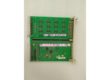
Product Core Brief
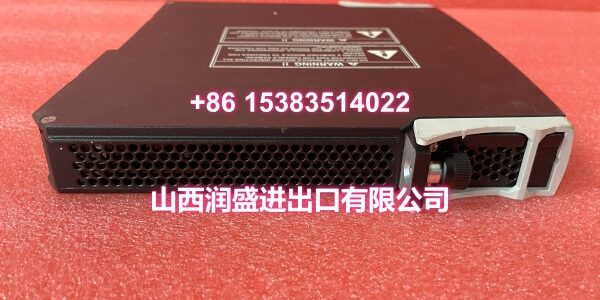
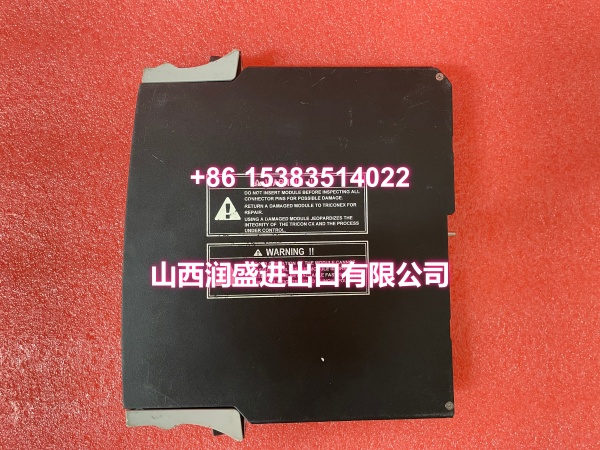
- Model: 3723X
- Brand: Triconex (Schneider Electric)
- Series: Tricon Safety System
- Core Function: Provides redundant digital input and output interfaces between field devices and the TMR safety controller.
- Product Type: Safety I/O Module (Digital Input/Output)
- Key Specs: 24 VDC field supply | I/O bus interface to Tricon mainframe | Fault-tolerant channel design
- Condition: New Original / New Surplus (condition stated per line item on quotation)
Key Technical Specifications
| Category | Parameter | Value |
|---|---|---|
| Identification | Full Model | 3723X |
| Identification | Parent System | Triconex Tricon Safety System |
| Function | Module Type | Digital Input/Output interface module |
| Function | Role in Topology | Sits between field devices and the TMR controller; no logic execution |
| Electrical | Field Supply | 24 VDC nominal |
| Electrical | Mounting | Chassis slot, backplane bus connection |
| Architecture | Redundancy | Fault-tolerant channel structure aligned with TMR design |
| Communication | Interface | Proprietary I/O bus to Tricon mainframe |
| Compatibility | Replacement Rule | Full suffix and firmware revision must match the original |
| Maintenance | Hot Swap | Slot-specific; follow OEM procedure only |
| Environment | Operating Range | Control cabinet / enclosure installation |
| Failure Signature | Common Symptoms | Channel fault alarm, I/O bus error, stuck state readback |
| Supply | Lead Time | In-stock models ship within 48 hours |
Product Introduction
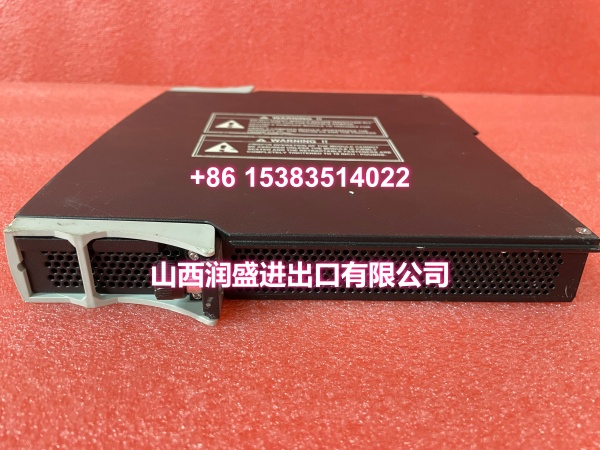
The 3723X is a digital I/O interface module for Triconex Tricon safety systems, used in SIS applications across oil and gas, petrochemical, and power generation. It carries field signals to and from the TMR controller.
What matters here is not the datasheet — it is the slot. Tricon I/O modules are not interchangeable by appearance. A wrong suffix or firmware mismatch will pass a power-on check and still fail during a proof test.
QA & Testing SOP
Every unit leaving our warehouse goes through the same sequence, and the report ships with it.
- Inbound verification. Nameplate, PCB revision, and date code photographed against the OEM part number. Solder joints and connector pins inspected for rework or bent-pin damage.
- Backplane pin inspection. Bent or oxidized pins are the most common cause of intermittent I/O bus errors on surplus stock. Each pin is checked under magnification.
- Bench power-up. 24 VDC applied through a current-limited supply; quiescent current logged and compared to the OEM baseline.
- Signal injection test. Digital channels exercised with a calibrated 24 VDC source and a Fluke multimeter on the readback side. Every channel is toggled, not just a sample.
- Anti-static packaging. Moisture-barrier bag with desiccant and ESD label. Condition noted on the packing list.
No unit ships without a signed test record.
Installation Pitfalls & Guide
❗ Firmware revision mismatch. A 3723X with a different PCB or firmware revision can mount mechanically and still reject the controller’s I/O handshake. Confirm the revision printed on the board, not just the model number on the box.
❗ Backplane pin damage during removal. Forcing the module out of the slot bends pins on both the card and the backplane connector. This is the number one cause of post-replacement I/O bus faults.
❗ Ground loops on field wiring. Mixing field ground and cabinet ground on the 24 VDC return path produces erratic channel readings that look like module failure.
❗ ESD exposure. Handling the board without a wrist strap can degrade channel drivers without an immediate visible fault.
Replacement sequence:
- Pre-install — Confirm the机组 is in a safe state, apply lockout/tagout, and photograph the original nameplate and slot position.
- Removal — Release the slot retention fully before extraction. Pull straight, never pry.
- Install — Seat the module evenly into the connector, then engage retention. Verify no visible pin gap.
- Power-on test — Confirm the channel status LEDs, run a forced I/O test from the engineering station, and complete a proof test before returning the loop to service.
Technical FAQ
Can I substitute a different 3723 suffix if the original is unavailable? Not without an engineering review. Suffix differences can reflect PCB revision, channel count, or firmware behavior. Substituting blind risks a silent failure during a safety demand.
Is this module hot-swappable? Slot and system configuration determine this. In redundant Tricon architectures, some slots tolerate removal without stopping the controller — but the procedure is OEM-defined, and skipping it can drop the channel out of redundancy.
Why does my replacement module power up but show a channel fault? Most often it is not the card. Check field wiring continuity, the 24 VDC return path, and whether the controller’s I/O configuration matches the installed revision.
What warranty do you provide? Standard coverage on new original stock, stated on the quotation. Surplus units carry a shorter term, disclosed before payment — no surprises after delivery.
Is the 3723X obsolete? Tricon system support has transitioned within Schneider Electric’s portfolio. Availability is increasingly through channel stock rather than direct OEM production, which is why lead times and condition disclosure matter more than price on this part.