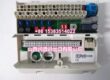
Product Core Brief
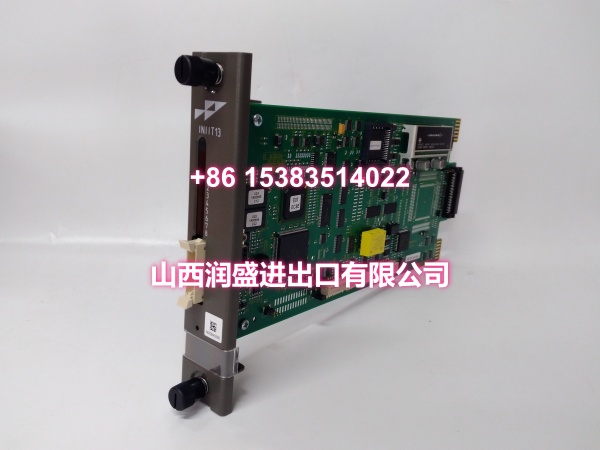
- Model: INIIT03
- Brand: ABB Bailey
- Series: INFI 90 / Symphony / Symphony Harmony
- Core Function: Cnet-to-Cnet local transfer module that buffers and exchanges data between two Cnet segments within the Bailey DCS architecture.
- Product Type: Cnet-to-Cnet Local Transfer Module
- Key Specs: local Cnet-to-Cnet interface | paired with INNIS11 | data buffering and bidirectional exchange
- Condition: New Original / New Surplus (depending on stock)
Key Technical Specifications
- Manufacturer: ABB (Bailey INFI 90 / Symphony product line)
- Part Number:
- Product Type: Cnet-to-Cnet Local Transfer Module
- System Compatibility: ABB INFI 90, Symphony, Symphony Harmony DCS
- Primary Function: Provides a local Cnet-to-Cnet interface node that buffers data and enables bidirectional exchange between Cnet segments
- Paired Sub-module: INNIS11 (Network Interface Sub-module)
- Interface Type: Cnet-to-Cnet local interface (distinct from remote Cnet-to-Cnet links)
- Supported Functions: data acquisition, process control data exchange, configuration transfer, system status reporting, and clock synchronization across Cnets
- Redundancy Support: supports redundant Cnet-to-Cnet interface configuration
- Mounting Style: Standard Bailey module for MMU rack installation
- ESD Handling: requires Bailey field static kit during maintenance
- HS Code: 853710 (electrical control panels / assemblies)
Product Introduction (No Fluff)
The ABB INIIT03 is a Cnet-to-Cnet local transfer module used in Bailey INFI 90, Symphony, and Symphony Harmony DCS systems. It operates as a node on each Cnet and provides buffered, bidirectional data exchange between two local Cnet segments, enabling controllers, I/O subsystems, and operator interfaces to share process data across network boundaries.
In the Bailey architecture, Cnet-to-Cnet interfaces are classified as either local or remote. The INIIT03 is specifically the local interface variant, typically paired with the INNIS11 sub-module. It is not interchangeable with the INIIT12, which serves the remote Cnet-to-Cnet interface role. A failed INIIT03 can interrupt data exchange between Cnet segments, so verifying the correct module type and pairing is essential before replacement.
QA & Testing SOP (Dynamic & Transparent)
This is a Cnet-to-Cnet transfer module, so testing focuses on network registration, data buffering, and inter-Cnet communication integrity.
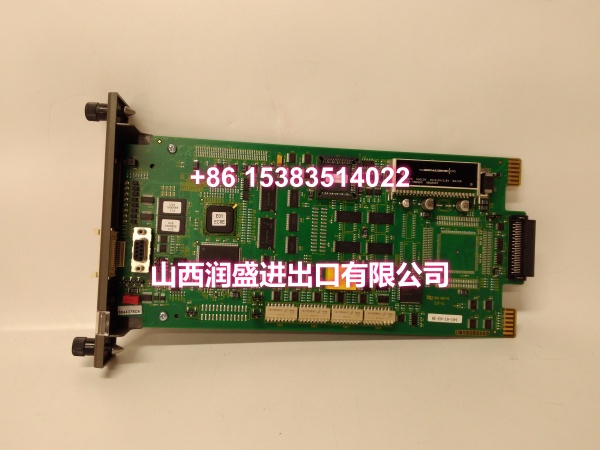
- Incoming visual inspection: Check the module housing, edge connector, status LEDs, and PCB for corrosion, burnt components, or prior repair marks.
- Sub-module pairing check: Verify the correct INNIS11 sub-module is installed and properly seated with the INIIT03.
- Cnet registration test: Seat the module in a known-good Bailey MMU and verify it registers as a valid node on the local Cnet without fault indicators.
- Data exchange validation: Confirm that process data, configuration data, and status information pass correctly between the two Cnet segments.
- Redundancy test (if applicable): If configured redundantly, verify primary/standby failover behavior to confirm seamless transfer.
- ESD-safe handling and packing: Store and ship in anti-static packaging; handle by the module frame and avoid contact with the edge connector.
Installation Pitfalls & Guide (Engineer to Engineer)
❗ Do not confuse INIIT03 with INIIT12. INIIT03 is the local Cnet-to-Cnet interface; INIIT12 is the remote variant. They are not interchangeable.
❗ Verify the INNIS11 pairing. The INIIT03 operates with the INNIS11 network interface sub-module. A mismatched or faulty sub-module can prevent Cnet communication even if the transfer module itself is functional.
❗ Confirm local vs. remote topology. Installing a local interface module in a remote Cnet-to-Cnet application—or vice versa—will not establish the expected link. Review the system topology before replacement.
❗ Check Cnet addressing and node configuration. A misconfigured node address can prevent the module from participating in inter-Cnet data exchange, even though it powers up normally.
Replacement steps:
- Pre-install: Document current Cnet topology, record active alarms, and notify operations.
- Removal: If redundant, verify the standby path is active before removing the failed module.
- Install: Seat the new INIIT03 with the correct INNIS11 sub-module, verify retention, and confirm slot alignment.
- Power-on test: Verify module indicators, confirm Cnet registration, and validate inter-Cnet data exchange.
Technical FAQ
1. Is the INIIT03 still available? Yes, but it is a legacy Bailey module. Availability depends on inventory condition. We carry new original and new surplus stock.
2. Can INIIT03 replace INIIT12? No. INIIT03 is a local Cnet-to-Cnet transfer module, while INIIT12 is used for remote Cnet-to-Cnet interfaces. The correct module must match the system topology.
3. What sub-module does INIIT03 require? The INIIT03 is typically paired with the INNIS11 network interface sub-module for Cnet-to-Cnet local interface applications.
4. Does this module need firmware loading? The INIIT03 operates as part of the Bailey Cnet infrastructure. It does not require user firmware loading like a controller, but correct node addressing and configuration must be verified after installation.
5. What happens if the INIIT03 fails? Data exchange between the two connected Cnet segments may be interrupted. Depending on the system configuration, this can affect process data sharing, operator visibility, and cross-Cnet control functions.
6. What warranty do you offer? Standard warranty is 12 months unless otherwise stated. For surplus stock, warranty terms are confirmed at quotation.