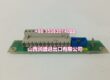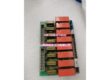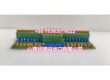
Product Core Brief
- Model: IS230TNSVH3A
- Brand: GE (General Electric)
- Series: Mark V Speedtronic — RST Analog I/O (TCQA)
- Core Function: Scales and conditions analog field signals for GE Mark V gas turbine control cores R1, R2, and R3.
- Product Type: Analog I/O Board (TCQA)
- Key Specs: 4–20 mA I/O | LVDT/LVDR position input | ±10 VDC analog input | Thermocouple input with cold-end compensation
- Condition: New Original / New Surplus
Product Introduction
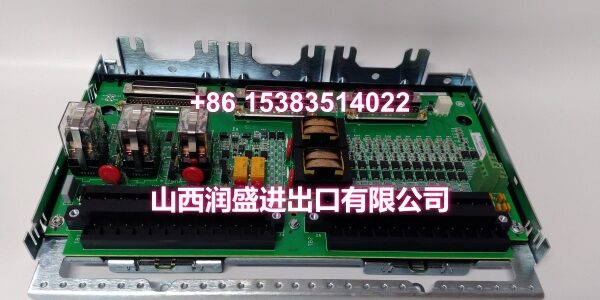
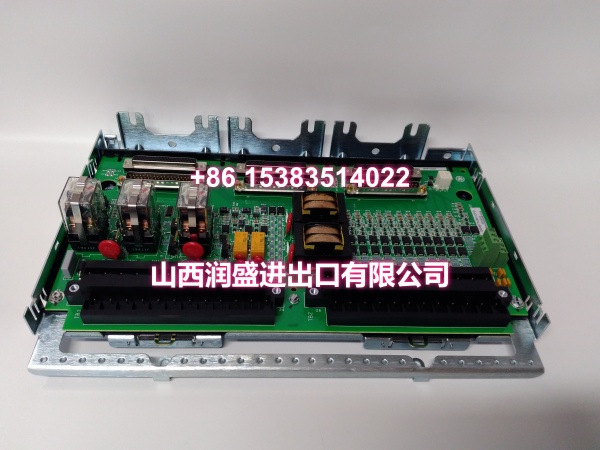
The GE IS230TNSVH3A is an RST analog I/O board (TCQA) from GE’s Mark V Speedtronic turbine control series. It handles scaling and signal conditioning for field instrumentation mounted on I/O cores R1, R2, and R3.
This board processes LVDT position feedback, servo valve outputs, 4–20 mA process signals (compressor stall detection, fuel flow pressure), thermocouple inputs, vibration signals, and generator/line signals. Conditioned data routes through the 3PL connector to the STCA board, while generator signals communicate via the JE connector to the TCQC board.
Key Technical Specifications
| Parameter | Value |
|---|---|
| Manufacturer | GE (General Electric) |
| Product Family | Mark V Speedtronic |
| Board Type | RST Analog I/O (TCQA) |
| Signal Types | 4–20 mA, ±10 VDC, LVDT/LVDR, thermocouple, pulse, vibration, relay driver output |
| Connectors | 2PL (power distribution), 3PL (data bus to STCA/TCQA/TCQE), JE (generator/line signals to TCQC), JD (trip signals to TCTG) |
| Thermocouple Input | Via TBQA board connectors JAR/S/T (JA) |
| 4–20 mA I/O | Via TBQC terminal board JBR |
| LVDT/LVDR Input | Via TBQC JFR to JF |
| ±10 VDC / Vibration | Via TBQB JGR to JG |
| Communication Protocols | Modbus, Profibus, Ethernet |
| Hot-Swap | Supported |
| Self-Diagnostics | Built-in watchdog timer, real-time status monitoring |
Quality Control Process
Every IS230TNSVH3A board goes through a four-stage bench check before shipping. First, a visual inspection under magnification catches cold solder joints, cracked traces, and connector pin damage — common failure points on turbine-deck boards. Second, we power up the board on a verified Mark V rack and confirm the 2PL power distribution circuit reads within spec using a Fluke 87V. Third, we inject known 4–20 mA and ±10 VDC signals through the appropriate terminal board connectors and verify scaled output on the 3PL data bus with an oscilloscope. Fourth, we exercise the thermocouple input channels with a calibrated temperature simulator to confirm cold-end compensation accuracy. Finally, the board is sealed in anti-static foam with desiccant — no exceptions.
Replacement Pitfall Guide
❗ Connector pinout mismatch between board revisions. GE revised several Mark V I/O boards mid-lifecycle. The JE and 3PL connectors look identical across revisions, but pin assignments can shift. Always cross-reference the physical board label against your rack’s configuration file before swapping.
❗ Ground loop noise on 4–20 mA loops. If you’re chasing erratic compressor stall readings after a board swap, check your shield grounding at the TBQC terminal board first. A floating shield on one channel can corrupt the entire analog bus.
❗ Thermocouple cold-end compensation drift. The TCQA board relies on the TBQA board’s JA connector for cold-junction reference. If the TBQA board itself is aged or has oxidized contacts, your temperature readings will be off regardless of how good the replacement I/O board is.
❗ Backplane power budget. The Mark V core has finite power headroom across R1/R2/R3. Dropping in a board with a slightly higher draw than the original can trip the core’s internal protection. Verify the board’s current rating against your rack’s remaining capacity.
Keep these in mind and you’ll cut 90% of rework time.
Compatibility Matrix & Benchmarks
| Original Model | Replacement / Successor Model | Compatibility Level | Migration Notes |
|---|---|---|---|
| (TCQA) | IS415UCVHH1A (Mark V TCQA) | Direct | Same TCQA function; verify connector pinout against rack config |
| IS420YDIAS1B (Mark VIe TCQA) | Not Compatible | Different series (Mark V vs. Mark VIe); different connector pinouts and firmware | |
| Mark V TCQA equivalent (OEM surplus) | Direct | Must match RST core slot assignment (R1/R2/R3) |
Benchmarks:
- Signal types supported: 4–20 mA, ±10 VDC, LVDT/LVDR, thermocouple, pulse, vibration, relay driver output
- Hot-swap capable for reduced downtime during maintenance