Product Core Brief
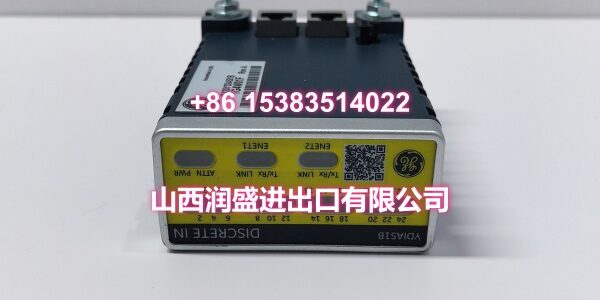
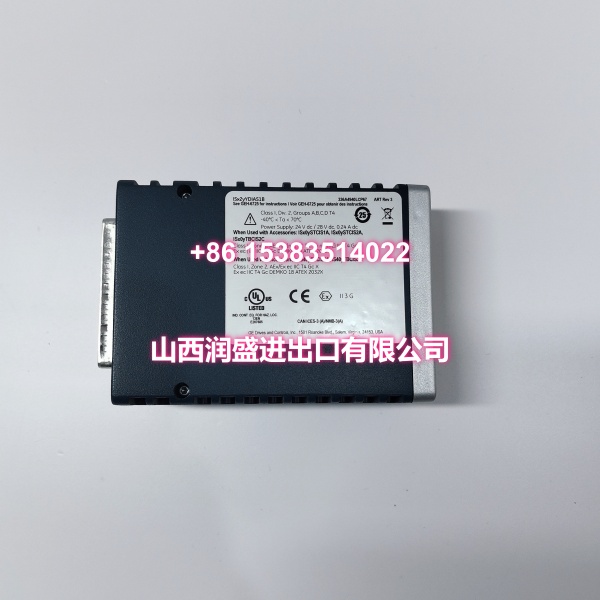
- Model: IS420YDIAS1B
- Brand: GE (General Electric)
- Series: Mark VIe — RST Analog I/O (TCQA)
- Core Function: Scales and conditions analog field signals for GE Mark VIe gas and wind turbine control cores.
- Product Type: Analog I/O Board
- Key Specs: 4–20 mA I/O | LVDT/LVDR position input | ±10 VDC analog input | Thermocouple input with cold-end compensation
- Condition: New Original / New Surplus
Product Introduction
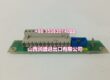
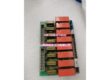
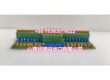
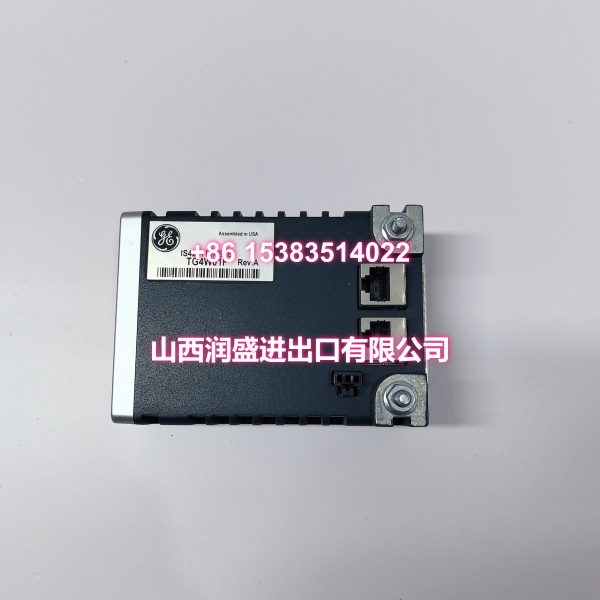
The GE IS420YDIAS1B is an RST analog I/O board (TCQA) from GE’s Mark VIe turbine control series. It handles scaling and signal conditioning for field instrumentation mounted on I/O cores R1, R2, and R3.
This board processes LVDT position feedback, servo valve outputs, 4–20 mA process signals (compressor stall detection, fuel flow pressure), thermocouple inputs, vibration signals, and generator/line signals. Operating range spans -30°C to 65°C — critical for turbine deck and wind turbine environments. It routes conditioned data through the 3PL connector to the STCA board and communicates generator signals via the JE connector to the TCQC board.
Key Technical Specifications
| Parameter | Value |
|---|---|
| Manufacturer | GE (General Electric) |
| Product Family | Mark VIe Speedtronic |
| Board Type | RST Analog I/O (TCQA) |
| Signal Types | 4–20 mA, 0–20 mA, ±10 VDC, LVDT/LVDR, thermocouple, pulse, vibration |
| Connectors | 2PL (power distribution), 3PL (data bus to STCA/TCQA/TCQE), JE (generator/line signals to TCQC), JD (trip signals to TCTG) |
| Thermocouple Input | Via TBQA board connectors JAR/S/T (JA) |
| 4–20 mA I/O | Via TBQC terminal board JBR |
| LVDT/LVDR Input | Via TBQC JFR to JF |
| ±10 VDC / Vibration | Via TBQB JGR to JG |
| Operating Temperature | -30°C to 65°C |
| Analog Output Current | 0–20 mA |
| Max Lead Resistance | 15 Ω |
| Communication Protocols | Modbus, Profibus, Ethernet |
| Response Time | < 10 ms |
| Hot-Swap | Supported |
| Self-Diagnostics | Built-in watchdog timer, real-time status monitoring |
| PCB Protection | Conformational coating (moisture, dust, chemical resistance) |
Quality Control Process
Every IS420YDIAS1B board goes through a four-stage bench check before shipping. First, a visual inspection under magnification catches cold solder joints, cracked traces, and connector pin damage — common failure points on turbine-deck boards. Second, we power up the board on a verified Mark VIe rack and confirm the 2PL power distribution circuit reads within spec using a Fluke 87V. Third, we inject known 4–20 mA and ±10 VDC signals through the appropriate terminal board connectors and verify scaled output on the 3PL data bus with an oscilloscope. Fourth, we exercise the thermocouple input channels with a calibrated temperature simulator to confirm cold-end compensation accuracy. Finally, the board is sealed in anti-static foam with desiccant — no exceptions.
Replacement Pitfall Guide
❗ Connector pinout mismatch between board revisions. GE revised several Mark VIe I/O boards mid-lifecycle. The JE and 3PL connectors look identical across revisions, but pin assignments can shift. Always cross-reference the physical board label against your rack’s configuration file before swapping.
❗ Ground loop noise on 4–20 mA loops. If you’re chasing erratic compressor stall readings after a board swap, check your shield grounding at the TBQC terminal board first. A floating shield on one channel can corrupt the entire analog bus.
❗ Thermocouple cold-end compensation drift. The TCQA board relies on the TBQA board’s JA connector for cold-junction reference. If the TBQA board itself is aged or has oxidized contacts, your temperature readings will be off regardless of how good the replacement I/O board is.
❗ Backplane power budget. The Mark VIe core has finite power headroom across R1/R2/R3. Dropping in a board with a slightly higher draw than the original can trip the core’s internal protection. Verify the board’s current rating against your rack’s remaining capacity.
Keep these in mind and you’ll cut 90% of rework time.
Compatibility Matrix & Benchmarks
| Original Model | Replacement / Successor Model | Compatibility Level | Migration Notes |
|---|---|---|---|
| (TCQA) | IS420YDIAS1B (same part, new revision) | Direct | Verify connector pinout against rack config file |
| IS420YAICS1B (Mark VIeS) | Needs Adaptation | Different series (VIe vs. VIeS); firmware and terminal board compatibility differ | |
| Mark VIe TCQA equivalent (OEM surplus) | Direct | Must match RST core slot assignment (R1/R2/R3) |
Benchmarks:
- Response time: < 10 ms for analog signal conditioning
- Operating temperature range: -30°C to 65°C (turbine-deck and wind turbine rated)
Need me to pull up the TBQA/TBQC terminal board part numbers that pair with this TCQA board? The cold-junction reference is critical for accurate thermocouple readings.