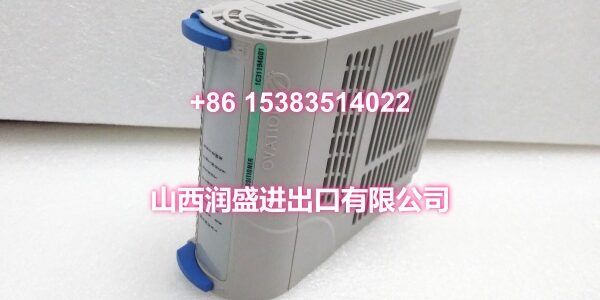
Product Core Brief
- Model: 1C31194G01
- Brand: Emerson (Ovation System)
- Series: Ovation DCS Valve Positioner Subsystem
- Core Function: Closed-loop valve position controller for DEH systems, driving electro-hydraulic servo valves via LVDT feedback to regulate steam flow and turbine speed.
- Product Type: Valve Positioner Electronic Module
- Key Specs: 17V LVDT Excitation | 10ms Loop Scan Time | 3x Servo Valve Coil Outputs
- Condition: New Original / New Surplus
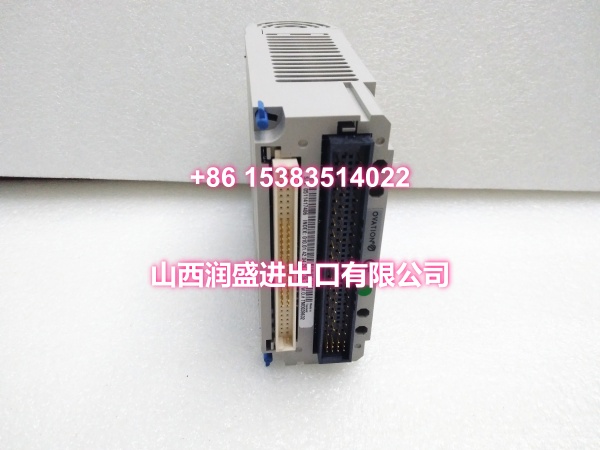
Key Technical Specifications
- Module Type: Valve Positioner Electronic Module (DEH System)
- LVDT Excitation Output: 17V peak-to-peak at 3kHz
- Servo Valve Coil Outputs: 3 redundant channels
- Loop Scan Time: 10ms
- Control Algorithm: Real-time closed-loop PI control (programmable gain & integral time)
- LVDT Input: 1x primary winding input
- Digital Output: 1x (manual mode signal)
- Communication Interfaces: RS-485 (SLIM interface), non-isolated RS-232 (local tuning)
- Operating Modes: Normal (remote auto) / Local-Manual
- Processor: 80C196 microprocessor with 16-bit timer watchdog
- Isolation: Electrically isolated I/O (servo coils, LVDT excitation, LVDT input, digital I/O)
- Test Point: Valve position feedback voltage test point
Product Introduction
This valve positioner electronic module is a critical control component within the Emerson Ovation DEH (Digital Electro-Hydraulic) system. It serves as the interface between the Ovation controller and the electro-hydraulic servo valve actuator, executing real-time closed-loop PI control to maintain precise valve position. The module receives a setpoint from the Ovation controller (or a SLIM operator interface in local-manual mode), drives the servo valve coils, and reads the actual valve stem position via an LVDT sensor to close the control loop.
The 10ms loop scan time and programmable PI parameters allow fine-tuned response for turbine speed control and steam flow regulation — essential for fossil fuel power plants and hydroelectric facilities. With three redundant servo valve coil outputs and full electrical isolation between I/O channels, this module is engineered for the high-availability demands of turbine control applications where a single point of failure is unacceptable.
QA & Testing SOP
Valve positioner modules are the most safety-critical I/O cards in a DEH system. A faulty LVDT driver or servo output can cause a turbine trip. Our testing protocol reflects that:
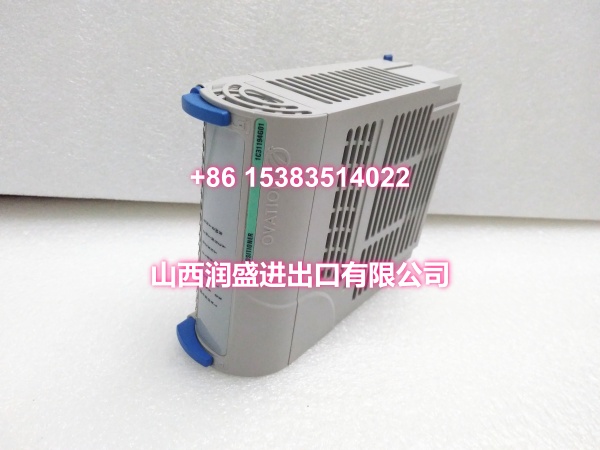
- Physical & Anti-Counterfeit Inspection: We verify the OEM chassis integrity, check for authentic Emerson labeling and correct revision codes, and inspect the terminal block connectors for corrosion or bent pins.
- LVDT Excitation Verification: Using an oscilloscope, we measure the LVDT primary winding excitation output to confirm a clean 17V peak-to-peak sine wave at 3kHz — any distortion or amplitude deviation indicates a failing driver circuit.
- Servo Valve Coil Output Test: We simulate a valve position setpoint and measure the three redundant servo coil outputs with a precision multimeter to verify correct current drive (24.8mA spec) and redundancy switchover functionality.
- Closed-Loop Simulation: The module is mounted on an OEM test rack with a simulated LVDT feedback signal. We verify the PI control loop responds correctly to setpoint changes within the 10ms scan window and that the local-manual mode via RS-232 functions properly.
- Watchdog & Communication Test: We validate the 16-bit timer watchdog and RS-485 SLIM interface communication to ensure the module reports its health status to the Ovation controller without errors.
- Anti-Static Packaging: After validation, the module is sealed in industrial-grade ESD shielding bags with desiccant packs for transit.
Installation Pitfalls & Guide
This is not a standard I/O card — it controls turbine steam valves. Getting the wiring wrong can cause a catastrophic overspeed event.
- ❗ LVDT Wiring Polarity: The LVDT primary excitation and secondary feedback wires must be connected with correct polarity. Reversed LVDT wiring will cause the closed-loop control to go unstable and drive the valve fully open or closed. Always verify LVDT phasing before enabling auto mode.
- ❗ Servo Coil Current Mismatch: The three redundant servo valve coil outputs must be wired to the correct terminals on the servo actuator. Cross-wiring or connecting to the wrong coil will prevent redundancy from functioning and may damage the servo valve.
- ❗ Ground Loop on LVDT Signal: The LVDT feedback signal is an AC voltage susceptible to noise. Use shielded twisted-pair cable for the LVDT wiring and ensure the shield is grounded at only one point to prevent ground loop interference that can corrupt the position feedback.
- ❗ PI Parameter Mismatch: If replacing a module in an existing system, verify that the PI gain and integral time constants are correctly downloaded from the Ovation controller. Default or incorrect PI settings can cause hunting or sluggish valve response.
Replacement Procedure:
- Pre-Install: Back up the current Ovation controller logic and document all terminal wiring (especially LVDT and servo coil connections). Place the turbine control in manual mode or schedule a maintenance outage.
- Removal: Disconnect all field wiring from the terminal block. Release the module locking mechanism and carefully pull the module straight out of the rack.
- Install: Seat the new module firmly into the rack slot and engage the locking mechanism. Reconnect all field wiring per your documented terminal assignments — double-check LVDT and servo coil connections.
- Power-On Test: Restore power and verify the module’s status LEDs indicate normal operation. Use the RS-232 local interface or SLIM station to verify LVDT feedback readings match the actual valve position. Perform a step test in manual mode before returning to auto control.
Technical FAQ
What’s the difference between 1C31194G01 and 1C31194G03? The G01 is the electronic module that provides the LVDT excitation (17V at 3kHz) and servo valve coil drive outputs. The G03 is a later revision in the same valve positioner family, typically used as a direct replacement with improved component reliability. Always verify your system’s firmware compatibility before swapping revisions.
Can I use this module for non-turbine valve control applications? Technically yes, but it’s over-engineered for simple on/off or throttling valve control. This module is specifically designed for the high-speed, high-precision demands of DEH turbine control. For general process valve control, a standard analog output module (like 1C31129G03) paired with a separate valve positioner would be more cost-effective.
Is this module hot-swappable? The Ovation system supports online module replacement for many I/O cards, but swapping a valve positioner module in a live DEH system is extremely risky. A momentary loss of servo valve drive during the swap can cause a turbine trip. We strongly recommend performing the replacement during a planned outage or with the turbine in a safe, offline state.
What happens if one of the three servo valve coil outputs fails? The module is designed with triple redundancy. If one servo coil output channel fails, the module automatically switches to one of the remaining two channels without interrupting valve control. The failure is reported to the Ovation controller as an alarm, giving operators time to schedule maintenance before a second failure occurs.
Do you offer volume pricing for power plant MRO stocking? Yes. Valve positioner modules are critical spares for any power plant running an Ovation DEH system. We offer flexible pricing tiers for bulk MRO orders — contact our sales team with your required quantity and we’ll provide a competitive quote.
Need the compatible personality module (1C31197G01) and SLIM interface cable specs for this valve positioner? I can pull those up for you.