Product Core Brief
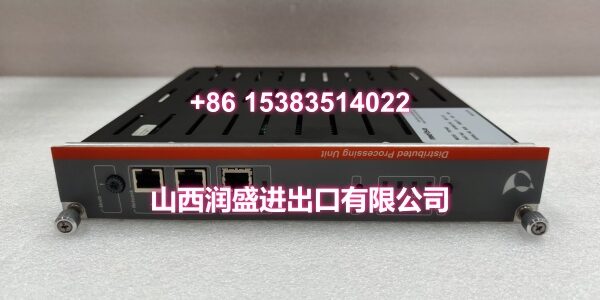
- Model: PDP408
- Brand: METSO (Valmet)
- Series: DNA Distributed Control System
- Core Function: Executes real-time process control logic and manages field I/O communication in distributed architectures.
- Product Type: Distributed Processing Unit (DPU) / Controller Module
- Key Specs: Redundant Processing | High-Speed Logic Execution | Integrated Fieldbus Interface
- Condition: New Surplus / Original Packaging
Key Technical Specifications
- Manufacturer: METSO Automation (Valmet)
- Country of Origin: Finland
- Model Number:
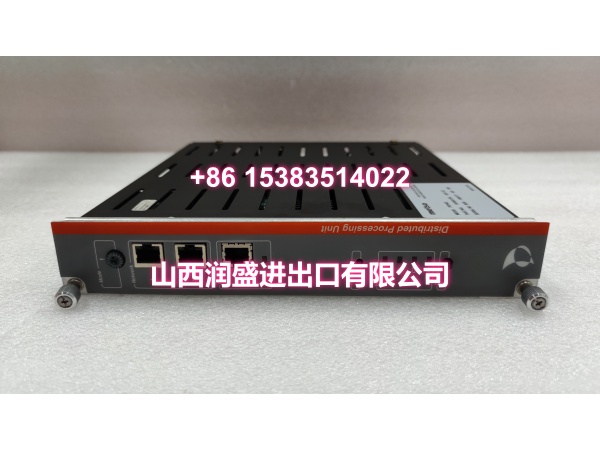
- Module Type: Distributed Processing Unit (DPU)
- Processor Architecture: Industrial-grade redundant microprocessor
- Memory: Integrated RAM/Flash for logic, configuration, and data buffering
- Communication: Dual redundant DNA bus / Fieldbus interfaces
- Scan Time: < 1ms for typical control loops (verify specific revision)
- Operating Temperature: -20°C to +70°C
- Backplane Compatibility: METSO DNA Chassis Series
- Certifications: CE, UL, ATEX, IECEx (verify specific revision)
Product Introduction (No Fluff)
Serving as the computational core of the METSO DNA system, the METSO PDP408 handles deterministic control execution and critical network routing. This DPU processes thousands of I/O tags per millisecond, ensuring that safety interlocks, PID loops, and sequence logic respond instantly to process changes in heavy industrial environments.
Replacing a failing controller with a verified METSO PDP408 eliminates unpredictable scan delays and communication dropouts. The module’s redundant architecture maintains system uptime even during partial bus or processor failures, protecting your process from costly unscheduled downtime.
QA & Testing SOP (Dynamic & Transparent)
Every METSO PDP408 undergoes rigorous functional validation:
- Cold-Boot & Firmware Integrity: Powered on from a completely unpowered state to verify POST (Power-On Self-Test) success, firmware checksum validation, and memory initialization without lockups.
- Logic Execution Benchmark: Loaded with a standard DNA test program to measure actual scan times against factory specifications, ensuring no degraded processing cores or memory bottlenecks.
- Redundancy Sync Verification: Seated in a live METSO DNA test chassis to confirm successful primary/secondary synchronization, bumpless transfer, and bus failover logic.
- Anti-Counterfeit & Packaging: Serial/lot verification against factory records, sealed in anti-static shielding bag with desiccant and ESD-safe foam cradle.

Installation Pitfalls & Guide (Engineer to Engineer)
❗ Firmware & Database Version Mismatch: The #1 cause of DPU replacement headaches. A new METSO PDP408 may ship with different firmware than your existing redundant pair or legacy DNA system. Always check the firmware revision and database version on the old module. You may need to flash the new module to match the system before installing it to avoid sync failures.
❗ Redundancy Sync Failure: If running in a redundant pair, the new DPU must synchronize with the primary before taking over control. Do NOT force it online manually or bypass sync checks. Allow the sync process to complete fully; forcing an unsynchronized CPU online can corrupt the control database and crash the entire DNA network.
❗ Bus Termination: The PDP408 often acts as a bus terminator or requires specific termination jumpers on the DNA bus. Missing or incorrect termination causes signal reflections that manifest as intermittent communication errors or sync losses. Check the chassis manual for termination requirements before applying power.
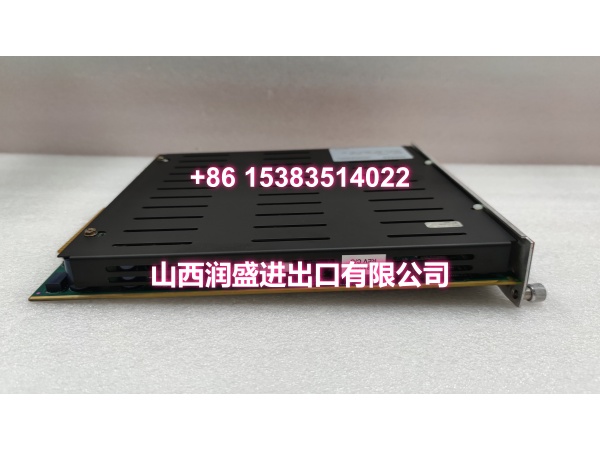
❗ ESD During Insertion: The DPU’s microprocessor and memory are highly sensitive to static discharge. Always wear a grounded wrist strap. Insert the module squarely into the backplane—never rock it side-to-side, as this can damage the high-density connector pins.
Replacement SOP:
- Pre-Install: Power down chassis, lockout/tagout, verify zero backplane voltage. Document firmware version, database version, and configuration settings.
- Removal: Release retaining clips, pull module straight out; inspect backplane connector for damage.
- Install: Align METSO PDP408 with guides, press firmly until seated; engage retaining clips.
- Power-on Test: Apply power, monitor POST LEDs, verify firmware/database version, allow redundancy sync to complete, confirm control logic execution and bus communication.
Technical FAQ
Q: Is the METSO PDP408 compatible with Valmet DNA or MaxDNA systems?
A: Yes. METSO Automation transitioned to Valmet, and the PDP408 is fully supported in both legacy METSO and current Valmet DNA/MaxDNA platforms. Always verify the revision code; later revisions may include updated firmware for enhanced diagnostics, expanded memory, or improved fieldbus support.
Q: Why is the price higher than generic PLC CPUs?
A: Generic controllers lack the deterministic scan times, redundant architecture, and DNA-specific protocol support required for critical process control. The METSO PDP408 is designed for sub-millisecond response, bumpless transfer, and fault-tolerant operation in environments where a single CPU failure can cost thousands per minute. The ROI is measured in continuous production.
Q: What is the warranty on new surplus stock?
A: Full 12-month functional warranty against manufacturing defects. We cold-boot, load-test, and verify redundancy sync on every unit using a live METSO DNA test rack before shipping. If it fails POST, scan time, or sync tests, we replace it immediately. No restocking fees on DOA units.
Q: Can I hot-swap this DPU module?
A: Absolutely not. The METSO DNA backplane architecture does not support hot-swapping DPU modules. Inserting or removing the METSO PDP408 while powered will cause catastrophic bus faults and potentially damage adjacent I/O modules. Always follow the full power-down SOP.
Q: Is this module still supported by Valmet/METSO?
A: The METSO PDP408 remains in active support for existing installations. Valmet maintains long-term availability for core DPU modules in the DNA series. However, always verify the full model number and revision; minor updates (e.g., PDP408B) may include expanded memory, improved communication protocols, or enhanced diagnostics. When in doubt, send us a photo of the module’s data plate for cross-reference.