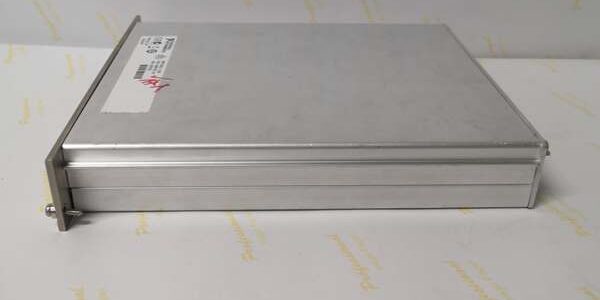
Product Core Brief
- Model: SCXI-1193
- Brand: National Instruments (NI)
- Series: SCXI RF Switching
- Core Function: Provides high-density, programmable routing and switching for RF signals up to 500 MHz with 50 Ω characteristic impedance.
- Product Type: 32-Channel RF Multiplexer / Sparse Matrix Switch Module
- Key Specs: 32 Channels | DC to 500 MHz | 50 Ω | >70 dB Isolation | <1 ms Switching Speed
- Condition: New Original (New Surplus)
Product Introduction
The is a high-density, 32-channel RF multiplexer switch module designed to maintain signal integrity for frequencies from DC to over 500 MHz. Engineered for complex test automation, it features 32 independent RF relays that can be software-programmed to route signals with high isolation (>70 dB) and low insertion loss (<1 dB).
Unlike standard multiplexers, the offers exceptional topological flexibility. It can be configured via software (NI-DAQmx / NI-Switch) as an unterminated multiplexer, an externally terminated multiplexer, or a dimensionally flexible sparse matrix. This makes it an ideal companion for high-frequency instruments like the PXI-5404 Arbitrary Waveform Generator and PXI-5112 High-Speed Digitizer, enabling automated antenna testing, filter characterization, and beamforming validation without manual cable swapping.
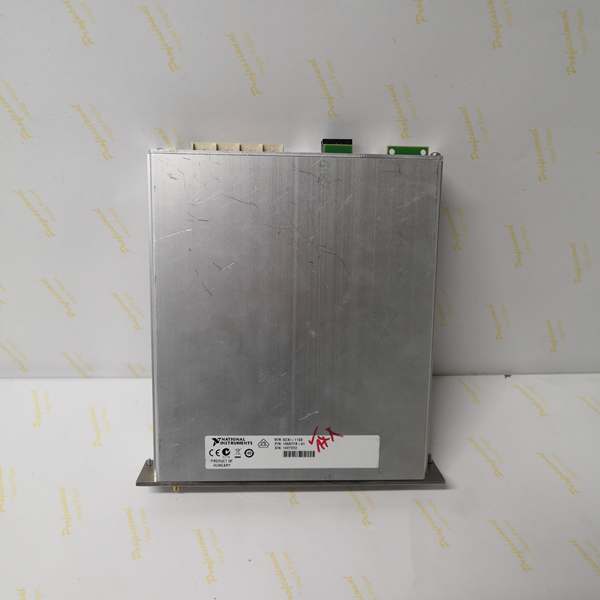
NI SCXI-1193
Key Technical Specifications
| Parameter | Value |
|---|---|
| Module Type | 32-Channel RF Multiplexer / Sparse Matrix Switch |
| Frequency Range | DC to 500 MHz |
| Characteristic Impedance | 50 Ω |
| Channel Count | 32 Independent RF Channels |
| Isolation | >70 dB (Typical) |
| Insertion Loss | <1 dB |
| Switching Speed | <1 ms |
| Max Scan Rate | 100 operations/second |
| Relay Type | Electromechanical Latching (Silver-Palladium/Gold) |
| Connectors | 36x MCX (I/O), 2x SMB (Trigger) |
| Bus Compatibility | SCXI Backplane (Requires SCXI Chassis & Controller) |
| Operating Temp | 0°C to +50°C |
Quality Control Process (Engineer’s Perspective)
We don’t just box these and ship them. Here is our actual bench test workflow.
- Incoming Verification: We verify the serial number against NI traceability records. A visual inspection checks for bent pins on the MCX/SMB connectors and ensures the SCXI backplane connector is free of debris or damage.
- Relay Actuation Test: We mount the unit in a live SCXI chassis. We cycle all 32 relays through multiple open/close sequences to verify mechanical latching and confirm no stuck relays.
- RF Performance Test: Using a VNA, we verify insertion loss and isolation at key frequency points (e.g., 100 MHz, 500 MHz) to ensure they meet the <1 dB and >70 dB specifications.
- Topology Configuration Test: We configure the module as a Quad 8×1 Mux and a Sparse Matrix via NI-Switch to confirm software-defined routing logic functions correctly.
- Final QC & Packaging: The module is sealed in an anti-static bag with silica gel. A QC sticker showing the test date and technician initials is applied to the exterior.
Replacement Pitfall Guide
Field replacements on RF switching systems are unforgiving. Watch out for these traps.
- Topology Mismatch: ❗ Critical. The is software-configurable. If your LabVIEW/Python code expects a “Quad 8×1 Mux” but the module is configured as a “32×1 Mux” or “Sparse Matrix” in NI MAX, routing commands will fail with “Channel not valid” errors. Always verify the topology in Measurement & Automation Explorer (MAX) before running code.
- MCX Connector Damage: ❗ Critical. MCX connectors are push-on and highly sensitive to misalignment. Forcing a cable at an angle will permanently damage the receptacle. Always align the cable perfectly straight before pushing. Inspect all 36 MCX jacks for bent center pins.
- Stub Effects in Custom Configs: When using the “Independent” or “Sparse Matrix” topology, unused relay paths can act as stubs and degrade RF performance at higher frequencies. Follow NI’s “Reducing Stub Effects” guidelines in the driver documentation to switch unused relays to a safe state.
- Trigger Wiring: The has dedicated SMB trigger connectors for hardware-timed switching. If your application requires synchronized switching with a digitizer, ensure the trigger cables are correctly routed and terminated.
- ESD Damage: RF relays are sensitive to electrostatic discharge. Always wear a grounded wrist strap when handling the bare PCB or connecting/disconnecting MCX cables. I’ve seen modules fail isolation tests because they were handled without ESD protection.
Keep these in mind and you’ll cut 90% of rework time.
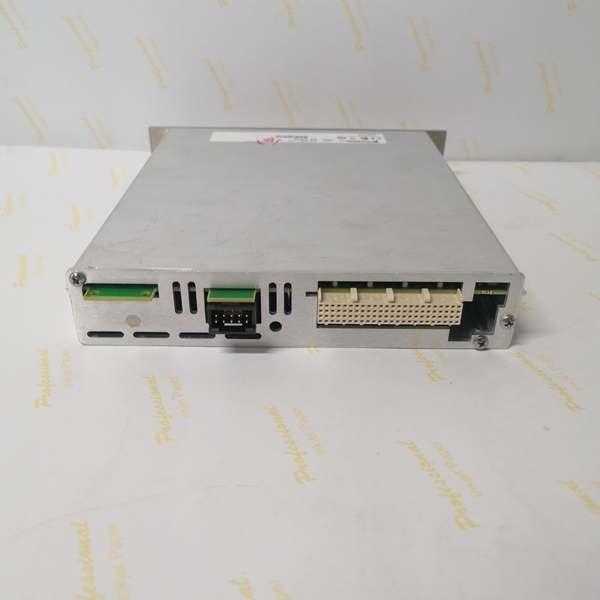
NI SCXI-1193
Compatibility Matrix & Benchmarks
Compatibility
- NI → : Direct Replacement — Verify topology configuration in MAX.
- NI PXI-2593 → : Functional Equivalent — PXI-2593 is the PXI form-factor version; same RF specs, different bus. Requires chassis adaptation.
- NI SCXI-1191/1190 → : Upgrade Path — offers 32 channels vs. 4×1; requires code re-validation for new topology.
Benchmarks
- Switching Speed: <1 ms (verified across all 32 channels)
- Isolation: >70 dB (verified at 500 MHz)
- Insertion Loss: <1 dB (verified at 500 MHz)
Need the topology configuration guide for the ? I can pull up the NI-Switch routing commands for Quad 8×1, 32×1, and Sparse Matrix configurations, along with the stub effect mitigation steps for high-frequency accuracy.