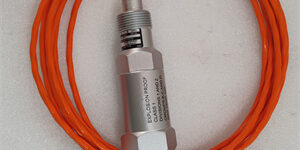
Product Core Brief
- Model: LG1093AA24
- Brand: Honeywell
- Series: LG1093 Series
- Core Function: Detects ultraviolet radiation from hydrocarbon flames for safety shutdown.
- Product Type: UV Flame Scanner / Detector
- Key Specs: 24 VAC/VDC | 1.5 mW/m² Sensitivity | 2 s Response
- Condition: New Original (New Surplus)
Product Introduction
The is a UV flame scanner designed to detect hydrocarbon flame radiation in industrial burners. It converts UV intensity into a pulse output that the control system evaluates against a programmable threshold.
This scanner offers higher sensitivity and a wider spectral response than older models, reducing false trips. With a 20-foot range and NEMA 4X rating, the handles harsh environments like boiler rooms and gas turbines without housing modifications.
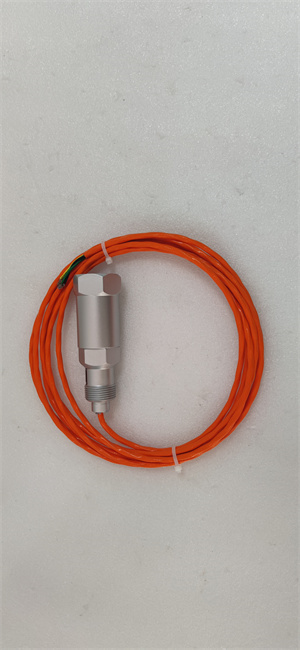
Honeywell LG1093AA24
Key Technical Specifications
| Parameter | Value |
|---|---|
| Detection Type | Ultraviolet (UV) |
| Sensitivity | 1.5 mW/m² |
| Detection Range | 20 ft (6.1 m) |
| Response Time | 2 seconds |
| Supply Voltage | 24 VAC/VDC |
| Power Consumption | 10 VA |
| Operating Temp | -40 °F to 158 °F |
| Protection Rating | NEMA 4X |
| Output Type | Pulse (UV Intensity) |
| Application | Hydrocarbon Flames |
Quality Control Process (Engineer’s Perspective)
We don’t just box these and ship them. Here is our actual bench test workflow.
- Incoming Verification: We verify the serial number against Honeywell’s traceability records. A visual inspection checks the UV window for scratches and ensures the NEMA 4X gasket is intact.
- Live Functional Test: We apply 24 VAC and expose the sensor to a calibrated UV source. We verify the pulse output frequency matches the expected intensity curve using an oscilloscope.
- Electrical Parameter Test: We perform a 500 V Megger test between the signal leads and the chassis. Insulation resistance must exceed 10 MΩ. Ground continuity is verified.
- Firmware Verification: N/A for analog UV scanners. We photograph the label and check the manufacturing date code to ensure no shelf-life degradation on internal capacitors.
- Final QC & Packaging: The module is sealed in an anti-static bag with silica gel. A QC sticker showing the test date and technician initials is applied to the exterior.
Replacement Pitfall Guide
Field replacements on burner systems are unforgiving. Watch out for these traps.
- Firmware Mismatch: ❗ Critical. While this is an analog scanner, your flame safeguard controller (e.g., RM7800 series) may have a programmable sensitivity threshold. If the is too sensitive for the old setting, it may cause nuisance trips. Verify the controller’s gain setting.
- DIP Switch / Jumper Misconfiguration: This model doesn’t use DIPs, but ensure you aren’t confusing it with the LG1093AA04 (4-20mA output) or LG1093AB. The AA24 is strictly a pulse/switching output device.
- Terminal / Cable Incompatibility: Inspect the shielded cable before connecting. UV scanners are high-impedance; a broken shield or grounded signal wire at the controller end will cause immediate failure-to-fire.
- Power Supply Mismatch: Verify your 24 VAC transformer has enough VA headroom. This scanner draws 10 VA; if you have multiple scanners on one transformer, calculate the total load plus 20% margin.
- ESD Damage: The UV tube is sensitive to static and physical shock. Always handle by the housing, not the glass window. I’ve seen scanners fail bench testing because someone touched the quartz window with bare fingers, leaving oil that carbonized on first fire.
Keep these in mind and you’ll cut 90% of rework time.
Compatibility Matrix & Benchmarks
Compatibility
- Honeywell LG1093AA01 → : Direct Replacement — Verify cable length (AA01 is 0.25m, AA24 is integral).
- Honeywell LG1093AA26 → : Direct Replacement — Verify voltage rating (AA26 is often 120VAC).
Benchmarks
- UV Response Time: < 2 seconds (to flame proven at 1.5 mW/m²)
- Signal-to-Noise Ratio: > 10:1 (at max rated range)
Need the wiring diagram for the pulse output? I can pull up the termination schematic for the flame safeguard relay module.