Product Core Brief
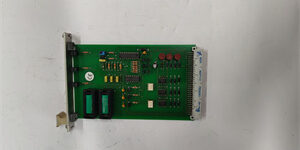
- Model: F7131 981713102
- Brand: HIMA
- Series: HIMax / H41q / H51q
- Core Function: Monitors and distributes power to ensure safe operation of the safety controller.
- Product Type: Power Monitoring / Distribution Module
- Key Specs: 24 VDC Nominal | High Stability | SIL 3 Compliant
- Condition: New Original (New Surplus)
Product Introduction
The HIMA 981713102 is a power monitoring and distribution module designed for HIMA’s safety-critical control architectures. It ensures the safety controller receives stable power while providing diagnostic feedback to the system.
This unit actively monitors voltage and current parameters, triggering alarms or protective actions during anomalies. Unlike standard power supplies, this module integrates directly with the HIMax bus to provide high-availability power management in harsh industrial environments.
Key Technical Specifications
| Parameter | Value |
|---|---|
| Module Type | Power Monitoring / Distribution |
| Nominal Supply Voltage | 24 VDC |
| Output Voltage | 5 VDC (Internal Logic) |
| Output Frequency | 47–63 Hz |
| Output Current | 1.12 A |
| Output Power | 40 W |
| Safety Certification | IEC 61508 SIL 3 |
| Operating Temperature | -25 °C to +70 °C |
| Bus Interface | HIMax System Bus |
| Diagnostics | Voltage / Current / Temperature |
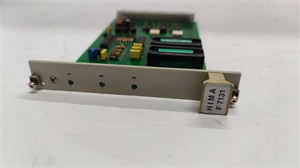
HIMA F7131 981713102
Quality Control Process (Engineer’s Perspective)
We don’t just box these and ship them. Here is our actual bench test workflow.
- Incoming Verification: We verify the serial number against HIMA’s traceability records. A visual inspection checks for heat damage on the bus connector and ensures the DIN rail clip isn’t cracked.
- Live Functional Test: We mount the unit in a live HIMax test rack. We simulate power fluctuations and verify that the module accurately reports voltage and current status to the controller.
- Electrical Parameter Test: We perform a 500 V Megger test between the field wiring terminals and the backplane. Insulation resistance must exceed 10 MΩ. Ground continuity is also verified.
- Firmware Verification: We read the module’s internal firmware revision via the service port. We photograph the DIP switch settings to ensure they match factory defaults before shipping.
- Final QC & Packaging: The module is sealed in an anti-static bag with silica gel. A QC sticker showing the test date and technician initials is applied to the exterior.
Replacement Pitfall Guide
Field replacements on safety systems are unforgiving. Watch out for these traps.
- Firmware Mismatch: ❗ Critical. A brand-new module might have a newer firmware revision than your existing CPU. The HIMax CPU will block it with a configuration mismatch fault. Always check your system’s allowed firmware matrix before installing.
- DIP Switch / Jumper Misconfiguration: This module uses hardware addressing. If you pull the old card and forget to transfer the binary address switches to the new one, the CPU will report a missing module.
- Terminal / Cable Incompatibility: Inspect the field wiring before plugging in the new card. Ensure all power connections are tight; a loose 24 VDC connection can cause intermittent brownouts that mimic module failure.
- Power Supply Mismatch: Verify your external 24 VDC field power supply has at least 20% headroom over the total calculated load. This module draws current for its own internal monitoring circuits.
- ESD Damage: Safety modules are highly sensitive to electrostatic discharge. Always wear a grounded wrist strap when handling the bare PCB. I’ve seen modules fail bench testing because they were handled on a dry winter day without protection.
Keep these in mind and you’ll cut 90% of rework time.
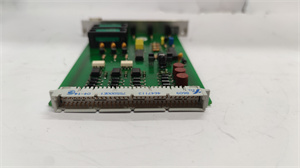
HIMA F7131 981713102
Compatibility Matrix & Benchmarks
Compatibility
- HIMA Rev A → 981713102 : Direct Replacement — Verify firmware compatibility with CPU.
- HIMA F7130 → 981713102 : Needs Adaptation — Different power distribution architecture; requires logic re-validation.
Benchmarks
- Monitoring Response Time: < 10 ms (from voltage anomaly to diagnostic flag)
- Output Ripple: < 50 mV (at full 1.12 A load)