Product Core Brief
- Model: SB522V1, official OEM part number: 3BSC760015-R1
- Brand: ABB Hitachi Energy
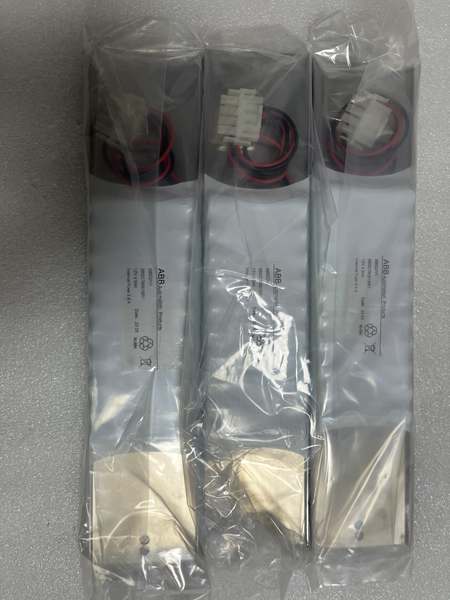
- Series: ABB Advant AC400 legacy DCS system memory backup battery assembly
- Core Function: Rechargeable nickel-metal hydride (NiMH) battery unit designed exclusively for ABB AC400 series controllers. It provides uninterrupted 12V backup power to the controller volatile RAM when the main 24V DC cabinet auxiliary power fails or is fully cut off. It retains critical process control logic, setpoint parameters, alarm event logs and runtime data stored in RAM to prevent complete data loss and forced controller re-download during power outages. It must be charged and managed by matching dedicated battery chargers SB510 or SB511, and cannot supply heavy load equipment independently.
- Product Type: DCS controller RAM backup NiMH battery module
- Key Specs: Nominal 12 VDC output, rated capacity 4 Ah; built-in 3.4 A internal safety fuse; compatible with SB510 / SB511 charging units; supports full data retention during short/long-duration power blackouts; continuous self-discharge monitoring; standard cabinet panel mounting; exempt from standard RoHS restrictions for industrial control backup power equipment
- Note: The AC400 Advant platform is fully end-of-production; only limited factory-original sealed battery assemblies and fully bench-tested surplus units are supplied as maintenance spares for legacy thermal power, hydropower and chemical plant Advant DCS control room retrofits. New 800xA projects adopt integrated on-board controller batteries without separate modules.
Key Technical Specifications
| Parameter | Value |
|---|---|
| Full OEM Article Code | 3BSC760015-R1 |
| Cell Chemistry | Nickel-Metal Hydride (NiMH) rechargeable battery pack |
| Nominal Rated Voltage | 12 VDC |
| Nominal Capacity | 4 Ah |
| Internal Safety Fuse | 3.4 A built-in overcurrent protection fuse |
| Matched Charging Hardware | SB510, SB511 dedicated DCS battery charger modules |
| Typical Self-Discharge Rate | Moderate self-discharge; mandatory full recharge every 6 months for stock storage |
| Data Retention Capability | Sustains RAM power for multiple hours with fully charged battery under no external load |
| Front Panel Indicators | Green CHARGE LED, yellow READY LED, red FAULT LED for charge status monitoring |
| Mechanical Installation | Standard cabinet internal panel mounting with fixed metal bracket |
| Operating Ambient Temperature | -10 °C ~ +55 °C continuous cabinet operation; storage temperature: -40 °C ~ +70 °C |
| Humidity Class | ≤75% RH non-condensing indoor control room rated |
| Overall Module Dimensions | 340 mm L × 70 mm W × 18 mm D |
| Net Weight | Approx. 0.7 kg |
| Compliance Standards | IEC 60255 industrial control equipment standard, CE certified, exempted from EU RoHS 2011/65/EU per Article 2 provisions |
Product Introduction
The is the dedicated RAM backup power core for all ABB Advant AC400 DCS controllers, solving the critical risk of permanent loss of process configuration data when station DC auxiliary power is lost.Its core operational workflow:
- Normal Operation: When the cabinet 24V DC auxiliary power is intact, the matched SB510/SB511 charger continuously trickle-charges the battery pack while the controller runs on main cabinet power; all three front panel LED indicators show normal charging status.
- Power Failure Backup Mode: Once the main 24V DC supply is disconnected, the instantly switches to discharge mode and delivers stable 12V DC power to the controller RAM chipset. It maintains all downloaded control logic, PID tuning parameters, historical event logs and unit runtime counters without data corruption or reset.
- Abnormal State Self-Diagnosis: If the battery pack suffers internal short circuit, aging capacity degradation or charging loop open circuit, the red FAULT LED activates and sends a digital alarm signal to the plant DCS/SCADA system to remind maintenance teams of battery replacement requirements.
The NiMH cell design avoids the memory effect common in older nickel-cadmium batteries, extending service life in cyclic charge-discharge industrial control environments. The integrated internal fuse prevents thermal runaway and fire hazards if the battery terminals are short-circuited during wiring or maintenance work. It is mandatory for all AC400 controller bays; without a functional , every power outage will erase all controller configuration data and require full offline parameter re-download, causing extended plant production downtime.
QA & Testing SOP (Transparency Building)
- Incoming Visual Inspection: Cross-check full part number 3BSC760015-R1 and serial number against ABB legacy DCS spare parts database to reject counterfeit mismatched battery packs; inspect front panel LED indicators, internal cell assembly, terminal screw blocks and housing plastic for swelling, electrolyte leakage, corrosion or burn marks; record serial numbers and production batches for full traceability.
- Full Charge-Discharge Cycle Bench Test: Mount with matched SB511 charger test bench, supply standard 24VDC charging power; run 24-hour cyclic testing including full charge cycle, constant-current discharge capacity verification, power failure RAM backup simulation, fault alarm trigger for broken charging loops, confirm battery capacity meets nominal 4Ah rating without rapid voltage drop.
- Safety Electrical Test: Verify internal fuse blow protection function under short-circuit simulation; test insulation resistance ≥ 10 MΩ between battery terminals and metal module housing; chassis ground continuity resistance below 0.5 Ω.
- Hardware Record Backup: Photograph front panel LED status definitions and rear terminal wiring pinout sequences for field cabinet wiring reference; record battery manufacturing date for service life tracking.
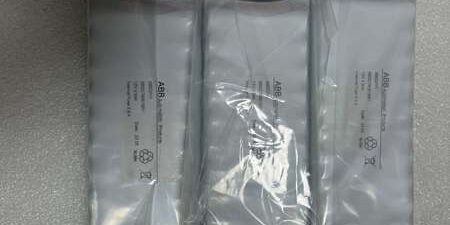
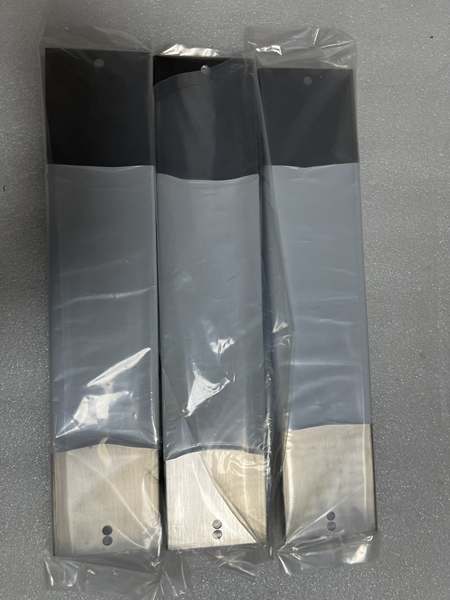
- Final QC Packaging: Wipe module housing with anti-static microfiber cloth, cover all terminal blocks with insulating protective caps, place the battery unit into independent anti-static ESD shielding bag, attach unified printed QC test tag with technician ID and full 24-hour charge-discharge cycle test runtime timestamp, then pack into foam shockproof carton for long-distance power plant transportation.
Installation Pitfalls & 4-Step Replacement Guide
Common Installation Hazards
❗ Residual Charge Short-Circuit Risk: The battery holds full 12V DC charge after disconnection; avoid direct short-circuit of positive/negative terminals during handling to prevent thermal swelling and electrolyte leakage.❗ Charger Model Mismatch Risk: only supports SB510 / dedicated chargers; generic industrial 12V chargers with unregulated output voltage will overcharge the NiMH cells and permanently damage the battery pack.❗ Polarity Reversal Wiring Error: Reverse positive/negative charging terminal wiring will instantly burn the internal charge management circuit and disable backup power function.❗ Storage Aging Risk: Uninstalled spare units must undergo full recharge every 6 months; long-term storage without periodic charging leads to irreversible capacity loss and early battery failure.❗ ESD PCB Damage Risk: Wear certified anti-static wrist strap during all disassembly and installation work; bare hand contact with internal charge monitoring PCB traces will disable fault alarm and self-diagnosis logic.
4-Step Battery Module Replacement Guide
- Pre-install Preparation: Lock out and tag out the cabinet 24VDC auxiliary power supply feeding the / charger, wear ESD wrist strap, photograph charging power terminal wiring and RAM backup output wiring sequences connected to the controller.
- Removal Operation: Unplug all charging and signal terminal wires one by one following photographed records, loosen the panel mounting bracket bolts, extract the old battery module from the cabinet internal rack.
- Installation & Wiring: Fix the new unit onto the original mounting bracket, re-terminate all charging and backup signal wiring strictly matching photographed terminal sequences, confirm positive/negative polarity alignment without reversal.
- Power-on Commissioning Test: Restore cabinet 24VDC auxiliary power, observe green CHARGE and yellow READY LEDs activate normally; simulate a full mains power cut to verify stable RAM backup voltage output, confirm no persistent FAULT LED alarms and DCS battery fault signal uploads correctly.
FAQ
Q: What is the matching device combination for ?A: Three mandatory components for a complete memory backup system:
- : Core 12V 4Ah NiMH backup battery unit;
- / : Dedicated battery charger module for controlled trickle charging;
- Advant controller: End device that receives 12V backup power to retain RAM data.
Q: Can be used for AC800F / 800xA DCS controllers?A: Not compatible. is exclusively calibrated for legacy Advant platforms. Modern 800xA and Freelance AC800F controllers integrate small built-in lithium backup batteries and do not support separate external battery packs.
Q: Can be hot-swapped while the cabinet auxiliary power is energized?Strictly prohibited. The battery terminals carry live charging voltage and stored DC energy; unplugging wiring under energized conditions will cause DC arc flash and permanent damage to internal charge monitoring circuits. Full auxiliary power lockout is mandatory before replacement.
Q: What warranty applies to stocked 3BSC760015-R1 battery units?Factory-new original battery packs carry a 12-month ABB manufacturer warranty covering cell capacity, internal fuse protection and charge monitoring PCB. Bench-tested surplus units provide a 6-month functional warranty; damage caused by terminal short-circuit, polarity reversal miswiring or long-term uncharged storage voids all warranty terms.
Q: Has ABB discontinued production?Yes, the entire Advant DCS platform including battery module is fully end-of-production. New industrial automation and power plant DCS projects adopt ABB Ability 800xA systems with integrated controller backup batteries; is only supplied as maintenance spare parts for legacy control rooms.
Q: What typical faults indicate a defective battery unit?Common failure symptoms: Permanent red FAULT LED alarm under normal charging conditions, rapid RAM data loss within minutes after mains power cut, battery swelling with electrolyte leakage, yellow READY LED never lights up after 24 hours of charging, controller loses all tuning parameters every time the cabinet auxiliary power shuts down.