Product Core Brief
- Model: DSPC170, OEM order code 57160001-AEZ, redundant pair variant DSPC170K01
- Brand: ABB
- Series: S100 rack central processing unit for Advant Mod300 legacy DCS systems
- Core Function: Execute TCL/TLL control logic, poll S100 ModuleBus I/O, handle DCN network communication for closed-loop process regulation
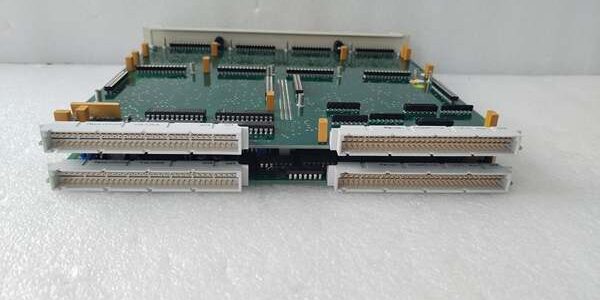
- Product Type: Full-size Eurocard slide-in S100 rack main CPU PCB, no separate termination unit required
- Key Specs: Native Mod300 DCN network port | Onboard program/backup memory | Supports redundant CPU pairing | Hot-swap certifiedNote: Discontinued legacy main controller, stocked inventory is New Surplus with intact factory anti-static sealed packaging.
Key Technical Specifications
- Auxiliary rack operating supply: 24VDC ±20% logic feed, total module power draw ≤4.8W
- Supported control languages: Taylor Control Language (TCL), Taylor Ladder Logic (TLL)
- Onboard non-volatile memory: Program storage + event alarm historical buffer
- Backplane bus: S100 synchronous ModuleBus for all local rack I/O expansion
- Network interface: Isolated DCN dual-channel control network for cross-station DCS communication
- Redundancy capability: Two units can operate as active/standby redundant controller pair with bumpless failover
- Hot-swap rating: Fully hot-swappable on energized Mod300 backplane racks
- Front panel diagnostics: System RUN LED, ModuleBus fault LED, DCN communication alarm lamp, hardware reset pushbutton
- Continuous operating temperature: 0°C to +55°C full program load; control loop scan timing derates above 55°C
- Storage environmental limits: -40°C to +85°C, 5%–95% RH non-condensing
- Physical dimensions: 324mm D × 22.5mm W × 234mm H; unit mass 0.915kg
- Compliance standards: CE, UL, RoHS, IEC 61000-6-2 Class A industrial EMC
- System compatibility: Advant Mod300 racks; incompatible with S800, AC800M, UNITROL, S400 remote I/O platforms
Product Introduction
This main processor board acts as the core computing engine for Mod300 rack DCS systems. It scans all local AI/AO/DI/DO/pulse I/O modules over the ModuleBus backplane and executes continuous PID and interlock logic cycles for boiler, refinery, and turbine process control.Dual-channel isolated DCN network ports enable peer-to-peer data exchange with other Mod300 stations, and redundant CPU pairing eliminates single-point controller failure for critical safety process units.
QA & Testing SOP (Transparency Building)
- Incoming Inspection: Cross-reference serial numbers against ABB Mod300 legacy component trace databases; inspect backplane gold edge fingers for oxidation, front diagnostic LED segment integrity, PCB conformal coating for peeling; verify factory static packaging seal remains unbroken for surplus inventory.
- Live Testing: Mount the unit to a Mod300 rack test bench paired with a full mixed I/O load bank and DCN network simulator; upload validated TCL/TLL control logic and run uninterrupted 24-hour continuous loop scanning and network data exchange; use a Fluke 115 to log steady 24VDC auxiliary supply voltage through the full test cycle.
- Electrical Testing: Perform 500VAC hipot insulation testing between DCN communication ports and backplane logic ground; pass threshold set at >10MΩ insulation resistance; inject reversed DC supply voltage to confirm hardware polarity lockout activates without damaging network transceiver semiconductors.
- Firmware/Config Backup: Record factory CPU operating firmware revision via Mod300 engineering workstation; photograph front DCN terminal pin layouts and document redundant CPU jumper settings for site commissioning reference.
- Final QC & Packaging: Torque all DCN network terminal screw connections to OEM torque specifications; enclose the board in static-dissipative foam; attach a printed QC tag listing serial number and completed test metrics before carton sealing.
Installation Pitfalls & Guide (Engineer to Engineer)
❗Firmware Mismatch Risk: Mismatched firmware versions between primary and standby redundant CPUs break bumpless failover. Fault outcome: Full process control outage during CPU switchover, lost analog setpoint tracking. Mitigation: Flash identical validated firmware revisions to both controller cards before rack power-up; archive matched firmware files to plant engineering servers.❗Missing DCN Bus Termination Risk: Omitted termination resistors on end-of-trunk DCN ports create signal reflection noise. Fault outcome: Cyclic DCN communication timeouts, missing cross-station process alarm data. Mitigation: Fit OEM DCN terminator blocks at both physical endpoints of each DCN trunk per wiring schematics.❗Platform Incompatibility Risk: Attempting to install the unit into S800 or UNITROL racks creates mismatched backplane pinouts and unsupported bus timing logic. Fault outcome: No ModuleBus I/O polling, burned network transceiver circuits, permanent controller failure. Mitigation: Only deploy the unit within dedicated Mod300 rack architectures paired with DCN shielded trunk cables.❗Overloaded ModuleBus Backplane Risk: Populating a single rack with more than 16 I/O modules exceeds the CPU’s bus scan timing budget. Fault outcome: Slowed control loop scan rates, delayed safety interlock response times. Mitigation: Split high-density I/O loads across multiple DSBC176 extended subracks to balance ModuleBus traffic.❗ESD Dangers: Low-humidity turbine control room air generates static charge that damages delicate DCN network transceiver ICs on the PCB. Field service logs show ungrounded handling creates intermittent total rack I/O dropout faults that require 10–16 hours of diagnostic labor to isolate. Mitigation: Establish direct contact with bare cabinet chassis ground metal for three full seconds before touching backplane edge fingers or DCN network terminal connectors.
4-Step Replacement Guide
- Pre-install: Set the Mod300 engineering workstation to manual hold mode to freeze all closed-loop PID setpoints; photograph front DCN trunk cable pin assignments and record redundant CPU jumper configuration if operating in standby pair mode.
- Removal: Unplug the DCN shielded trunk cable fully from the controller’s front network port; release the rack slot retention clips and extract the faulty board straight outward without scraping PCB components against cabinet metal framing.
- Install: Slide the new unit evenly into the target rack slot and engage retention clips fully; replicate the photographed DCN trunk wiring connection, reconfigure redundant CPU jumpers to match original operating mode, then reattach the DCN trunk cable fully seated into the network port.
- Power-on Test: Energize 24VDC auxiliary rack supply; initiate continuous ModuleBus full I/O polling and DCN cross-station data exchange from the Mod300 simulator, confirm zero communication fault counters accumulate during 30 minutes of idle control loop operation before restoring live process control logic.
FAQ (Frequently Asked Questions)
Q: Can this unit directly replace older DSPC172 high-capacity CPU hardware without TCL/TLL logic edits?A: No, DSPC172 features expanded memory and extended DCN bandwidth with incompatible rack backplane timing registers. Cross swap requires re-sizing all control logic buffer allocations and re-indexing all I/O point addresses in the Mod300 database.Q: Does hot-swap capability remove the requirement to set the controller to manual hold mode during replacement?A: Hot-swap only protects the module’s internal circuits from power surge damage; it does not maintain active control loop execution during the swap window. Manual hold mode remains mandatory to prevent unregulated valve stroke movement and lost process setpoint tracking.Q: What warranty coverage applies to surplus stocked units?A: A 12-month limited warranty only covers factory manufacturing defects. Damage from mismatched redundant firmware, missing DCN termination resistors, ungrounded ESD handling, or cross-platform rack installation is excluded from warranty claims.Q: Can more than two units be paired for multi-level redundant control architectures?A: The hardware only supports a single active/standby two-card redundant pair per rack. Multi-rack redundant systems require separate paired CPU sets installed in distinct I/O subracks linked via DSBC176 bus extenders.Q: Is this main processor rated for Class 1 Div 2 hazardous cabinet deployment inside refinery pump MCC rooms?A: No, the open slide-in PCB rack design lacks intrinsic safety certification for flammable vapor environments. Flameproof dedicated control enclosures are required for hazardous area process plant installations.Q: What cable part numbers are approved for DCN network trunk runs with this controller?A: Only ABB TK570 shielded differential network cables meet OEM impedance specifications; generic unshielded twisted pair will introduce excessive signal reflection and cyclic DCN bus fault events.Q: What long-term hardware upgrade path exists as this component reaches ABB end-of-support status?A: Modern ABB distributed control deployments use AC800M controllers paired with S800 I/O and CI810B AF100 fieldbus interfaces to replace legacy Mod300 racks. Full Mod300 cabinet migration, removal of all subracks, and complete TCL/TLL control logic conversion to IEC 61131 are required for a direct functional retrofit.