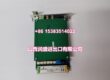
Component Snapshot At-a-Glance
- Model: IS200JPDHG1AAA, abbreviation JPDH
- Alt P/N: IS200JPDDG1AAA (low-density variant, fewer output circuits, cannot fully replace)
- Product Series: GE Speedtronic Mark VI / Mark VIe gas/steam turbine control platform
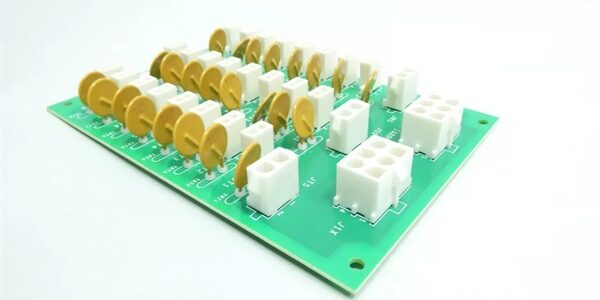
- Hardware Type: Rack-mounted passive power distribution PCB, integrated individual fuse protection for every output channel
- Key Feature: Single 28VDC input, split into 24 isolated protected I/O power outputs + 3 dedicated Ethernet switch power ports, support multi-card daisy-chain expansion
- Primary Field Use: Central 28V power distribution hub for all remote I/O packs, control Ethernet switches inside Mark VIe turbine control cabinets, isolate each branch with independent fuses to avoid full system power loss from single wiring short
Hard-Numbers Technical Specifications
- Input Voltage: 24/28 VDC nominal, wide range 12–48VDC operating window
- Main Input Connector: 6-pin J1 Mate-N-Lok terminal, max 13A total input current
- Daisy-Chain Port: J1X 6-pin connector for cascading extra IS200JPDHG1AAA boards
- Output Channels:
- 24 × 2-pin I/O pack ports (JT1–JT8 / JR1–JR8 / JS1–JS8), each circuit 1A rated, 1.25A fuse per channel
- 3 × 2-pin dedicated Ethernet switch supply terminals
- Circuit Protection: Individual fast-blow fuse on every single output channel, overcurrent auto cut-off per branch
- Operating Temp: -30°C ~ +65°C cabinet operational; -40°C ~ +85°C storage, non-condensing 5–95% RH
- Mounting: Standard Mark VI rack slot mount, cabinet IP20 only
- Physical Size: 158.7 × 107.9 × 20 mm, weight ~0.35–0.4kg
- Certifications: UL, CE, Class I Div 2 / Zone 2 hazardous area certified for turbine & refinery environments
- Max Load Capacity: One card supports 24 Mark VIe I/O packs + up to 3 industrial Ethernet switches
The Real-World Problem It Solves
Combining all I/O power on a single unprotected busbar means one shorted field wiring loop crashes all remote I/O packs, triggering full turbine trip. IS200JPDHG1AAA equips every output with independent fuses; only the faulty branch loses power, rest of control system stays online.Separate DIN rail power terminal blocks add dozens of loose vibration-prone terminals in turbine cabinets; this single PCB consolidates all 28V power routing into one compact rack card, reducing wiring points and fault risks.Single low-density JPDDG boards limit total I/O capacity; JPDH supports daisy-chain stacking to expand power supply capacity for large multi-turbine control racks without extra PSU hardware.Unfiltered raw DC power from rack power supplies carries switching noise; onboard RC filtering and surge suppression stabilize voltage for sensitive analog I/O and encoder modules.Where you’ll typically find it:
- Combined cycle power plant Mark VIe gas/steam turbine main control cabinets, feeding vibration, temperature, valve position I/O packs
- Refinery & LNG plant turbine-driven compressor control racks powering ESD safety I/O and fieldbus switches
- Cogeneration industrial boiler turbine control systems with distributed remote I/O subpanels
This high-density fused distribution card isolates power faults per I/O branch, eliminates messy discrete terminal wiring, and expands system power capacity via daisy-chain stacking for critical turbine control systems.
Hardware Architecture & Under-the-Hood Logic
This is a passive power distribution PCB with no CPU or communication logic; it only routes, fuses, and filters 28VDC power to downstream I/O and network hardware.
- 6-pin J1 main input receives regulated 28VDC from rack power supply, internal heavy copper busbars distribute raw DC across the board.
- Each output channel passes through a dedicated miniature fuse + TVS surge suppression to absorb field wiring ESD and short-circuit transients.
- Three rows of eight 2-pin connectors provide isolated power for standard Mark VIe remote I/O packs; three extra dedicated ports supply control network Ethernet switches.
- J1X daisy-chain connector carries unregulated 28V input to secondary JPDH boards, expanding total available I/O power ports for large control systems.
- Integrated RC low-pass filtering on every output rail smooths DC ripple, preventing analog measurement drift and encoder pulse jitter caused by power supply switching noise.
Field Service Pitfalls: What Rookies Get Wrong
Replacing IS200JPDHG1AAA With Low-Density IS200JPDDG1AAA
Junior technicians install JPDDG spare boards without counting total I/O packs. Insufficient output channels force parallel wiring without individual fuses; single short circuit takes down multiple I/O groups and risks turbine trip.
- Field Rule: Deploy JPDH for full-size Mark VIe racks with ≥12 I/O packs; reserve JPDDG only for small auxiliary single-digit I/O layouts.
Oversizing / Removing Channel Fuses To Fix Intermittent Trips
Maintenance staff swap 1.25A factory fuses for higher amp ratings or remove fuses entirely. Loss of branch protection allows field wiring short circuits to burn PCB traces and damage upstream rack power supply.
- Quick Fix: Always replace blown fuses with factory-specified 1.25A fast-blow fuses; trace wiring shorts instead of modifying fuse ratings.
Daisy-Chaining Multiple JPDH Boards Exceeding J1 Input 13A Current Limit
Techs stack 3+ JPDH cards without calculating total I/O load. Overloaded main input connector overheats, melts terminal pins and triggers unplanned full rack power loss.
- Field Rule: Limit daisy-chain to maximum two JPDH boards; split large I/O loads across separate rack power supply feeds when total current exceeds 10A.
Hot-Swapping JPDH Card With Rack 28V Power Energized
Live card removal creates abrupt power drop for all connected I/O packs; loss of field power triggers turbine safety interlock trips and resets all analog control loops mid-operation.
- Field Rule: Cut rack 28V DC power supply breaker first, disconnect all I/O wiring plugs before removing or inserting IS200JPDHG1AAA.
Commercial Availability & Pricing Note
Please note: The listed price is for reference only and is not binding. Final pricing and terms are subject to negotiation based on current market conditions and availability.