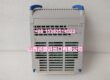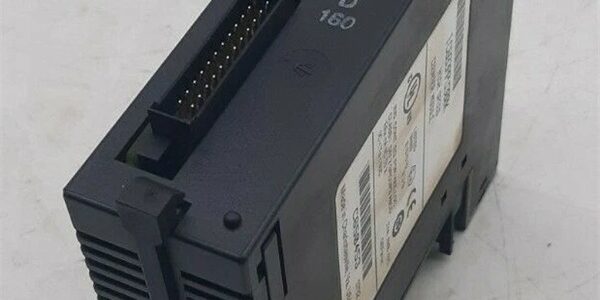
Field Engineer’s Notes (From the Trenches)
The “Gotcha” is Sinking vs Sourcing Wiring (NPN vs PNP) and Common Wiring.
Sinking (This Module): The load connects between +24V and the Output terminal. The Output terminal connects internallyto the FET which switches to 0V (Common).
- Wrong Way: Landing +24V to the Common terminal and the load between Output and 0V. That’s Sourcing (PNP) wiring. The MDL742 won’t work that way (open circuit).
- Correct: Land +24V to one side of eachload (solenoid/relay). Land the other side of the load to the Output terminal (e.g., A1). Land the Common (C) terminal for that group (on the TBB032) to the 0V / DC Return of your 24V supply.
Common Terminal: There are 4 Commons (one per group of 8). They are notinternally tied. You must land a 0V wire to eachCommon terminal (C1-C4) on the TBB032, or jumper them externally if you want a single-point 0V return. Forgetting to land C3 causes “Outputs 17-24 dead despite LED being On” (because the current has no return path).
Inductive Loads: For AC coils or large DC solenoids (>0.2A inductive), use an external flyback diode (DC) or RC Snubber (AC) across the load. The internal protection handles momentary spikes, but continuous inductive kick on a 0.5A point will eventually degrade the FET. If a point fails “On” (welded) or “Off” (shorted), check for missing suppression on the coil.
Real-World Applications
- Automated Case Packer (24V DC Solenoids): An RX3i rack with driving 32 x 24V DC pneumatic solenoid valves (0.3A each). Groups 1-2 run the main lane diverters, Groups 3-4 run the flap folders. When a jammed flap shorted Group 3, only those 8 outputs dropped; the diverters kept running, allowing the operator to clear the jam without resetting the whole line.
- Water Treatment Plant (Pump Starter Pilot Lights): 32 x 24V DC LED stacks and seal-in relays for pump run/stop status, driven by MDL742. The individual point LEDs made verifying the “Pump 2 Running” light circuit a 5-second visual check during FAT.
High-Frequency Troubleshooting FAQ
Q: Point LED is ON (Green), but the field device (solenoid/relay) does not energize.
A: Missing Common (0V) or Wiring Polarity.
- Check the Common (C) terminal for that group on the TBB032. Is 0V DC landed and tight (7 lb-in torque)? If the Common is floating, the circuit is open—current can’t return to the supply, so the load sees 0V across it.
- Verify Wiring Polarity: +24V should be on the load’s otherterminal, not on the MDL742 Common. The MDL742 Output sinks to0V. Swap the wires at the load if unsure (or check with a DMM: Voltage acrossthe load should be ~24V DC when the point is On).
- Check Load Integrity: Is the solenoid coil open? Measure resistance (should be 20-200Ω for a 24V DC solenoid). If OL, the load is bad, not the module.
Q: “FUSE” LED is ON (Amber/Red) for a group, those 8 outputs are dead, others OK.
A: Group Short or Overload.
- The electronic fuse tripped. Turn the output group Off in the PLC (write 0 to those %Q bits) or power cycle the rack to reset the electronic fuse.
- Find the Short: Disconnect the field wires from the 8 Output terminals of the faulted group. Power the group back On (command all 8 On via PLC force). If the Fuse LED stays Off, the short is in the field wiring. Reconnect one wire at a time to find the culprit.
- If the Fuse LED immediately re-illuminates with no field wires connected, the module’s group driver is damaged (unlikely but possible from a severe transient). Swap the module (Hot-Swap if rack allows).
A: Yes. The is fully backward compatible with the Series 90-30 backplane.
- It requires the same Terminal Block (IC694TBB032/TBB132).
- Configure it in Logicmaster 90-30 or Proficy Machine Edition as “.”
- Ensure the 90-30 CPU (e.g., IC693CPU374) firmware supports the “IC694” family (most do post-2004; check release notes if using very old CPU).
Please note: The listed price is not the actual final price. It is for reference only and is subject to appropriate negotiation based on current market conditions, quantity, and availability.