SEO Intent-Driven Titles
- GE IS200ERDDH1A | EX2100 ERDD Dynamic Discharge Board Specs
- GE IS200ERDDH1A | IGBT Gate Drive & DC Link Overvoltage Control
- GE IS200ERDDH1A | Simplex (ERBP) vs Redundant (ERRB) Installation
- GE IS200ERDDH1A | K3 Charging Relay & K41 De-excitation Logic
Quick Sizing & Sourcing Snapshot
System Architecture & Operational Principle
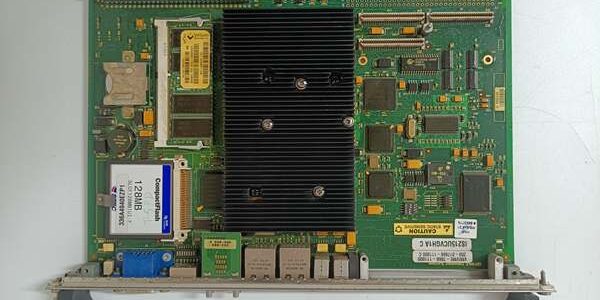
The (ERDD) is an active, processor-driven board mounted in the Regulator Control Rack, interfacing between the logic layer (ERIO/DSPX) and the power layer (ERSC – Static Converter).
- Location & Mode:
- Simplex Mode: Installed on the ERBP (Regulator Backplane), typically in the M1 core. Controls the K41 De-excitation (Crowbar) relay.
- Redundant Mode: One board on ERBP (M1, controls K41) and one on ERRB (M2/C, controls K3 Charging relay).
- Signal Flow (Input): Receives low-level firing commands and regulation logic from the ERIO (Exciter Regulator I/O) board via the backplane.
- Signal Flow (Output): Amplifies and conditions gate drive signals for the ERSC (Static Converter/IGBT Bridge). It handles the high-speed switching required for precise field voltage control.
- Dynamic Discharge Function: This is its signature role. It continuously monitors the DC Link Voltage (from the exciter bridge). If voltage exceeds a safe threshold (e.g., during load rejection or regulator failure), the ERDD autonomously triggers discharge circuits (via K3/K41 relays) to clamp the voltage and protect the rotor/thyristors, operating independently of the main CPU for hardware-level safety.
- Bridge Feedback: Monitors bridge output current (via shunt), output field voltage, and IGBT temperature (RTD) to provide closed-loop data to the controller.
Core Technical Specifications
- Functional Acronym: ERDD (Exciter Regulator Dynamic Discharge)
- Form Factor: Double-Height, Single-Slot VME (6U: ~9.25″ x 6.5″)
- Power Input: +5V, +15V/-15V, +24V (Sourced from EPSMG2 on ERBP/ERRB)
- Control Input: Logic commands from ERIO (via P1/P2 Backplane)
- Gate Drive Output: Interfaces to ERSC (Static Converter) – IGBT Gate Pulses
- Key Relays Controlled:
- K41: De-excitation/Crowbar (Simplex Mode / ERBP)
- K3: DC Link Charging/Pre-charge (Redundant Mode / ERRB)
- Monitoring Inputs:
- DC Link Voltage (Attenuated from ERSC)
- Bridge Output Current (Shunt voltage)
- Heatsink Temperature (RTD Input)
- Indicators: Typically includes PWR (Green), Status/Active, and fault LEDs (Check specific board overlay).
- Isolation: Optical isolation for gate drives; galvanic isolation on feedback inputs.
Customer Value & Operational Benefits
Hardware-Level Safety (Deterministic Discharge)
The primary value is Autonomous Protection. Unlike software-based trips which depend on the DSPX scanning loop (ms), the ERDD monitors DC link voltage in hardware. If voltage spikes >110% in microseconds, it triggers K41 (Crowbar) instantly. This prevents rotor insulation breakdown and IGBT explosion during transient faults, saving millions in generator repairs.
Precise IGBT Drive (EX2100e/IGBT Systems)
For modern EX2100e setups using IGBTs (via ERSC), this board provides the tailored gate drive characteristics (voltage levels, desaturation protection) needed for IGBTs, which are more sensitive than traditional Thyristors (SCRs). This extends semiconductor life by 20-30%.
Seamless Redundant Control
In TMR/Redundant configs, the split between ERBP (K41) and ERRB (K3) ensures that DC link charging/pre-charge is managed by the secondary core (M2/C) without conflicting with the active regulator (M1). This prevents startup inrush current spikes that can trip the 125V DC bus.
Field Engineer’s Notes (From the Trenches)
The “Gotcha” is Mode-Specific Relay Logic.
- In Simplex (ERBP only): This board controls K41 (De-excitation/Crowbar). If K41 isn’t firing, check the ERDD status.
- In Redundant (ERBP + ERRB): The ERBP board controls K41, but the ERRB board controls K3 (Charging Relay).
Mistake: Swapping a failed ERRB board but landing the K3 wiring on the ERBP terminal block. K3 won’t engage, and the DC link won’t pre-charge, causing “DC Link Under-voltage” alarms on startup. Verify the physical board location matches the relay function.
DC Link Calibration: The ERDD scales the DC Link voltage via internal attenuation (often via ERSC board resistors). If your “Field Voltage” reads 50% high in ToolboxST (e.g., shows 500V when it’s 250V), the ERDD scaling/jumpers or the ERSC attenuator ratio is mismatched. Do not tweak the software gain immediately; check if the correct ERDD/ERSC pairing is installed for your generator’s voltage class.
Hot-Swap Caution: While VME boards canbe hot-swapped in redundant mode, the ERDD handles live gate drives. Pulling this while the unit is “Online” (Exciter Pumping) can cause a gate signal glitch, potentially turning on an IGBT arm and shorting the DC link. Best Practice: Perform ERDD swaps during “Off” or “Blocked” excitation states.
Real-World Applications
- Frame 9FA Gas Turbine (EX2100e IGBT): The ERDDH1A in the ERBP rack drives the ERSC (IGBT Bridge) gates. When a grid fault causes a 1.2 PU overvoltage on the DC link, the ERDD hardware-triggers K41 (Crowbar) in <2ms, saving the $1M rotor winding.
- Simplex Hydro Exciter: A single ERDD on ERBP manages the K41 crowbar for a 50MW unit. During commissioning, the ERDD detected a mismatched CT polarity on the shunt, flagging “Bridge Overcurrent” and inhibiting firing before the thyristors overheated.
High-Frequency Troubleshooting FAQ
Q: ToolboxST shows “DC Link Overvoltage” or “Dynamic Discharge Active” but the generator volts are normal.
A: Check the ERDD Scaling/Attenuation.
- The ERDD reads DC Link voltage via a scaled input (often from ERSC board’s voltage divider).
- If the ERSC jumpers (voltage range select) are set for 500V max, but your system runs at 300V, the scaling is off, OR vice versa.
- Verify the ERDD’s internal config matches the ERSC hardware. A common error is mixing “G1” boards (lower voltage rating) with “G3” systems (high voltage), causing the ERDD to think 300V is actually 600V (Overlimit).
Q: “K41 De-excitation Failed” alarm, but the relay coil ohms out good.
A: Check the ERDD Board Status LEDs.
- If PWR is Green but “K41 Fail” persists, the ERDD’s internal driver transistor for K41 may have failed (shorted/open).
- In Redundant Mode, ensure you are looking at the ERBP board (M1). The K41 is controlled by the ERBP-located ERDD, notthe ERRB (M2/C) board (which controls K3).
A: Yes, but verify compatibility. The ERDD is designed for IGBT/ERSC architectures primarily, but it is often used in advanced SCR (Thyristor) setups for the Dynamic Discharge (K41) function.
- Critical Check: Ensure the Gate Drive Output voltage/current capability of the H1A matches your SCR gates (usually via ESEL/EGPA in SCR systems). If the ERDD replaces an older “E…” board, the pinouts on P1/P2 for gate signals might differ. Consult GEI-100470 (EX2100 System Manual) before swapping.
Please note: The listed price is not the actual final price. It is for reference only and is subject to appropriate negotiation based on current market conditions, quantity, and availability.