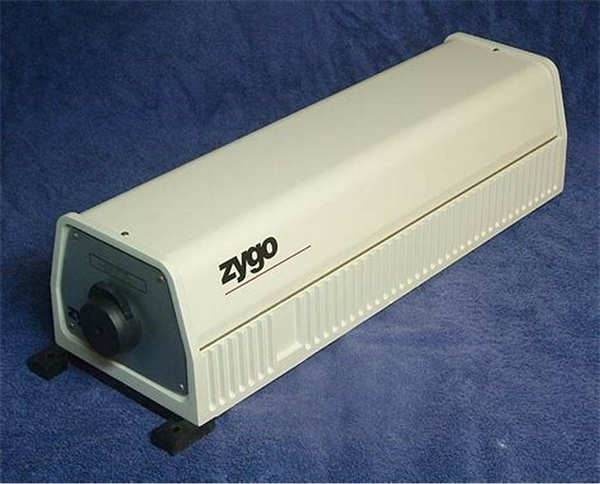
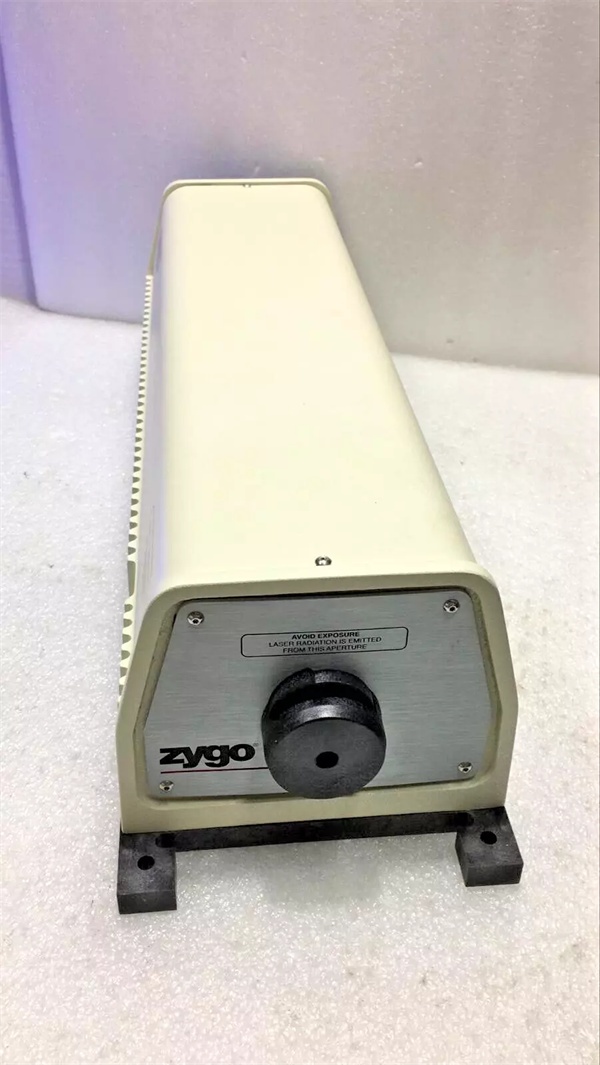
Description
Key Technical Specifications
-
Model Number: 7702 (order codes 8070-0102-05, 8070-0102-35)
-
Manufacturer: ZYGO Corporation (USA)
-
Laser Type: Helium-Neon, continuous-wave, dual-frequency
-
Wavelength: 632.8 nm
-
Output Power: 400 µW min, 1 mW max
-
Beam Diameter: 6 mm
-
Split Frequency: 20 MHz ± 1.6 kHz
-
Frequency Stability: < 0.1 ppm/h drift, < 0.01 °C/h temperature coefficient
-
Spatial Mode: TEM₀₀-like, orthogonal linear polarization
-
Beam Isolation: Internal optical isolator (30 dB typical)
-
Warm-up Time: < 10 s to beam, 25 min to full stability
-
Life Expectancy: > 20 000 h MTBR
-
Cooling: Air-cooled head; water-cooling optional for highest stability
-
Power Input: ±15 V & +5 V DC from ZMI electronics rack
-
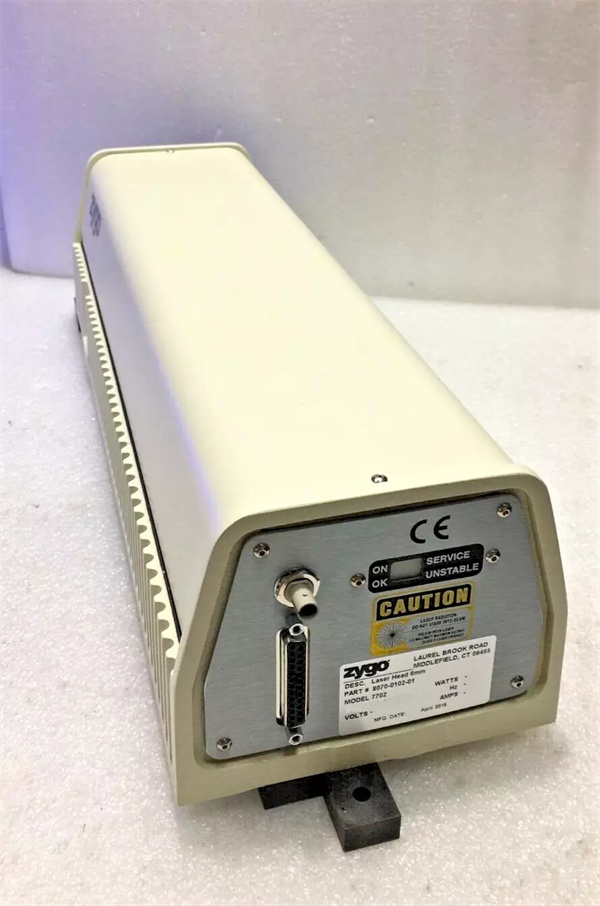
Interfaces: RF beat pick-off (BNC), interlock, temperature monitor
-
Dimensions / Weight: Head 100 × 80 × 60 mm, ≈ 0.5 kg
-
Operating Temperature: –40 °C…+70 °C head; best stability 15-30 °C

ZYGO 7702
Field Application & Problem Solved
Wafer steppers need sub-nanometer stage feedback while the floor vibrates at 50 Hz. Bolt the 7702 to the frame, run the 6 mm beam through a double-pass interferometer, and the 20 MHz beat gives you 0.31 nm resolution at 2.55 m/s when paired with a ZMI 4104 receiver. I’ve used these on 200 mm litho tracks—one laser feeds three axes, stays locked during a 0.5 g earthquake, and drifts < 5 nm over an eight-hour shift. Core value: it collapses a frequency-stabilized source, optical isolator, and RF driver into one 0.5 kg head that you can swap without re-aligning the entire metrology path.
Wafer steppers need sub-nanometer stage feedback while the floor vibrates at 50 Hz. Bolt the 7702 to the frame, run the 6 mm beam through a double-pass interferometer, and the 20 MHz beat gives you 0.31 nm resolution at 2.55 m/s when paired with a ZMI 4104 receiver. I’ve used these on 200 mm litho tracks—one laser feeds three axes, stays locked during a 0.5 g earthquake, and drifts < 5 nm over an eight-hour shift. Core value: it collapses a frequency-stabilized source, optical isolator, and RF driver into one 0.5 kg head that you can swap without re-aligning the entire metrology path.
Installation & Maintenance Pitfalls (Expert Tips)
Mode balance walks with temperature – After 25 min warm-up the X & Y polarized outputs must be within 5 % of each other; otherwise the heterodyne signal drops 20 % and you’ll chase “low MEAS” faults. Let the head cook for 30 min before you lock the final alignment .
Beam height tolerance ±1 mm – The internal isolator is wedged; tilt the head > 1° and back-reflection walks off the cavity, killing frequency stability. Shim the mount, don’t crank the bolts

Mode balance walks with temperature – After 25 min warm-up the X & Y polarized outputs must be within 5 % of each other; otherwise the heterodyne signal drops 20 % and you’ll chase “low MEAS” faults. Let the head cook for 30 min before you lock the final alignment .
Beam height tolerance ±1 mm – The internal isolator is wedged; tilt the head > 1° and back-reflection walks off the cavity, killing frequency stability. Shim the mount, don’t crank the bolts
.
RF pick-off cable length is critical – The 20 MHz beat rides on 50 Ω coax; add 2 m extra and phase shift gives false 0.1 nm steps. Use the supplied 1 m cable or trim to match the original length exactly
.
Ignore the 20 000 h hour-counter at your peril – Output drops 20 % at end-of-life; the ZMI board compensates until 0.4 mW then throws “Laser Low”. Log hours in the CMMS and order the spare at 18 000 h or you’ll discover the weakness during a production lot
ZYGO 7702
.
Technical Deep Dive & Overview
The 7702 is a dual-frequency He-Ne laser head. An internal Bragg cell splits the 632.8 nm line into two orthogonally polarized frequencies 20 MHz apart. A corner-cube cavity and active heater loop hold the cavity length to < 0.1 µm, giving frequency stability of < 0.1 ppm. The internal isolator prevents back-reflection from the interferometer from pulling the cavity; the RF pick-off mixes the two beams and delivers the 20 MHz heterodyne signal to the ZMI electronics. Air-cooling removes ~25 W of waste heat; hold the head within ±0.1 °C for ultimate stability. No user adjustments—just ±15 V and +5 V and the beat is present; lose any supply and the interlock kills the laser tube in < 1 ms to save mirror coatings
The 7702 is a dual-frequency He-Ne laser head. An internal Bragg cell splits the 632.8 nm line into two orthogonally polarized frequencies 20 MHz apart. A corner-cube cavity and active heater loop hold the cavity length to < 0.1 µm, giving frequency stability of < 0.1 ppm. The internal isolator prevents back-reflection from the interferometer from pulling the cavity; the RF pick-off mixes the two beams and delivers the 20 MHz heterodyne signal to the ZMI electronics. Air-cooling removes ~25 W of waste heat; hold the head within ±0.1 °C for ultimate stability. No user adjustments—just ±15 V and +5 V and the beat is present; lose any supply and the interlock kills the laser tube in < 1 ms to save mirror coatings
.