Operating Temperature: -40°C to +85°C (-40°F to +185°F)
Storage Temperature: -55°C to +100°C (-67°F to +212°F)
Vibration: Sine sweep 24-2000 Hz, 2.5 Gs
Shock: US MIL-STD-810C, Method 516.2, Procedure III
Max Nodes per Bus: 20 (+40°C to +85°C)
Maximum Stub Length: 600 mm (0°C to +70°C)
Weight: 900g to 1020g (varies by source)
Dimensions: Handheld portable form factor
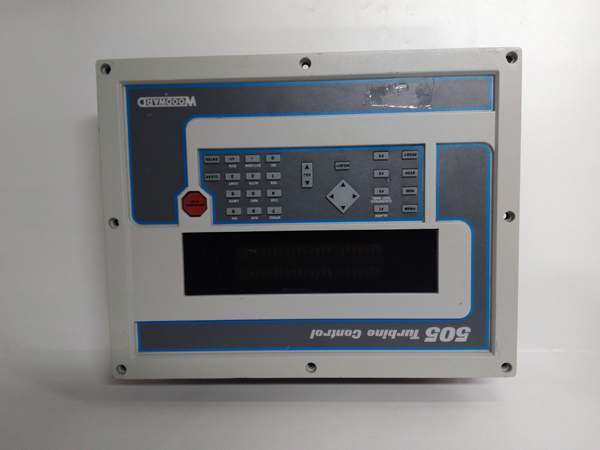
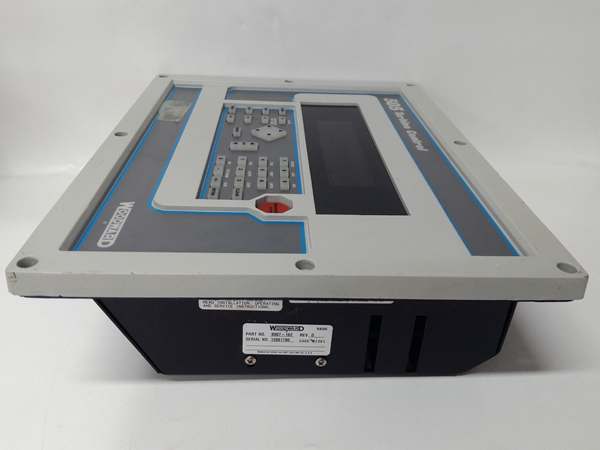
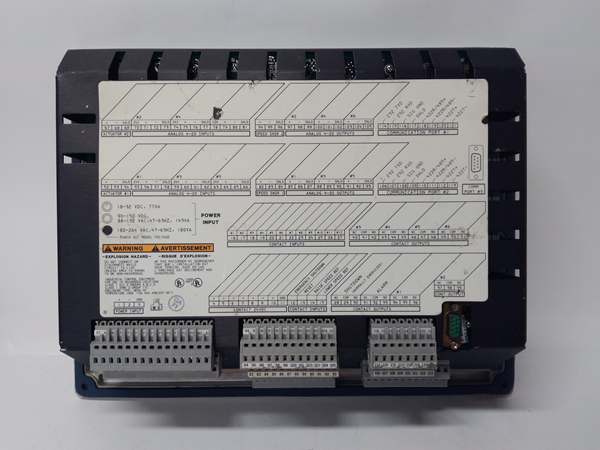
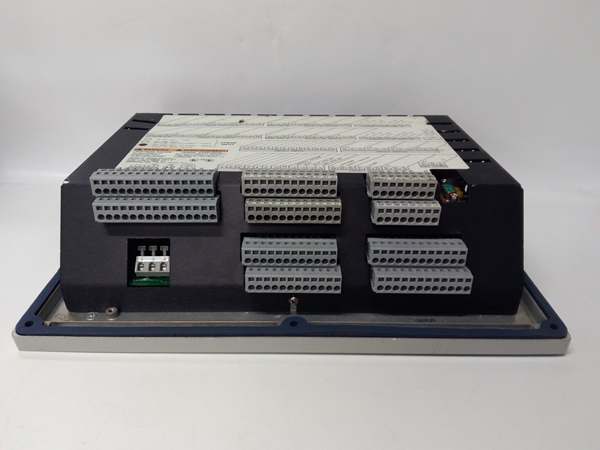
Woodward 9907-162
Field Application & Problem Solved
In the field, the biggest challenge with MSLC and DSLC synchronizer systems is configuration and troubleshooting without hauling a laptop into a cramped, hot, or hazardous switchgear room. These are sophisticated digital controls with dozens of parameters—sync windows, voltage matching tolerances, load sharing gains, ramp rates—that must be set correctly for safe paralleling. Without the 9907-205, you’re either working blind or needing to set up a laptop with specialized software in an environment where screen glare, dust, and vibration make that impractical. This handheld unit solves that by providing a rugged, portable interface that plugs directly into the MSLC/DSLC network, allowing you to read parameters, adjust settings, and diagnose faults while standing in front of the switchgear.
You will typically find this programmer in the toolboxes of field service engineers who maintain power plants, marine vessels, offshore platforms, and industrial facilities with Woodward paralleling systems. It’s used during initial commissioning to set up synchronizer parameters (voltage matching, phase angle windows, frequency bias), during maintenance to check calibration of load sharing lines, and during troubleshooting to identify why a unit won’t parallel or why load sharing is hunting between generators. The 9907-205 connects to the RS-422/RS-232 serial port on the MSLC/DSLC control (terminal J1), allowing access to all configuration menus and real-time diagnostic data.
Its core value is reducing commissioning time and eliminating the need for a laptop in the field. The four-line backlit LCD lets you view two separate functions simultaneously—toggle between them with the UP/DOWN ARROW key
. The BKSP and SPACE keys scroll through longer prompts that exceed the 18-character display width. You can set control functions and specifications before the system is powered up, monitor generator standard parameters in real-time, run diagnostics on contact switches and analog I/O ports, and perform calibration procedures—all without leaving the switchgear room. The 15 kV ESD protection and MIL-STD shock/vibration ratings mean it survives the rough handling inevitable in power plant environments.
Installation & Maintenance Pitfalls (Expert Tips)
This is a Programmer, Not a Controller—Don’t Wire It In Permanently
The most common field mistake is treating the 9907-205 as if it were part of the control system. It is not. This is a temporary service tool that plugs into the MSLC/DSLC control’s J1 communication port. I’ve seen technicians try to panel-mount this unit or wire it into the control cabinet as if it were the master controller. The 9907-205 derives power from the host control (12-40 Vdc) and is designed for intermittent use during commissioning and maintenance. Remove it when not in use—leaving it connected permanently creates a vulnerability to ESD damage and communication bus loading issues.
The “Key 49” Calibration Sequence is Not Documented on the Unit
To calibrate the remote load reference input—which is essential for proper load sharing—you must enter the Calibration menu, select Option 6, and set the key to 49
. This is not printed on the unit or in the quick-start guide. Write this on a label inside your toolbox: “Cal Menu → Option 6 → Key 49”. Without this sequence, you cannot calibrate the remote load reference, and your load sharing will drift or hunt. Many technicians spend hours troubleshooting load sharing instability when the real issue is uncalibrated remote reference inputs.
RS-422 Wiring Polarity is Critical—Check A and B
The communication cable between the 9907-205 and the MSLC/DSLC control uses differential RS-422 signaling. Reverse the A and B wires and you get no communication, or worse, intermittent communication that causes parameter corruption or display garbling. Always verify wire polarity with a multimeter before powering up. The shield should be grounded at the control end only to prevent ground loops. Use twisted pair cable with 120-ohm characteristic impedance for reliable communication over the maximum 600 mm stub length
.
Node Address Confusion on Multi-Unit Networks
When connecting to an MSLC network with multiple units (up to 20 nodes), you must select the correct network address to communicate with the target controller. A common mistake is leaving the programmer set to the wrong node address, then wondering why parameter changes aren’t taking effect on the unit you’re standing in front of. Always verify the network address of the MSLC/DSLC unit (set via hardware switches or software) and ensure your programmer is addressing that specific node. The “Max Nodes per Bus: 20” specification
means large plants can have extensive networks—know which node you’re talking to.
Power-Up Self-Test Failures Indicate Communication Problems
When you plug the 9907-205 into J1, it performs a power-up self-test. If the display remains blank or shows garbled characters, don’t assume the programmer is dead—check your RS-422 cable integrity and verify the host MSLC/DSLC control is powered and functioning. The programmer derives power from the host; if the host control has a blown fuse or dead power supply, the programmer won’t boot. The self-test validates communication integrity; if it fails, check your cable connections and polarity before blaming the handheld unit.
Firmware Version Mismatches Cause Menu Access Issues
The 9907-205 must have firmware compatible with the MSLC/DSLC control it’s configuring. Older programmers may not access all menus on newer MSLC firmware revisions, or may display incorrect parameter ranges. Check the software version displayed at power-up (press the ID key) and compare against the MSLC/DSLC control firmware revision. If you can’t access critical menus or see “????” for parameter values, you may need a firmware update for the programmer or a newer 9907-205 unit.
Woodward 9907-162
Technical Deep Dive & Overview
The Woodward 9907-205 is a handheld human-machine interface (HMI) for the MSLC (Master Synchronizer and Load Control) and DSLC (Digital Synchronizer and Load Control) systems
. It is not a governor, not a synchronizer, and not a load controller—it is strictly a service tool for configuring and monitoring those devices.
The MSLC/DSLC systems are sophisticated digital controls that manage generator paralleling, load sharing, and utility interconnection. They communicate via Echelon LonWorks networks and RS-422/RS-232 serial interfaces
, allowing multiple units to coordinate across a power plant. The 9907-205 plugs into the J1 communication port on these controls, temporarily joining the network as a configuration node.
The programmer contains an embedded microprocessor that manages the communication protocol, drives the four-line backlit LCD display, and scans the 30-key keypad
. It draws power from the host MSLC/DSLC control (12-40 Vdc, 18 W burden)
, eliminating the need for batteries or external power supplies in the field. The display permits viewing two separate functions simultaneously—use the UP/DOWN ARROW key to toggle between displayed items, and BKSP/SPACE to scroll through prompts longer than 18 characters
.
From an operational perspective, the 9907-205 provides access to all MSLC/DSLC configuration menus: synchronizer settings (voltage matching, phase angle windows, frequency bias), load control parameters (ramp rates, load sharing gains, import/export limits), VAR/PF control settings, and system configuration (PT/CT ratios, network addressing). The Service menus allow parameter adjustment while the engine is running; the Configure menus require I/O shutdown (engine stopped) for safety-critical changes .
The 15 kV ESD protection , MIL-STD shock/vibration ratings
, and -40°C to +85°C operating range make this suitable for field service work in harsh industrial environments. The 600 mm maximum stub length
refers to the communication cable from the main network bus to the programmer—exceeding this causes signal reflections and communication errors.