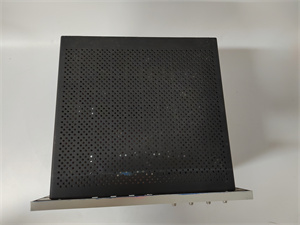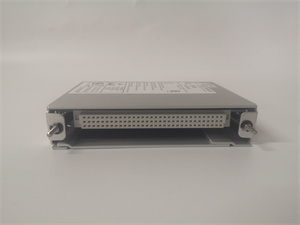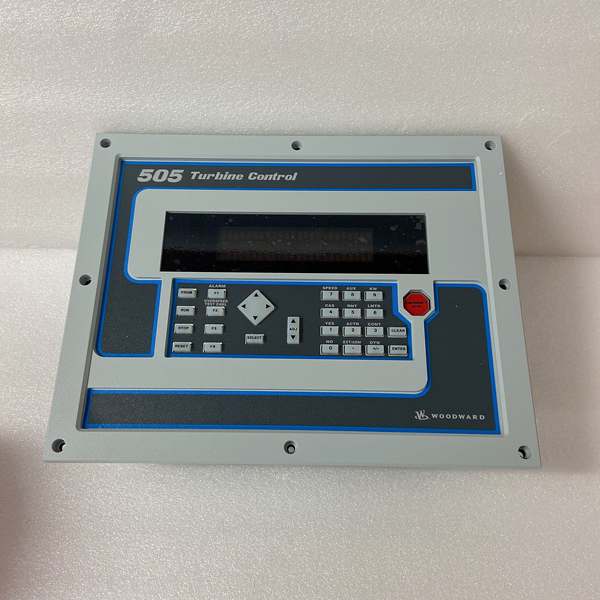
Description
Hard Numbers: Technical Specifications
- Power Supply: 115/230 VAC (95–130 VAC or 190–260 VAC), 50–400 Hz
- Power Consumption: Approx. 5 W to 10 W
- CT Inputs (Current Transformers): 3-phase, 3–7 Arms at full load
- PT Inputs (Potential Transformers): 3-phase, 100–240 VAC line-to-line
- Analog Output to Governor: ±3 VDC (Isochronous Load Sharing signal)
- Droop Adjustment Range: 0–10% speed reduction
- Operating Temperature: –40°C to +60°C (–40°F to +140°F)
- Humidity: Up to 95% RH (non-condensing)
- Shock Resistance: 40 G
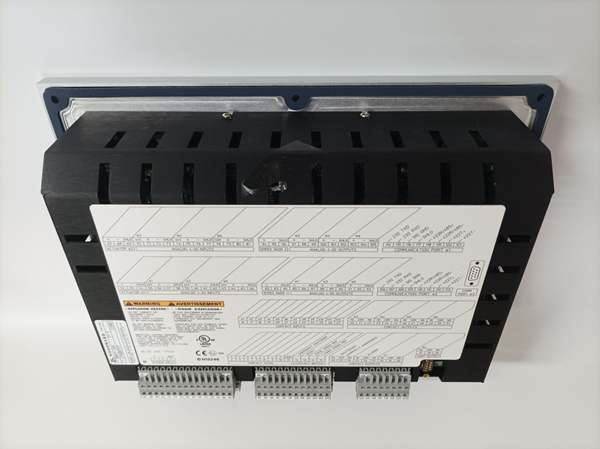
- Mounting: Panel-mounted
- Dimensions: 273.6 mm × 59.2 mm × 214.1 mm
- Weight: 2.5 kg
- Environmental Rating: IP54 (when properly installed in an enclosure)
The Real-World Problem It Solves
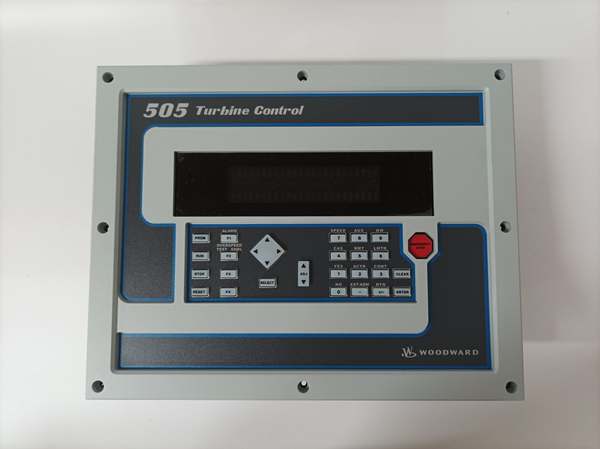
When you strap multiple generator sets or industrial turbines together in parallel, they naturally fight each other. Without precise load sharing, one unit might hog the entire electrical load while another freewheels, leading to catastrophic overspeed or premature engine wear. The 9907-173 acts as the ultimate peacekeeper. It continuously samples the true RMS power output of its assigned prime mover and outputs a highly accurate correction signal. This ensures that whether you have 2 generators or 32 running in parallel, the workload is distributed exactly according to each unit’s capacity .
Where you’ll typically find it:
- In the heart of a powerhouse control panel, bridging the gap between the generator output and the Woodward 2301D or 505 governor.
- On marine vessels, ensuring main propulsion engines share torque evenly without damaging the reduction gear.
- Retrofitted into legacy systems to replace outdated, drifting analog load分享 controllers, bringing digital precision to older hardware .
Hardware Architecture & Under-the-Hood Logic
The 9907-173 is a sophisticated blend of analog conditioning and digital processing designed for one primary goal: mathematical perfection in load distribution.
- True RMS Calculation: The module takes high-resolution samples from the generator’s PTs (Voltage) and CTs (Current). It performs a real-time Root Mean Square calculation to determine the actual wattage being produced, filtering out harmonic distortion that would fool lesser controllers.
- Error Amplification & Droop Control: The module compares the calculated load against the desired setpoint. If the unit is carrying more than its fair share, the internal circuitry adjusts the output voltage (the ±3 VDC signal) to command the governor to back off the fuel rack. The built-in Droop adjustment allows operators to intentionally let the speed drop slightly as load increases, which is critical for stable load sharing in islanded grids .
- Multi-Unit Networking: The module communicates seamlessly with Woodward synchronizers (like the SPM-A or SPM-D). This coordination ensures that as new generators are brought online, the 9907-173 dynamically adjusts its output so the transition is invisible to the connected load .
Field Service Pitfalls: What Rookies Get Wrong
Blowing the Input Circuits with Incorrect PT Wiring
Rookies often assume that because the CT inputs can handle up to 7 Amps, the PT inputs are equally robust. They accidentally feed 480V line-to-line into terminals rated for a maximum of 264VAC. The result is an immediate pop of the internal sensing resistors, rendering the module blind to voltage changes.
- Field Rule: Always verify your transformer ratios before energizing. If you are stepping down voltage using external PTs, double-check your wiring with a voltmeter beforeconnecting it to the 9907-173. If the module is already fried, check for burnt traces near the PT input terminals.
Creating a “Fighting” System via Improper Droop Settings
When generators are operating in parallel, they need a reference point to share the load. Rookies often set the droop adjustment to 0% (isochronous) on all units. While this sounds ideal, even a microscopic difference in the governor’s speed sensor calibration will cause the generators to continuously hunt and fight for dominance.
- Quick Fix: For stable parallel operation, introduce a slight artificial droop (typically 3% to 5%). This softens the load curve, forcing the generators to naturally settle into their respective load bands without constant governor tweaking. Adjust the potentiometer in small increments while watching the kW output on your main breakers .
Ignoring CT Polarity and Causing Reverse Power Flow
During commissioning, rookies rush the CT wiring and ignore the polarity marks (P1/P2 or S1/S2). When the generator picks up a load, the 9907-173 sees a massive negative power value. It frantically commands the governor to reduce fuel, which can cause the generator to motor (act as a synchronous motor) and draw power from the grid instead of producing it.
- Field Rule: Before closing the main breaker, perform a “flash test.” Briefly apply a small resistive load (like a bank of lights or a space heater) to the generator bus while it’s unloaded. If the 9907-173 reports negative kW, simply swap the S1 and S2 terminals at the module. Do not attempt to fix this by changing the speed control wiring, as it will only mask the underlying phasing issue .
Commercial Availability & Pricing Note
Please note: The listed price is for reference only and is not binding. Final pricing and terms are subject to negotiation based on current market conditions and availability.