Description
9907-164: Product Overview
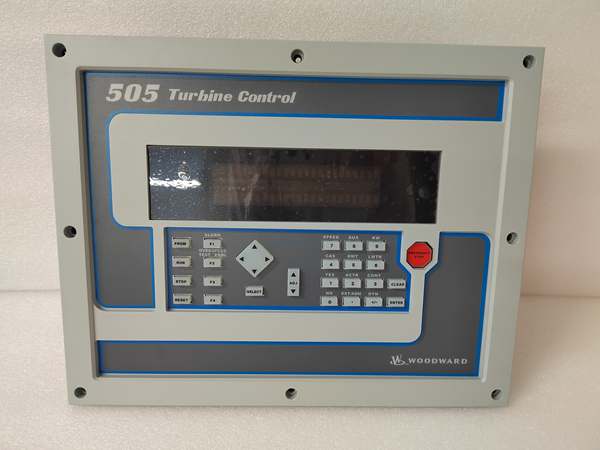
The 9907-164 serves as a dedicated digital governor controller within Woodward’s 505 series, specifically engineered for the control and protection of single-valve industrial steam turbines. In the hierarchy of turbine control systems, this unit occupies the critical position of prime mover governor—responsible for maintaining turbine speed, managing load distribution, and executing protective functions that prevent mechanical damage to rotating equipment.
Positioned typically in turbine control panels or local control stations, the 9907-164 operates as a standalone control unit requiring only 24 VDC power and appropriate I/O connections to implement complete turbine control. Its microprocessor architecture replaces traditional mechanical-hydraulic governors or analog electronic controllers, providing software-configurable control algorithms, self-diagnostic capabilities, and communication interfaces that integrate with plant distributed control systems (DCS) or supervisory control and data acquisition (SCADA) networks.
The controller’s primary role encompasses three fundamental functions: speed regulation, load control, and equipment protection. For speed control, the unit accepts magnetic pickup or proximity probe signals indicating turbine rotor speed, compares these against operator-set speed references, and modulates steam valve position through integrated actuator drivers to maintain precise speed regulation. In generator applications, isochronous load sharing algorithms allow multiple turbines to maintain grid frequency while sharing load proportionally. For mechanical drive applications (compressors, pumps, fans), the controller maintains process-variable setpoints through speed adjustment.
Protection functions include overspeed detection with emergency trip output, critical speed avoidance during acceleration, and alarm annunciation for abnormal operating conditions. The integrated event recorder captures pre-trip and post-trip data, aiding root-cause analysis of turbine trips or process upsets. These protection features operate independently of the control algorithms, ensuring safety function integrity even during control system faults.
As part of the 505 series ecosystem, the 9907-164 benefits from Woodward’s extensive application experience in turbine control. The menu-driven configuration software, accessible through the front-panel keypad and display, allows field engineers to adjust PID tuning parameters, configure I/O assignments, and modify control logic without specialized programming tools or laptop computers. This configurability reduces commissioning time and allows control strategy optimization without hardware modifications.

WOODWARD 9907-164
9907-164: Technical Specifications
-
Model Number: 9907-164
-
Manufacturer: Woodward Inc.
-
Product Type: Digital Governor Controller
-
Series: Woodward 505/505E Series
-
Application: Single-valve steam turbine control and protection
-
Input Power: +24 VDC, 1 A nominal
-
Processor: 16-bit or 32-bit microprocessor (embedded)
-
Speed Input: Magnetic pickup or proximity probe (passive or active), 1-30 VAC or 0.5-30 VDC
-
Speed Range: 100-50,000 RPM (configurable)
-
Speed Signal Resolution: 0.01% of rated speed
-
Analog Inputs: 6 channels, 4-20 mA, 250 Ω input impedance, 12-bit resolution
-
Discrete Inputs: 16 channels, 24 VDC dry contact or solid-state compatible (4 dedicated, 12 programmable)
-
Actuator Outputs: 2 channels, 4-20 mA or 0-20 mA, 500 Ω maximum load, for single or split-range actuator configurations
-
Analog Outputs: 6 channels, 4-20 mA, 750 Ω maximum load, configurable for indication or control
-
Relay Outputs: 8 channels, Form C (SPDT), 5 A @ 250 VAC/30 VDC resistive, programmable for alarms, trips, or status
-
Communication Ports: RS-232 (service/modem), RS-422/RS-485 (Modbus RTU slave), optional Ethernet (Modbus TCP)
-
Display: 2-line × 24-character vacuum fluorescent or LED display
-
Keypad: 30-key membrane keypad with dedicated function keys
-
Configuration: Menu-driven via front panel or Woodward 505View/OpView software
-
Control Algorithms: PID with velocity limiting, droop/isochronous load sharing, critical speed avoidance, valve limiting
-
Event Recorder: 100-event capacity with pre-trip and post-trip data logging
-
Operating Temperature: -20°C to +60°C (-4°F to +140°F)
-
Storage Temperature: -40°C to +85°C (-40°F to +185°F)
-
Humidity: 95% RH non-condensing at 20°C to 55°C
-
Enclosure Rating: IP56 (front panel), NEMA 4X optional with bulkhead mounting kit
-
Vibration: 1.0 G, 5-2000 Hz per IEC 60068-2-6
-
Shock: 15 G, 11 ms half-sine per IEC 60068-2-27
-
EMC: IEC 61000-4-2 (ESD), IEC 61000-4-4 (EFT), IEC 61000-4-5 (surge)
-
Dimensions: 14″ W × 11″ H × 4″ D (355.6 mm × 279.4 mm × 101.6 mm) approximate panel cutout
-
Weight: 9.11 lbs (4.13 kg)
-
Certifications: CE, UL, cUL, CSA (typical for Woodward 505 series)
Core Features & Customer Value
Integrated Control and Protection in Single Unit: The 9907-164 consolidates functions traditionally requiring multiple separate devices—governor controller, overspeed protection system, and alarm annunciator—into one microprocessor-based unit. This integration reduces panel wiring, eliminates inter-device communication failures, and provides coordinated control/protection action through a unified software architecture. For small steam turbine applications, this consolidation significantly reduces overall system cost while maintaining functionality comparable to larger, more complex control systems.
Menu-Driven Configuration Without Specialized Tools: Unlike PLC-based turbine controls requiring ladder logic programming or proprietary software, the 9907-164 configures entirely through front-panel menus or standard PC software. Field engineers can modify speed setpoints, adjust PID gains, reassign I/O points, and configure alarm limits using the built-in keypad and display. This accessibility reduces dependence on specialized control system engineers for routine maintenance or control strategy adjustments, lowering lifecycle support costs for facilities with limited technical staff.
Critical Speed Avoidance and Automatic Sequencing: Steam turbines exhibit mechanical resonance at specific rotational speeds where vibration amplification can cause bearing damage or shaft failure. The controller’s critical speed avoidance function automatically accelerates turbines through these resonance zones without operator intervention, pausing acceleration below critical speed, then ramping quickly through the danger zone to stable operating speed. Automatic start sequencing manages warm-up periods, speed hold points, and load application, ensuring consistent, safe turbine operation regardless of operator experience level.
Comprehensive Event Recording for Diagnostics: The 100-event recorder captures time-stamped data for speed, load, valve position, and alarm states before and after turbine trips. This forensic capability transforms troubleshooting from speculative guesswork to data-driven analysis—engineers can review exact sequence of events leading to trips, identify whether root cause was process upset, mechanical failure, or control system malfunction, and implement targeted corrective actions. The recorder operates independently of controller operation, ensuring data preservation even during controller power loss.
Flexible Actuator Control for Retrofit Applications: The dual actuator outputs support both single-acting and split-range actuator configurations, accommodating steam valves with mechanical staging or hydraulic relay systems. This flexibility allows the 9907-164 to retrofit existing turbines with minimal mechanical modification—engineers can retain existing valve actuators and steam chest configurations while replacing obsolete mechanical governors or early electronic controls. The 4-20 mA output standard interfaces with modern electro-hydraulic actuators or positions existing pneumatic actuators through I/P converters.
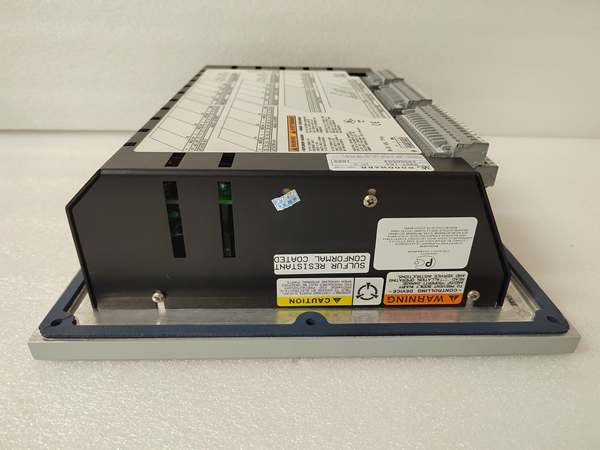
WOODWARD 9907-164
Typical Applications
Small Industrial Steam Turbine-Driven Generators: In cogeneration facilities and small power plants (1-20 MW), the 9907-164 controls single-stage steam turbines driving synchronous generators. The isochronous mode maintains constant 50/60 Hz frequency during isolated operation, while droop mode enables stable parallel operation with utility grids or other generators. Integrated load control accepts dispatch setpoints from plant DCS systems, adjusting turbine inlet valves to maintain power output matching plant demand. Overspeed protection provides SIL-capable safety function independent of control algorithms.
Mechanical Drive Steam Turbines for Pumps and Compressors: Petrochemical facilities and refineries utilize the controller for steam turbines driving boiler feedwater pumps, process compressors, and cooling water pumps. In these applications, the controller maintains process variable setpoints (suction pressure, discharge pressure, flow rate) through speed adjustment, replacing throttle valves with more efficient variable-speed operation. The critical speed avoidance function proves essential for multi-stage pumps where operating near mechanical resonance causes seal failure and bearing damage.
Paper Machine Steam Turbine Drives: Paper mills employ the 9907-164 for steam turbines driving paper machine sections (wire, press, dryer) and pulp mill refiners. The controller’s fast speed response accommodates sheet break recovery—when paper breaks, the controller quickly reduces speed to threading velocity, then accelerates back to production speed once the break is cleared. Valve limiting functions prevent steam overload of turbine casings during cold starts, protecting against thermal shock and differential expansion damage.
Turbine Retrofit and Upgrade Projects: Facilities with aging mechanical governors (Woodward PG, UG-8, or competitive units) utilize the 9907-164 for control system modernization without turbine replacement. The controller mounts in existing control panels, connects to existing magnetic pickups and actuators, and provides modern control capabilities—DCS interface, remote monitoring, and predictive maintenance data—while preserving the mechanical turbine investment. This retrofit approach extends turbine life decades while improving reliability and operational flexibility.