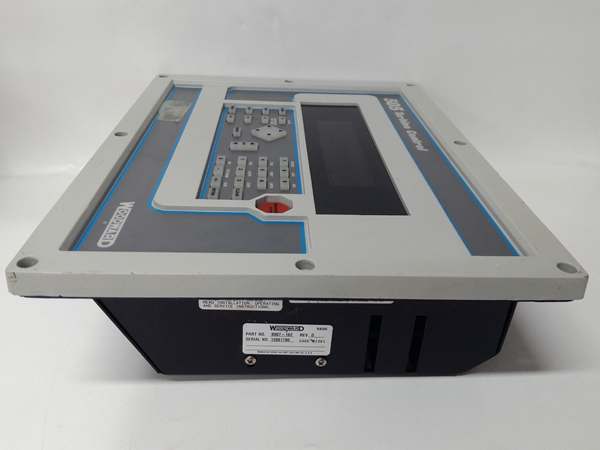
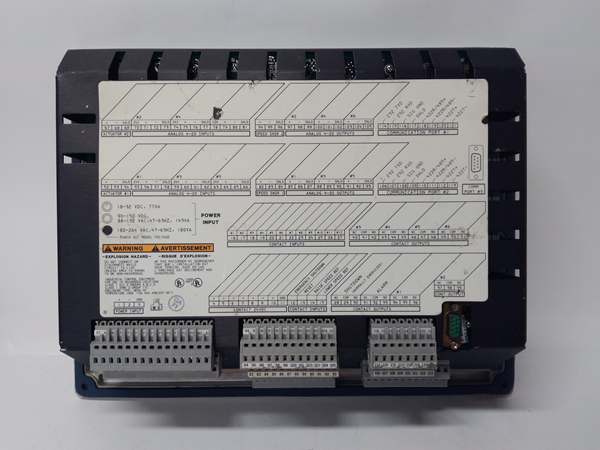
Description
Key Technical Specifications
-
Model Number: 9907-162
-
Manufacturer: Woodward Inc.
-
Product Family: 505/505E Digital Governor Series
-
Power Supply: +24 Vdc at 1 A (primary); 18-32 Vdc range
-
Power Consumption: 360W (max output)
-
Control Type: Microprocessor-based digital control with PID and advanced algorithms
-
Actuator Outputs: 2 channels (supports single or split-stage actuators)
-
Relay Outputs: 8 relay outputs
-
Programmable Current Outputs: 6 channels (4-20 mA)
-
Analog Inputs: 8 channels
-
Analog Outputs: 6 channels
-
Digital Inputs: 16 channels
-
Digital Outputs: 8 channels
-
Speed Sensing: Magnetic pickup or proximity probe, 0-20,000 RPM range
-
Speed Control Accuracy: ±0.25%
-
Load Control Accuracy: ±1%
-
Response Time: <10 ms
-
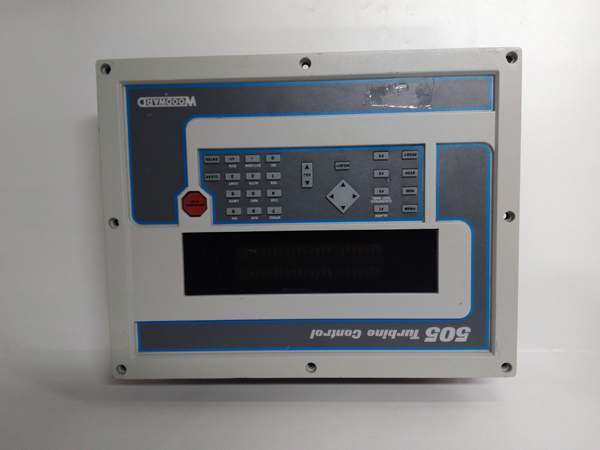
Display: Two-line × 24-character LED display
-
Keypad: 30-key multifunction keypad for field programming
-
Communication Ports: RS-232, RS-422, RS-485
; Modbus protocol
-
Software: OpView™, 505View™
-
Operating Temperature: -20°C to +60°C (standard); -40°C to +85°C (extended)
-
Storage Temperature: -40°C to +85°C
-
Enclosure: NEMA Type 4X or IEC 60529 IP56 (optional); IP30 (standard)
-
Dimensions: 11″ × 14″ × 4″ (279 × 356 × 102 mm)
; or 279 × 203 × 89 mm
-
Weight: 9.11 lbs (4.13 kg) / 4.5 kg
-
Vibration: 0.5g, 10-500 Hz; or 5g peak-to-peak, 20-500 Hz
-
Shock: 5g @ 11ms; or 50g @ 11ms half-sine
-
Turbine Power Range: 0.5 MW to 30 MW
-
Special Features: Emergency stop button, overspeed test button, critical speed avoidance (3 bands), auto-start sequence

Woodward 9907-162
Field Application & Problem Solved
You will typically find this controller in industrial cogeneration plants, paper mill power houses, chemical process steam systems, and district heating applications where steam turbines drive generators, compressors, or pumps. It’s specifically designed for single extraction and/or admission steam turbines
—machines that bleed steam at intermediate pressures for process use while continuing to generate power from the exhaust. The 9907-162 controls these using split-stage actuators
—one actuator for the inlet valves, another for the extraction valves, coordinated by internal algorithms to maintain stable operation across varying process demands.
Its core value is replacing obsolete mechanical-hydraulic governors (like the Woodward TG or PG) with digital precision while maintaining the reliability of discrete analog controls. The field-programmable capability
is critical—technicians can configure control logic, tune PID parameters, and set protection limits using the front-panel keypad and display, without needing a laptop or specialized software. Though 505View software is available for complex configurations, most commissioning can be done standing in front of the panel. The critical speed avoidance feature
protects the turbine from resonant vibration damage by ramping quickly through dangerous speed bands, and the overspeed test button
allows periodic safety system verification without external test equipment.
Installation & Maintenance Pitfalls (Expert Tips)
The 9907-162 provides three critical speed avoidance bands
, but they’re only effective if set correctly for your specific turbine rotor. Setting them too narrow misses the actual critical speed; too wide unnecessarily restricts operating range. Consult the turbine manufacturer’s rotor dynamics report to identify the actual critical speeds (typically 1st and 2nd bending modes), then set the avoidance bands ±10% around these values. Never disable critical speed avoidance to “solve” a ramp problem—this risks catastrophic rotor damage from resonance.
The 9907-162 uses 505View or OpView software
for PC-based configuration. A common pitfall is using an outdated software version to upload a configuration, then downloading to a controller with newer firmware. This can corrupt the control map or reset parameters to defaults. Always verify software version against controller firmware revision before connecting. Save the original configuration file before any modifications, and maintain version control—label files with date, turbine ID, and software revision.
For split-stage actuators, the 9907-162 uses split-range calibration—Actuator #1 handles 0-50% demand, Actuator #2 handles 50-100%, with overlap to prevent dead zones. If the calibration is linear but the valve flow characteristics are non-linear (typical for globe valves), you get unstable control at the transition point. Use the valve characterization curves from the turbine OEM to set non-linear gain scheduling in the 9907-162. This requires accessing the advanced tuning menus—don’t attempt this without understanding the turbine’s heat balance.
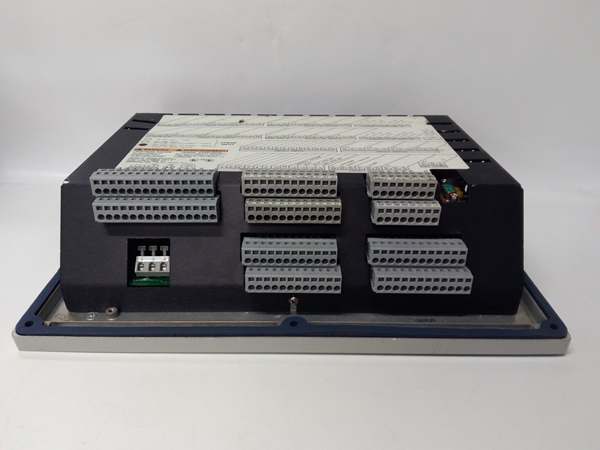
Woodward 9907-162
Technical Deep Dive & Overview
The Woodward 9907-162 is a microprocessor-based digital governor from the 505/505E series, representing Woodward’s standard off-the-shelf platform for industrial steam turbine control
. Unlike the 2301A series (which is analog and designed for reciprocating engines/generators), the 9907-162 is a fully digital architecture with software-configurable control algorithms, designed specifically for the complex dynamics of steam turbines.
The field-programmable capability
distinguishes the 9907-162 from custom-programmed turbine controls. The 30-key front panel keypad and 2-line × 24-character LED display
provide direct access to all configuration parameters, alarm setpoints, and tuning constants. Technicians can modify PID gains, change control modes (speed, load, pressure, extraction), and configure protection limits without external software. However, for complex configurations or backup/restore operations, the 505View™ or OpView™ software
connects via RS-232/422/485 ports
, providing a PC-based interface for parameter editing, trending, and event logging.
The 9907-162 includes critical speed avoidance logic
with three programmable bands. When accelerating through a critical speed band, the control ramps quickly to minimize dwell time at resonant frequencies. The overspeed test function
allows periodic verification of the electronic overspeed trip by simulating overspeed conditions without actually exceeding mechanical limits. The emergency stop button
provides immediate hardware trip of the turbine, bypassing all control logic.
Communication capabilities include Modbus RTU/ASCII
over serial ports, allowing integration with plant DCS or SCADA systems for remote monitoring and setpoint adjustment. The control can transmit speed, load, valve positions, and alarm status to a central control room, though critical protection functions (overspeed, vibration, temperature) remain hardwired for safety.
The NEMA 4X/IP56 enclosure option
provides protection against dust and water ingress for harsh industrial environments, though it limits heat dissipation and may require derating in high-temperature locations. The standard IP30 enclosure
is suitable for clean control rooms but requires separate protection in dirty or wet environments.