Description
9907-147: Product Overview
The 9907-147 functions as a dedicated safety instrumented system (SIS) within Woodward’s ProTech 203 series, specifically engineered to prevent catastrophic damage to gas turbines, steam turbines, compressors, and other high-speed rotating machinery from overspeed events. In the protection system hierarchy, this unit represents the primary safety layer—the final defense against mechanical failure when speed control systems malfunction or load is suddenly lost.
Positioned typically in turbine control panels or skid-mounted enclosures, the 9907-147 operates as a standalone protection device requiring only 24 VDC power and magnetic pickup speed signals to implement complete overspeed protection. Its microprocessor-based architecture continuously monitors turbine rotor speed through three independent magnetic pickup (MPU) sensors, executing 2-out-of-3 voting logic to ensure that a single sensor failure cannot cause either a spurious trip or a failure to trip. This redundancy architecture aligns with SIL (Safety Integrity Level) requirements for critical machinery protection.
The module’s primary role is speed monitoring and emergency trip execution. Each of the three speed-sensing units processes MPU signals to calculate rotational speed, comparing measured values against configurable trip setpoints (typically 110-115% of rated speed). When two of three channels confirm an overspeed condition, or when signal loss indicates sensor failure in a 2-out-of-2 configuration, the unit immediately de-energizes its trip relays to initiate emergency shutdown. The de-energize-to-trip (DET) logic ensures that loss of control power, internal faults, or wiring failures result in a safe (tripped) state rather than a dangerous failure mode.
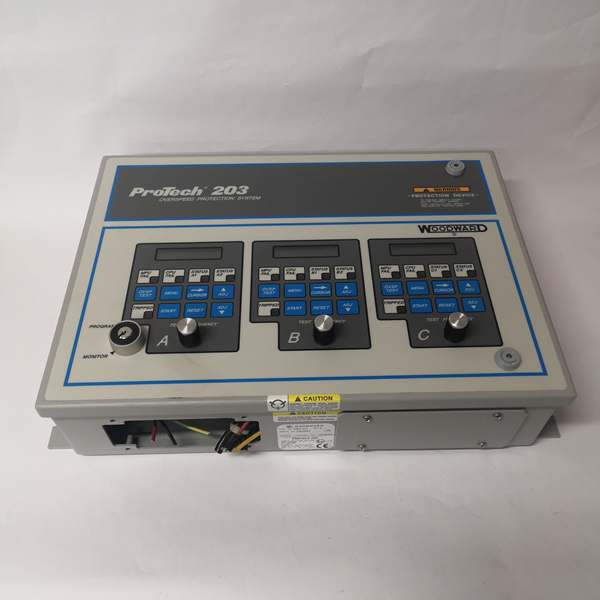
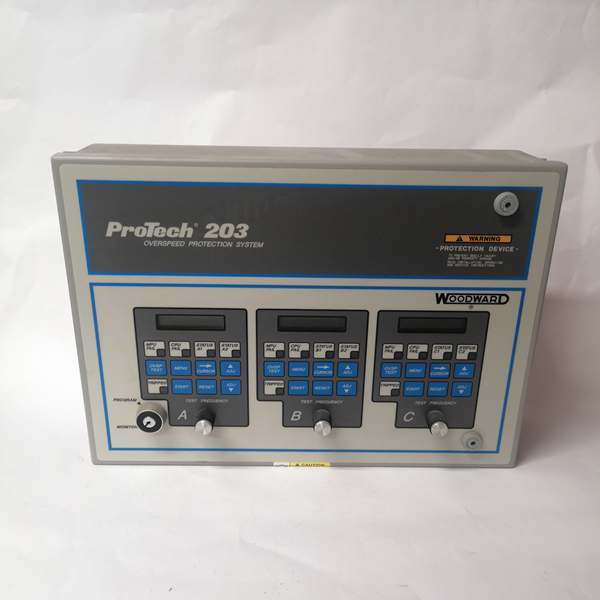
As part of the ProTech 203 platform, the 9907-147 benefits from Woodward’s extensive experience in turbine protection. Each speed-sensing unit includes a dedicated two-line × 16-character LCD display and touchpad for local monitoring and configuration. The lockable enclosure prevents unauthorized modification of safety settings, while the wide -25°C to +60°C operating range permits installation in industrial environments without additional climate control.

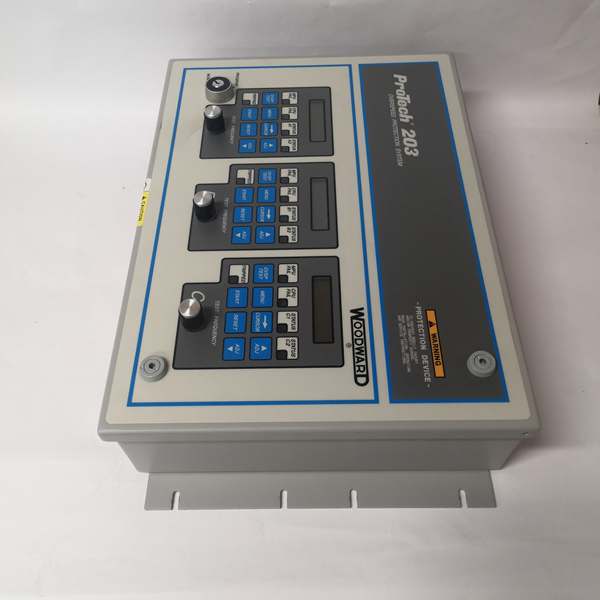
WOODWARD 9907-147
9907-147: Technical Specifications
-
Model Number: 9907-147
-
Manufacturer: Woodward Inc.
-
Product Type: ProTech 203 Overspeed Protection System
-
System Family: Woodward ProTech 203 Series
-
Function: Digital overspeed protection and emergency trip initiation
-
Input Power: 24 VDC, auto-ranging
-
Power Consumption: <50 W typical
-
Speed Sensing: Triple-redundant magnetic pickup (MPU) inputs
-
MPU Input Range: 1-30 VAC or 0.5-30 VDC, 100 Hz to 32 kHz frequency range
-
Speed Calculation: Microprocessor-based with digital filtering
-
Trip Logic: 2-out-of-3 voting (configurable to 2-out-of-2)
-
Trip Setpoint Range: 100-200% of rated speed (configurable)
-
Trip Accuracy: ±(0.05% × Trip Point in Hz + 2 Hz)
-
Trip-Point Frequency Range: 250 Hz to 25 kHz
-
Trip Response Time: <40 ms from speed exceedance to relay operation
-
Trip Relay Outputs: 6 independent Form C (SPDT) relays, de-energize-to-trip
-
Relay Contact Rating: 5 A @ 250 VAC/30 VDC resistive
-
Relay Configuration: 3 trip relays (main, auxiliary, spare), 3 status relays
-
Analog Output: 4-20 mA speed signal for external indication
-
Discrete Inputs: Start/reset, test enable, remote trip
-
Discrete Outputs: Alarm, status, relay driver signals
-
Communication: RS-232/RS-485 for configuration and monitoring (optional)
-
Display: Three LCDs, each with 2 lines × 16 characters
-
Keypad: Touchpad interface per speed-sensing unit
-
Configuration: Front panel or Woodward ProTech software
-
Event Recording: 100-event buffer with timestamp and speed data
-
Self-Diagnostics: Continuous monitoring of MPU health, relay status, processor integrity
-
Enclosure: Lockable, IP54/NEMA 4 rated
-
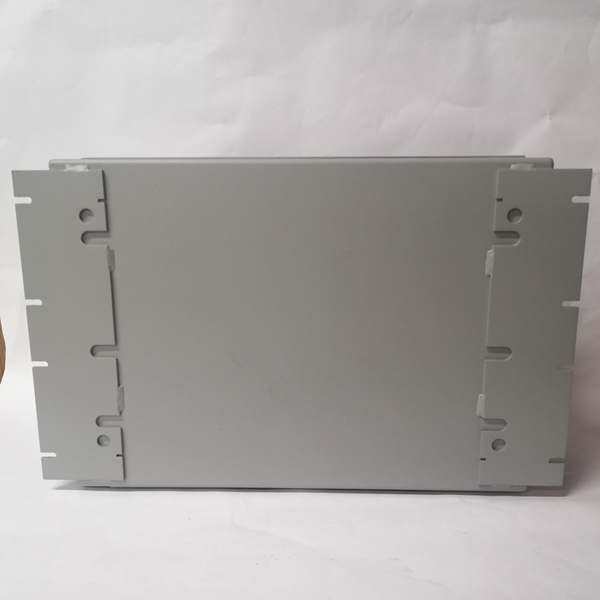
Mounting: Panel mount or 19″ rack mount
-
Operating Temperature: -25°C to +60°C (-13°F to +140°F) display; -40°C to +70°C internal
-
Storage Temperature: -40°C to +85°C (-40°F to +185°F)
-
Relative Humidity: 5% to 95%, non-condensing
-
Vibration Resistance: 1.0 G, 5-2000 Hz per IEC 60068-2-6
-
Shock Resistance: 15 G, 11 ms half-sine per IEC 60068-2-27
-
EMC Compliance: IEC 61000-4-2 (ESD), IEC 61000-4-4 (EFT), IEC 61000-4-5 (surge)
-
Dimensions: 482.6 mm W × 310.4 mm H × 142.7 mm D (19.0″ × 12.2″ × 5.6″)
-
Weight: 6.2 kg (13.7 lbs)
-
Certifications: CE, UL, cUL, CSA, TÜV SIL-capable
-
Manual Reference: Woodward Manual 85205
Core Features & Customer Value
Triple-Redundant Speed Sensing with 2-out-of-3 Voting: The 9907-147’s three independent MPU channels eliminate single points of failure in the speed measurement path. Unlike single-channel overspeed devices that can fail dangerously (fail to trip) or cause spurious shutdowns (nuisance trips), the 2-out-of-3 voting logic requires two channels to confirm overspeed before tripping, while any two channels can maintain protection if one fails. This architecture achieves the high safety availability and low spurious trip rates required for critical turbomachinery in power generation and petrochemical applications. For insurance and regulatory compliance, this design supports SIL 2 and SIL 3 safety integrity levels when properly integrated into the overall SIS architecture.
Individual Displays for Each Sensing Unit: Unlike monolithic protection systems with a single display, the 9907-147 provides three independent LCD displays—one per speed-sensing unit. This design allows operators to compare speed readings from each channel in real-time, immediately identifying sensor drift or discrepancies that might indicate impending failure. During commissioning, engineers can verify proper MPU gap settings and signal quality per channel without switching between menu screens. The independent displays also improve diagnostic clarity during fault conditions, showing exactly which channel detected the overspeed or fault condition.
De-Energize-to-Trip Fail-Safe Design: The module’s de-energize-to-trip logic ensures that any loss of control power, internal processor fault, or wiring failure results in immediate turbine trip. In DET systems, relays are normally energized during operation; loss of power causes spring-return contacts to open the trip circuit. This philosophy contrasts with energize-to-trip (ETT) systems where loss of power could prevent protective action. For rotating equipment where overspeed can result in rotor burst, projectile damage, and personnel injury, the DET approach provides inherent safety that aligns with API 670 and ISO 10494 standards for overspeed protection.
High Accuracy for Precise Protection: The ±(0.05% × Trip Point + 2 Hz) accuracy specification allows precise setting of overspeed trip points close to rated speed without risk of nuisance trips. This precision enables operators to maximize turbine operating speed for efficiency while maintaining adequate safety margin. The 250 Hz to 25 kHz trip-point range accommodates turbines from large, slow-speed steam turbines (1800 RPM, 60 Hz) to high-speed gas turbines (15,000+ RPM) and expanders.
Lockable Enclosure for Safety Security: The IP54-rated, key-lockable enclosure prevents unauthorized or accidental modification of trip setpoints and configuration parameters. Only personnel with physical keys can switch between PROGRAM and MONITOR modes, ensuring that safety settings cannot be altered during operation or by untrained personnel. This physical security complements cybersecurity measures for electronic safety systems, addressing both inadvertent changes and deliberate tampering.
WOODWARD 9907-147
Typical Applications
Industrial Gas Turbine Protection: In power generation, oil and gas, and mechanical drive applications, the 9907-147 protects gas turbines from overspeed following generator breaker opening, compressor surge, or load coupling failure. The triple-redundant MPU configuration handles the high reliability requirements of continuous-process plants where spurious trips cost millions in lost production. The module’s fast response protects aeroderivative turbines with high power-to-weight ratios and rapid acceleration characteristics.
Steam Turbine Overspeed Protection: Power plant steam turbines—both utility-scale and industrial cogeneration units—utilize the 9907-147 as the primary or backup overspeed protection device. The 250 Hz minimum frequency accommodates large, slow-speed turbines (1800/1500 RPM) while the 25 kHz maximum covers high-speed applications. The de-energize-to-trip logic ensures safe shutdown during station power disturbances common in grid-connected plants.
Compressor and Expander Protection: Centrifugal and axial compressors in natural gas transmission, petrochemical processing, and air separation plants employ the 9907-147 to prevent overspeed during load rejection or anti-surge valve failure. The module’s analog speed output (4-20 mA) feeds plant DCS systems for operational speed monitoring while the independent trip relays provide safety-function isolation from process control systems.
Marine and Offshore Turbine Applications: Shipboard propulsion turbines and offshore platform power generation utilize the 9907-147 for machinery protection in harsh environments. The IP54 enclosure withstands salt spray, humidity, and vibration without additional protection. The wide temperature range accommodates engine room installations with minimal climate control.
Emergency Diesel Generator Protection: Nuclear power plants and critical facilities employ the 9907-147 for emergency diesel generator (EDG) overspeed protection. The SIL-capable design supports nuclear safety system requirements, while the 24 VDC operation integrates with standard station battery systems. Forced-guided relays provide the diagnostic coverage required for periodic safety system testing.