Description
9905-990: Product Overview
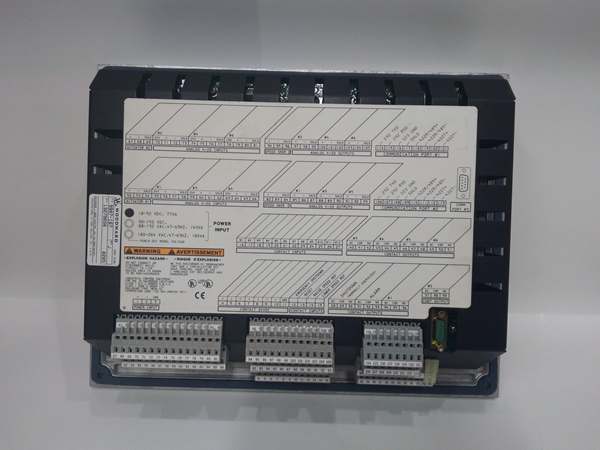
The 9905-990 functions as the critical output stage within Woodward’s ProTech GII overspeed protection system, specifically engineered to execute emergency shutdown commands for gas turbines, steam turbines, compressors, and other high-speed rotating machinery. In the safety instrumented system (SIS) architecture, this module represents the final control element—the physical interface that translates electronic protection decisions into decisive mechanical action to prevent catastrophic equipment damage.
Positioned within the ProTech GII chassis alongside the main processor modules, the 9905-990 operates as a de-energize-to-trip (DET) safety relay module. Its fundamental design philosophy prioritizes fail-safe operation: loss of control power, processor fault, or detection of overspeed condition results in immediate relay de-energization, closing the trip circuit to initiate shutdown. This de-energize-to-trip logic ensures that any single point of failure results in a safe state, rather than a dangerous failure mode that could prevent protective action.
The module’s primary role is the reliable switching of high-current trip circuits that actuate fuel shutoff valves, steam stop valves, or braking systems. Upon receiving trip commands from the ProTech processor—triggered by magnetic pickup speed signals exceeding set limits, vibration alarms, or manual emergency stop inputs—the 9905-990 simultaneously opens its normally-closed contacts and closes its normally-open contacts to complete the trip circuit. The six independent channels allow protection of multiple systems: main fuel valve, pilot fuel valve, bleed valve, and auxiliary systems, or provision for redundant trip paths to a single critical valve.
As part of the ProTech GII platform, the 9905-990 benefits from Woodward’s extensive safety system engineering experience. The forced-guided relay technology ensures mechanical coupling between normally-open and normally-closed contacts, providing positive feedback that contacts are in the correct state and preventing the hazardous condition of both contacts being closed simultaneously. This mechanical integrity supports SIL (Safety Integrity Level) compliance requirements for critical protection applications.

WOODWARD 9907-167
9905-990: Technical Specifications
-
Model Number: 9905-990
-
Manufacturer: Woodward Inc.
-
Product Type: ProTech GII Trip Relay Output Module
-
System Family: ProTech 203/205 Overspeed Protection System
-
Trip Logic: De-energize-to-Trip (DET) – failsafe on loss of power
-
Input Power: 120 Vac/dc (88-132 Vac / 90-150 Vdc), 7.25 W
-
Number of Channels: 6 independent trip relay channels
-
Relay Type: Electromechanical, forced-guided (positive-guided) relays
-
Contact Configuration: 1 Form C (SPDT) per channel – 1 Normally Open (NO), 1 Normally Closed (NC)
-
Contact Rating: 5 A @ 250 VAC (resistive), 5 A @ 30 VDC (resistive)
-
Maximum Switching Voltage: 250 VAC, 125 VDC
-
Maximum Switching Current: 5 A per channel
-
Minimum Load: 10 mA @ 5 VDC (contact wetting current)
-
Relay Coil Voltage: 120 Vac/dc (matches input power)
-
Operate/Release Time: <20 ms typical
-
Forced-Guided Mechanism: Mechanical linkage ensures NO and NC contacts cannot be closed simultaneously; detects contact welding
-
Isolation: Channel-to-channel isolation, field-to-system isolation via relay contacts
-
Indicators: Per-channel LED status indicators (relay energized/de-energized)
-
Mounting: Plug-in module for ProTech GII chassis or DIN rail mount (per configuration)
-
Terminations: Screw terminals or spring clamp for field wiring
-
Enclosure Rating: IP20 (control cabinet installation)
-
Operating Temperature: -20°C to +60°C (-4°F to +140°F)
-
Storage Temperature: -40°C to +85°C (-40°F to +185°F)
-
Relative Humidity: 5% to 95%, non-condensing
-
Vibration Resistance: 1.0 G, 5-2000 Hz per IEC 60068-2-6
-
Shock Resistance: 15 G, 11 ms half-sine per IEC 60068-2-27
-
EMC Compliance: IEC 61000-4-2 (ESD), IEC 61000-4-4 (EFT), IEC 61000-5-5 (surge)
-
Safety Integrity: Supports SIL 2/SIL 3 applications (system dependent)
-
Dimensions: Approximately 45 × 125 × 115 mm (1.8″ × 4.9″ × 4.5″) or chassis-dependent
-
Weight: Approximately 0.6 kg (1.3 lbs)
-
Certifications: CE, UL, cUL, CSA, TÜV (safety certified)
Core Features & Customer Value
Forced-Guided Relay Technology for Safety Integrity: The defining safety feature of the 9905-990 is its forced-guided (positive-guided) relay construction. Mechanical linkages physically couple the normally-open and normally-closed contacts, ensuring they cannot be closed simultaneously—a fault condition that could create a dangerous situation where a fuel valve receives both open and close commands. If one contact welds closed due to overload or arc damage, the mechanical linkage prevents the opposite contact from closing, and the module can detect this fault condition. For safety engineers designing SIS loops to IEC 61511 or ISA 84 standards, this mechanical integrity provides the hardware fault tolerance necessary for SIL 2 and SIL 3 safety functions.
De-Energize-to-Trip Fail-Safe Logic: The module’s de-energize-to-trip design ensures that any loss of control power results in immediate trip circuit activation. Unlike energize-to-trip systems where loss of power could prevent protective action, the 9905-990 defaults to the safe (tripped) state when power is lost, when processor communication fails, or when internal diagnostics detect faults. This fail-safe characteristic aligns with fundamental safety engineering principles and regulatory expectations for critical machinery protection. The 120 Vac/dc input voltage allows integration with standard station battery systems (125 VDC) or AC control power, providing flexibility in safety system architecture.
High Contact Capacity for Direct Valve Actuation: The 5-ampere contact rating at 250 VAC allows direct switching of most turbine trip solenoids and valve actuators without interposing relays. This direct actuation eliminates intermediate failure points, reduces panel wiring complexity, and improves trip circuit reliability. Contacts rated for 125 VDC accommodate direct connection to DC-powered trip coils common in older turbine installations or safety-critical applications where DC circuits are preferred for their simpler fault analysis. The dry contact configuration allows switching of AC or DC circuits at various voltages within the contact rating.
Per-Channel Status Indication for Rapid Diagnostics: Front-panel LEDs for each of the six channels provide immediate visual indication of relay state—energized (run) or de-energized (trip). During commissioning, these indicators confirm proper wiring and logic operation without requiring multimeter measurements. During emergency shutdown events, operators can instantly identify which protection channels have activated, aiding post-event analysis and reducing mean-time-to-repair (MTTR). The discrete channel design allows partial operation: if one channel fails, the remaining five continue providing protection, unlike monolithic trip modules where single failures disable entire protection systems.
Redundancy Support for High-Availability Applications: The six-channel architecture supports various redundancy schemes. Critical applications may assign two channels to a single trip valve (2-out-of-2 voting), or use three channels with 2-out-of-3 voting to balance safety and availability. Alternatively, channels may protect separate systems—fuel valve, bleed valve, and auxiliary systems—providing comprehensive machinery protection from a single module. In ProTech 205 configurations, multiple 9905-990 modules operate in parallel to achieve the redundancy levels required for the most critical turbomachinery applications.
WOODWARD 9907-167
Typical Applications
Gas Turbine Overspeed Protection: In industrial gas turbines for power generation, oil and gas compression, and mechanical drive applications, the 9905-990 serves as the final output stage of the ProTech overspeed protection system. The module receives trip commands when magnetic pickup sensors detect rotor speeds exceeding 110-115% of rated speed, immediately de-energizing relays to close fuel shutoff valves and open vent valves. The 5A contact rating directly drives large fuel valve solenoids, while forced-guided contacts ensure that a welded fuel valve relay cannot simultaneously indicate a false “valve closed” status to the control system.
Steam Turbine Emergency Trip Systems: Power plant steam turbines utilize the 9905-990 in both main turbine protection and smaller auxiliary turbine (boiler feed pump, condensate pump) applications. The module actuates main stop valves and control valves through hardwired trip circuits that bypass the DCS for safety-critical functions. During turbine startups, the de-energize-to-trip logic ensures that any control system fault results in immediate valve closure, preventing overspeed events that could cause rotor burst and catastrophic equipment damage. The 120 VDC compatibility integrates with standard power plant 125 VDC station battery systems.
Compressor Anti-Surge and Emergency Shutdown: Centrifugal and axial compressors in petrochemical facilities, natural gas pipelines, and air separation plants employ the 9905-990 for emergency shutdown (ESD) functions. The module actuates suction and discharge block valves, recycle valves, and vent valves when vibration monitors, temperature sensors, or process controllers detect surge conditions or mechanical faults. The fast relay operate time (<20 ms) ensures rapid valve closure to prevent compressor damage from surge events or excessive vibration.
Emergency Diesel Generator Protection: Nuclear power plants and critical facilities utilize the 9905-990 in emergency diesel generator (EDG) protection systems. The module provides overspeed protection, low lube oil pressure trip, and high coolant temperature trip functions required for safety-related diesel generators. The SIL-capable design supports nuclear safety system requirements, while the 125 VDC operation matches standard nuclear plant DC instrument power systems. Forced-guided relays provide the diagnostic coverage required for periodic safety system testing.
Marine Propulsion and Auxiliary Systems: Shipboard applications including cruise ship diesel-electric propulsion, naval vessel gas turbine propulsion, and cargo ship auxiliary power systems utilize the 9905-990 for machinery protection. The module’s shock and vibration resistance (15G/1G) withstands the mechanical stresses of marine environments, while the de-energize-to-trip logic ensures safe shutdown during power system transients common in shipboard electrical distribution. The compact form factor accommodates space-constrained marine control consoles.