Description
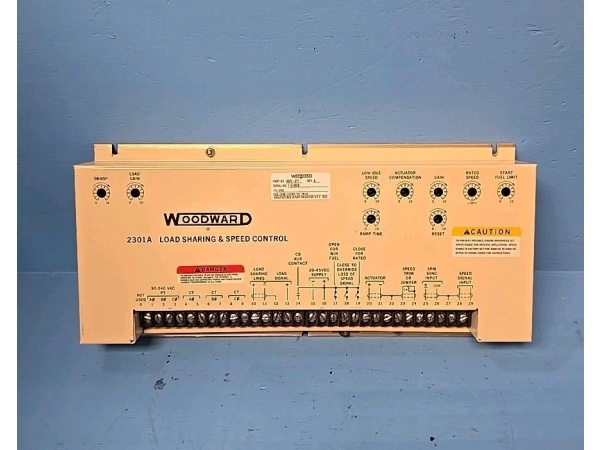
Hard Numbers: Technical Specifications
- Power Supply: 120/240 VAC
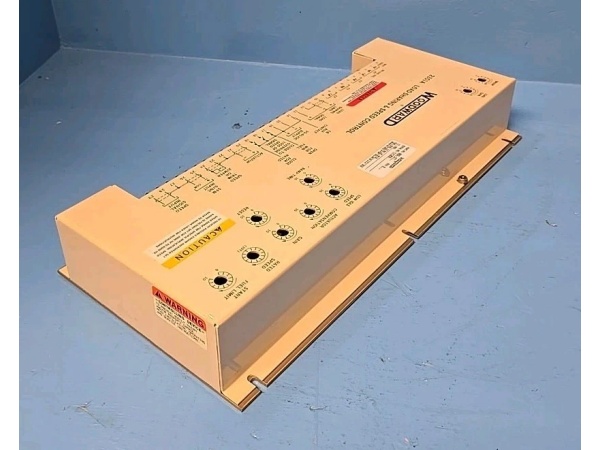
- Physical Dimensions: 18.14 in (H) x 10.4 in (W) x 2.3 in (D) [approx. 461 x 264 x 58 mm]
- Weight: 5.60 lbs to 6 lbs 14 oz (approx. 2.5 – 3.1 kg)
- Operating Temperature: -40°F to 158°F (-40°C to 70°C)
- Storage Temperature: -67°F to 221°F (-55°C to 105°C)
- Humidity Standard: 95% at 38°C (non-condensing)
- Speed Bias Output: ±3.0 Vdc
- Network Technology: LONWORKS (for unit-to-unit communication)
- Phase Configuration: Open delta PT configuration supported
The Real-World Problem It Solves
Connecting a spinning generator to a live electrical bus (syncing) is like trying to parallel park a car while both your car and the parking spot are moving at 60 mph. If the frequencies don’t match, the generator will motor and stall. If the phases are misaligned, you get a massive current surge that can weld the breaker contacts or destroy the windings.
The 9905-795 acts as the meticulous matchmaker. It continuously compares the generator’s frequency, voltage, and phase angle against the bus. It outputs a precise Speed Bias(+/- 3.0 Vdc) to nudge the Woodward 2301D or 505 governor, adjusting the engine RPM until the generator is perfectly matched to the grid. Once aligned within tight tolerances (typically ±0.25 Hz and ±5° phase), it automatically fires the breaker coil to close the switch .
Where you’ll typically find it:
- In municipal wastewater treatment plants, coordinating the startup and grid-tie of multiple biogas-fueled generators .
- Retrofitted into legacy analog control panels, replacing bulky banks of discrete timers, voltage comparators, and synchroscopes with a single, reliable digital module .
- In peak-shaving applications, where the DSLC monitors the utility mains and seamlessly exports excess generator power to offset high demand charges .
Hardware Architecture & Under-the-Hood Logic
Unlike a standard relay bank, the 9905-795 is a specialized computational engine focused entirely on the mathematics of AC waveforms.
- Waveform Zero-Crossing Analysis: The module takes AC inputs from the generator and the bus (via Potential Transformers – PTs). Internally, it uses hardware comparators to detect the exact zero-crossing points of both sine waves. By measuring the time delta between these crossings, it calculates the precise phase angle difference and slip frequency .
- Closed-Loop Speed Bias: Instead of directly driving the fuel rack, the 9905-795 outputs a bipolar DC voltage (+/- 3.0 Vdc). This signal is fed into the “Speed Bias” or “Load Share” port of the main Woodward speed governor. This creates a nested control loop: the DSLC handles the coarse synchronization, while the main governor maintains fine stability .
- LONWORKS Distributed Networking: For multi-generator sites, the 9905-795 uses a LONWORKS communication network. This allows multiple DSLC units to share real-time data on system load, active generators, and breaker statuses without requiring a central host computer .
Field Service Pitfalls: What Rookies Get Wrong
Forgetting the Handheld Programmer (HHP) Connection Protocol
Rookies often treat the 9905-795 like a modern USB device. They make changes using the Handheld Programmer (HHP), see the values change on the HHP screen, and walk away. Later, during a power cycle or system disturbance, the DSLC reverts all the settings back to factory defaults.
- Field Rule: The HHP interface is not truly “live” with the main processor at all times. After modifying critical parameters (like PT ratios, frequency deadbands, or phase match limits), you MUST navigate to the “Upload/Download” menu on the HHP and explicitly select “Store to Module”. If you don’t get a “Success” confirmation, pull the battery from the HHP and try again—never assume it saved.
Open Delta PT Wiring Nightmares
The 9905-795 supports Open Delta PT configurations to save money on wiring, but it is extremely sensitive to phase rotation. Rookies often wire the PTs based on standard industrial color codes (A-B-C), only to find that the DSLC reports a massive phase error even when the generator is off.
- Quick Fix: Grab a known-good phase sequence meter and verify the ABC rotation at the DSLC terminals beforeenergizing the generator. If the DSLC shows the phases jumping erratically, you likely have a crossed leg in your Open Delta. Swap the A and C inputs at the terminal block; if the reading stabilizes, you’ve confirmed a phase reversal. Correct the wiring physically to match the DSLC’s expected rotation.
Ignoring LONWORKS Termination Resistors
In multi-unit paralleling switchgear, rookies daisy-chain the LONWORKS network cables from one DSLC to the next. They skip installing the required 120-ohm termination resistors at the physical ends of the network backbone. The result is “ghost” units appearing in the load share list and frequent “Loss of Comm” trips during heavy motor starting.
- Field Rule: LONWORKS is a balanced differential network. Use a multimeter to measure the resistance between the LON+ and LON- pins at the main trunk cable. With the power off and all units connected, it should read exactly 60 ohms (two 120-ohm resistors in parallel). If it reads wildly off (like 0 ohms or open circuit), trace your cabling to find the missing terminators. Proper shielding and termination are non-negotiable for stable load sharing.
Commercial Availability & Pricing Note
Please note: The listed price is for reference only and is not binding. Final pricing and terms are subject to negotiation based on current market conditions and availability.