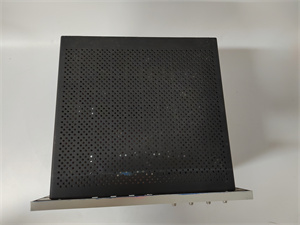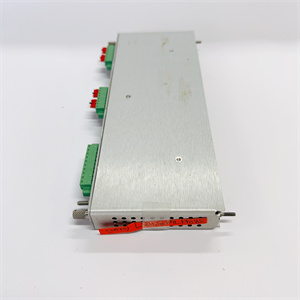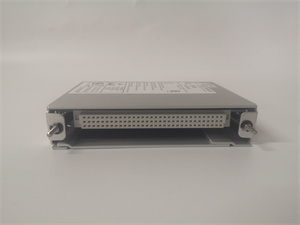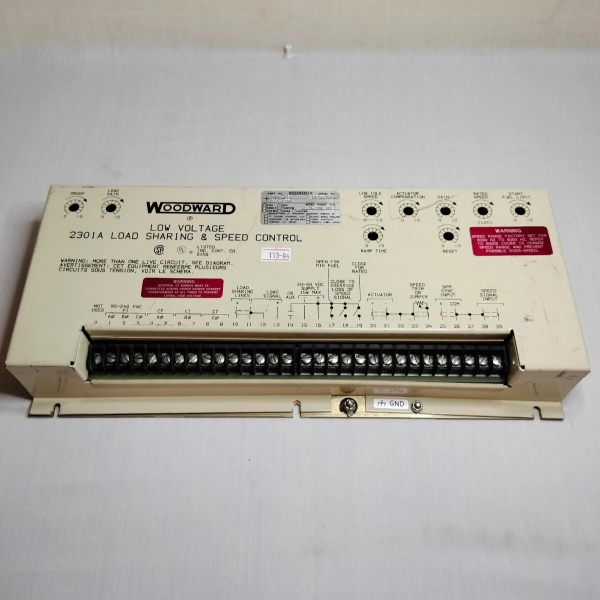
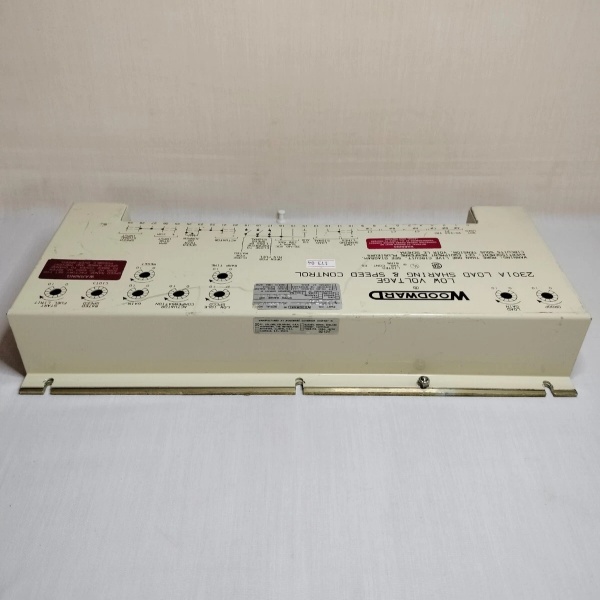
Description
Key Technical Specifications
-
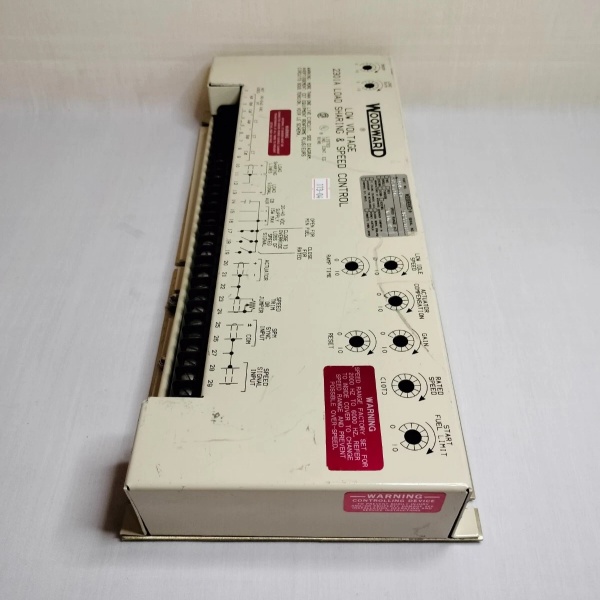
Model Number: 9905-020P
-
Manufacturer: Woodward
-
Supply Voltage: 20-40 VDC (SELV compliant per IEC standards)
-
Power Consumption: ≤ 15 W
-
Actuator Output: 0-200 mA into 40 Ω max, forward-acting (0 mA = idle, 200 mA = full speed)
-
Actuation Type: Forward-acting, single actuator, no deceleration ramp
-
Speed Reference Input: 1-5 VDC (or 4-20 mA via 250 Ω jumper)
-
MPU Input: 1-30 V p-p, 1 kHz–25 kHz, 0.010–0.040 in. air-gap
-
Load Sharing Input: 0-6 VDC from 5 A CT secondary, gain trim on board
-
Droop Range: 0-10 % via 20-turn pot; isochronous when pot fully CCW
-
Operating Temperature: –40 °C to +85 °C (–40 °F to +185 °F)
-
Dimensions: 15.25 in (W) × 7.125 in (H) × 2.5 in (D)
-
Weight: 3 lb 14 oz
-
Terminals: 29-point terminal strip
-
Mounting: Panel or chassis mount, 2301A form factor

WOODWARD 9905-020P
Field Application & Problem Solved
Small gas turbines and diesel gensets in remote sites often run on 24 VDC battery systems—no 120 VAC available. The 9905-020P is Woodward’s low-voltage answer: it runs straight off the battery bank, drives a single forward-acting actuator (0-200 mA), and handles speed regulation plus load sharing without needing an inverter. I install these on 1-3 MW landfill-gas engines and remote pump-jack gensets where the only power is a 24 V solar/battery setup. The card takes MPU pulses from the flywheel, compares to a 60 Hz crystal reference, and outputs current to a Woodward PG-PL or TG-13 actuator on the fuel valve. Load-sharing input from a 5 A CT lets multiple units parallel without fighting each other. One card replaces the mechanical governor, the droop linkage, and a rack of relays—critical when you’re 200 miles from the nearest service tech.
Small gas turbines and diesel gensets in remote sites often run on 24 VDC battery systems—no 120 VAC available. The 9905-020P is Woodward’s low-voltage answer: it runs straight off the battery bank, drives a single forward-acting actuator (0-200 mA), and handles speed regulation plus load sharing without needing an inverter. I install these on 1-3 MW landfill-gas engines and remote pump-jack gensets where the only power is a 24 V solar/battery setup. The card takes MPU pulses from the flywheel, compares to a 60 Hz crystal reference, and outputs current to a Woodward PG-PL or TG-13 actuator on the fuel valve. Load-sharing input from a 5 A CT lets multiple units parallel without fighting each other. One card replaces the mechanical governor, the droop linkage, and a rack of relays—critical when you’re 200 miles from the nearest service tech.
Installation & Maintenance Pitfalls (Expert Tips)
Battery Voltage Sag Will Trip You Offline
The card runs on 20-40 VDC, but at 19.5 V the undervoltage lockout kicks in and the actuator snaps to idle. I’ve seen sites with weak batteries that sag to 18 V during cranking—unit starts, then immediately shuts down. Check battery capacity; you need 24 V nominal, 21 V minimum under load.
The card runs on 20-40 VDC, but at 19.5 V the undervoltage lockout kicks in and the actuator snaps to idle. I’ve seen sites with weak batteries that sag to 18 V during cranking—unit starts, then immediately shuts down. Check battery capacity; you need 24 V nominal, 21 V minimum under load.
Forward-Acting Means Fail-Open—Plan Your Fuel System
0 mA = idle, 200 mA = full speed. Lose power or signal and the actuator returns to minimum fuel. Make sure your fuel valve springs to the closed position or you’ll have a runaway. I always verify the valve spring direction before I wire the first terminal.
0 mA = idle, 200 mA = full speed. Lose power or signal and the actuator returns to minimum fuel. Make sure your fuel valve springs to the closed position or you’ll have a runaway. I always verify the valve spring direction before I wire the first terminal.
No Deceleration Ramp—Watch the PID Gains
Unlike the 9905-021 (which has a soft deceleration ramp), the 020P ramps speed directly. If your PID gains are too aggressive, the engine will hunt on load rejection. Start with P=20, I=5, and tune from there—don’t copy settings from a different revision.
Unlike the 9905-021 (which has a soft deceleration ramp), the 020P ramps speed directly. If your PID gains are too aggressive, the engine will hunt on load rejection. Start with P=20, I=5, and tune from there—don’t copy settings from a different revision.
The “P” Revision Fixed the Cold-Start Drift
Earlier revisions (L, M) had a temperature drift issue where the speed reference would shift 2-3 Hz on cold mornings. The “P” revision added temp compensation—if you’re swapping cards and the old one is pre-P, expect to retune the speed trim pot.
Earlier revisions (L, M) had a temperature drift issue where the speed reference would shift 2-3 Hz on cold mornings. The “P” revision added temp compensation—if you’re swapping cards and the old one is pre-P, expect to retune the speed trim pot.
Check Terminal 2-3 Minimum Fuel Contact
Terminals 2 and 3 are the minimum fuel shutdown interface. They must be jumpered for normal operation; open them and the actuator drives to idle. I’ve seen these wired to an emergency stop button that corroded open—unit runs fine for months, then one day won’t take load because the contact failed.
Terminals 2 and 3 are the minimum fuel shutdown interface. They must be jumpered for normal operation; open them and the actuator drives to idle. I’ve seen these wired to an emergency stop button that corroded open—unit runs fine for months, then one day won’t take load because the contact failed.
WOODWARD 9905-020P
Technical Deep Dive & Overview
The 9905-020P is an analog speed/load control built on a four-layer PCB with heavy copper traces for the 200 mA output stage. A magnetic pickup zero-cross detector feeds a CD4046 phase-locked loop; the loop compares shaft frequency to an internal 60 Hz temperature-compensated crystal reference and generates a 0-200 mA error signal via a discrete NPN current source. Load-sharing current from a 5 A generator CT converts to 0-6 V through a precision burden resistor, sums at the PID summing junction, and applies droop via the 20-turn front-panel potentiometer.
The 9905-020P is an analog speed/load control built on a four-layer PCB with heavy copper traces for the 200 mA output stage. A magnetic pickup zero-cross detector feeds a CD4046 phase-locked loop; the loop compares shaft frequency to an internal 60 Hz temperature-compensated crystal reference and generates a 0-200 mA error signal via a discrete NPN current source. Load-sharing current from a 5 A generator CT converts to 0-6 V through a precision burden resistor, sums at the PID summing junction, and applies droop via the 20-turn front-panel potentiometer.
The “P” revision uses surface-mount components for the timing circuits, replacing the through-hole construction of earlier revisions. It adds a 5 V reference regulator with better tempco (50 ppm/°C vs. 100 ppm in the L revision) and upgrades the conformal coating to acrylic-polyurethane for humidity resistance. No microprocessor—pure analog control that settles in 50 ms and survives reverse battery connection (protected by a series diode). The 29 terminals include dedicated points for MPU, PT, CT, actuator, and minimum fuel contact—no guesswork on wiring.