Description
Hard Numbers: Technical Specifications
- Power Supply: 12/24 VDC (8 to 40 VDC operating range)
- Display: Graphical LCD (part of the easYgen-3400 series standard HMI)
- Primary Frequency Setting: 50/60Hz (Range 40 – 85 Hz)
- Discrete Inputs: 10 optically isolated inputs (Configurable for wetting source)
- Discrete Outputs: 12 Form-C relays (Rating dependent on series configuration)
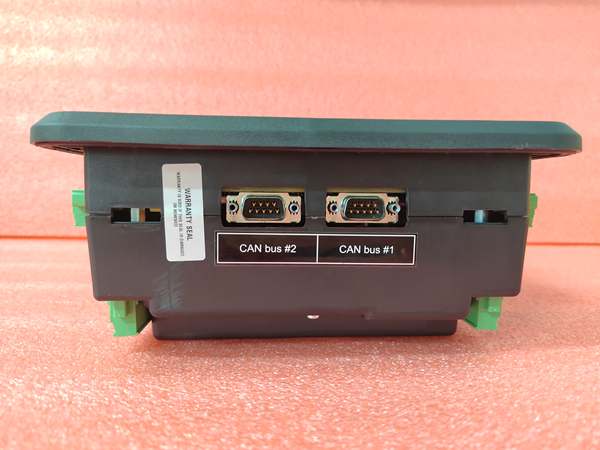
- Communication Ports: 2x CANopen, 1x RS-485 (Modbus RTU), 1x Ethernet, 1x USB
- Operating Temperature: -20°C to +70°C (-4°F to +158°F)
- Front Panel Dimensions: 282W x 216H x 96D mm
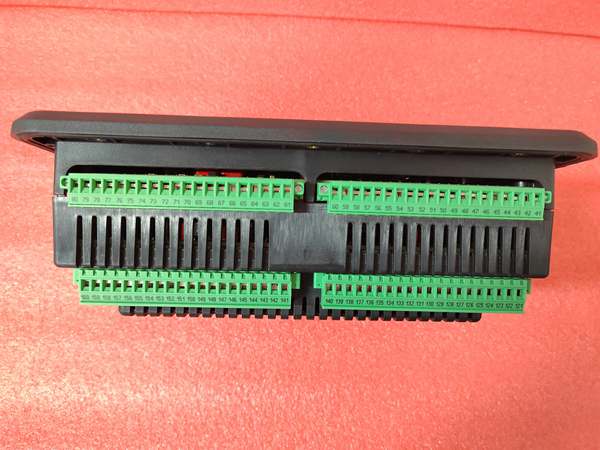
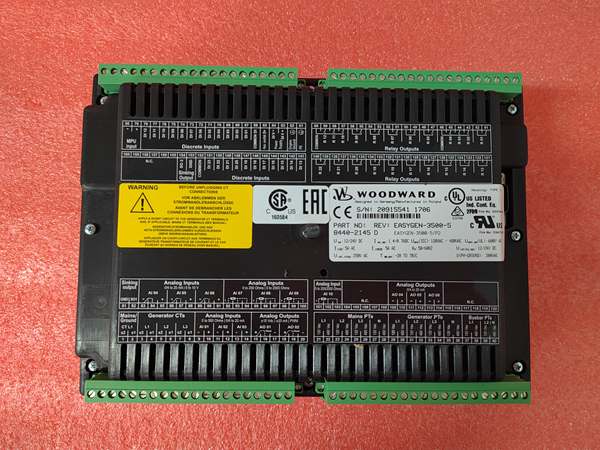
- Connection Terminals: Screw/Plug terminals (supports up to 2.5 mm² wire)
- Protection Rating: IP20 (IP54 when installed with front panel gasket)
- Language Support: Multilingual (up to 14 languages including English, German, Spanish, French, Italian, etc.)
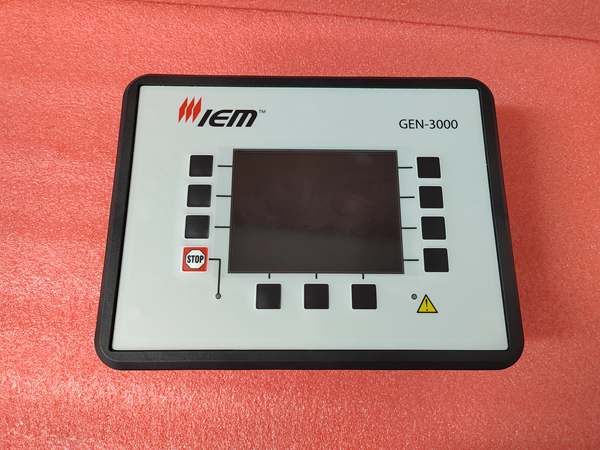
The Real-World Problem It Solves
Managing a distributed power system with multiple generators, utility feeds, and tie-breakers is a logistical nightmare. Standard controllers often require a jungle of external PLCs and custom wiring to handle complex scenarios like peak shaving or segmented bus load sharing. The 8440-2079 eliminates this complexity. It acts as a standalone genius, seamlessly managing engine starts/stops, synchronizing multiple units to the bus, and executing load-sharing logic without needing extra hardware .
Where you’ll typically find it:
- In commercial and industrial backup power systems, orchestrating up to 32 generators in a peer-to-peer network during utility failures .
- In rental power fleets, mounted in mobile generator panels, providing a standardized, multilingual interface for operators across different regions .
- In microgrid applications, managing the transition between island mode (generator-only) and grid-parallel mode for utility demand response .
Hardware Architecture & Under-the-Hood Logic
The 8440-2079 is built on a robust electronic platform designed to replace complex control cabinets with a single, smart device.
- Integrated LogicsManager: Instead of relying on external PLCs for custom sequences (like specific valve timings or alarm acknowledgments), this controller features an internal programmable logic core. Technicians can implement custom ladder logic directly into the HMI, drastically reducing panel wiring and external component costs .
- Peer-to-Peer Networking: The hardware utilizes its dual CANopen ports to communicate directly with other easYgen units on the same bus. It autonomously negotiates leadership roles, calculates total system load, and dictates which generators should pick up the slack or shed load based on real-time kW/kVAr demands .
- Multilingual Core OS: Uniquely, the controller’s firmware natively supports dynamic language switching (up to 14 languages). This means a single hardware SKU can be deployed globally; the HMI can switch from English to Japanese to Russian on the fly without reflashing the firmware .
Field Service Pitfalls: What Rookies Get Wrong
Overlooking the Negative Grounding Configuration
Rookies often grab a standard 12V or 24V power supply and wire it to the 8440-2079 without checking the polarity requirements. Because the unit is specified with a “negative/positive potential grounded” power supply, reversing the polarity or using a floating ground can lead to erratic behavior, communication drops, or even damaged input/output circuits.
- Field Rule: Always verify your power supply’s grounding scheme before energizing. Use a multimeter to confirm that the 0V rail is solidly bonded to the system ground (earth) as required by the unit’s configuration.
Misconfiguring Fixed vs. Programmable Inputs
The 8440-2079 has discrete inputs divided into “Fixed” and “Programmable” categories. Rookies often try to reprogram a fixed input (like an Emergency Stop or a Mains Failure sense) in the software, wondering why their changes don’t take effect.
- Quick Fix: Check the documentation before assigning wires. Fixed inputs have hardcoded priorities and functions determined by the application mode (e.g., AMF vs. Island). Only use the programmable inputs for custom alarms or auxiliary functions. Swapping your wiring to a truly programmable input will save hours of frustration.
Ignoring CT Polarity During Paralleling Setup
When commissioning a multi-unit system, a common rookie mistake is trusting the CT (Current Transformer) wiring without testing. If the polarity is reversed on one unit in a 32-generator network, that specific controller will see negative kW. The load-sharing algorithm will then command that generator to absorb power (motor) rather than produce it, causing massive system instability.
- Field Rule: Before closing the main breaker, perform a “flash test” with a small resistive load (like a portable heater or lamp bank). If the kW reading is negative, simply swap the S1 and S2 terminals at the controller. Never bypass the load share logic to “fix” hunting; the math is usually right, the polarity is just backwards.
Commercial Availability & Pricing Note
Please note: The listed price is for reference only and is not binding. Final pricing and terms are subject to negotiation based on current market conditions and availability.