Description
Hard-Numbers: Technical Specifications
- Part Number: 8406-116
- Processor/Logic: 32-bit Microprocessor (505-series architecture)
- Power Supply: 24 VDC nominal (Range typically 18–36 VDC), approx. 1A current draw
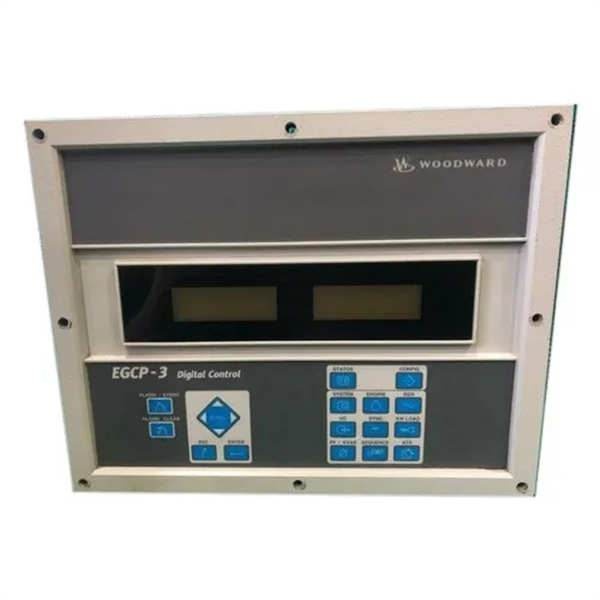
- Operator Interface: Built-in OCP with two-line, 24-character LCD display and membrane keypad
- Communication Ports: 1 x RS-232, 1 x RS-422/485 (Supports Modbus RTU)
- Analog Outputs: 6 channels (typically 4–20 mA)
- Discrete Outputs: 8 channels (relay or solid-state)
- Actuator Outputs: 2 channels (for servo valves or electro-hydraulic actuators)
- Dimensions: 14 × 11 × 4 in (35.6 × 27.9 × 10.2 cm)
- Weight: 9.11 lbs (4.13 kg)
- Operating Temperature: –4 to +140 °F (–20 to +60 °C)
- Protection Rating: IP54 (when properly mounted in panel cutout)
The Real-World Problem It Solves
Before digital controllers, turbine operators had to rely on clunky, imprecise mechanical-hydraulic governors that required constant manual tweaking and were prone to causing “hunting” or slow responses during load shifts. The 8406-116 replaces that archaic hardware, giving you pinpoint accuracy over turbine speed and load, along with critical protections like overspeed tripping and critical speed avoidance.
Where you’ll typically find it:
- Mounted on the front door of a steam turbine control cabinet in a biomass or waste-to-energy plant.
- Serving as the primary speed governor for a single-valve extraction steam turbine driving a refinery compressor.
- Acting as the local HMI for a gas or steam turbine generator set, communicating via Modbus to a larger plant DCS.
This unit allows an operator to walk up to the machine, read real-time RPM and temperature values on the LCD, and execute controlled startups or shutdowns with the push of a button—no laptop required.
Hardware Architecture & Under-the-Hood Logic
The 8406-116 is essentially a ruggedized industrial computer dedicating all its processing power to real-time turbine dynamics.
- Central Processing Unit (CPU): Executes the turbine control algorithms (PID loops) and monitors critical parameters. It processes the inputs from magnetic pickup sensors (MPUs) to calculate turbine speed.
- Operator Control Panel (OCP): The built-in LCD and keypad allow for local configuration and monitoring without needing a PC. The menu-driven software lets technicians adjust setpoints, tune PID gains, and view alarm logs directly on the unit.
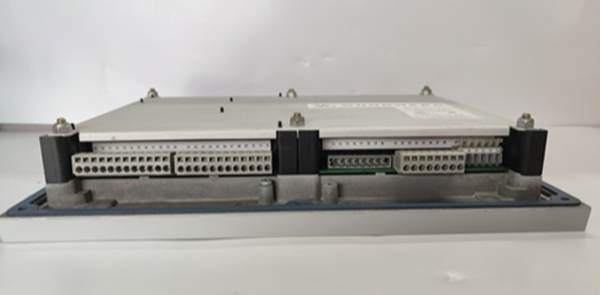
- I/O Conditioning Circuits: The unit conditions the analog 4-20mA outputs to drive external electro-hydraulic actuators (like the Woodward 47371 series) and conditions the discrete inputs to monitor lube oil pressure switches or emergency stop buttons.
- Serial Communication Interface: An isolated RS-422/485 port allows the 8406-116 to act as a Modbus slave, sending turbine data to a plant’s central DCS or SCADA system.
Field Service Pitfalls: What Rookies Get Wrong
The “Phantom Trip” Caused by Parameter Corruption
A rookie technician tries to change the turbine’s rated speed using the front keypad but accidentally alters a protected parameter in the “Service” menu (like the critical speed range or actuator gain). The next time the turbine starts, it hits a resonance peak and the 8406-116 forces an emergency trip.
- Field Rule: Never navigate the Service or Configuration menus while the turbine is running. Always perform a “Save to Flash” operation after making changes, and triple-check your MPU (Magnetic Pickup) calibration settings before a scheduled startup.
RS-422 Communication Failures Due to Ground Loops
An integrator connects the 8406-116 to a distant DCS over RS-422. During a rainstorm, a massive ground potential difference between the turbine skid and the control room causes a voltage spike, frying the 8406-116’s serial port.
- Field Rule: When linking the 8406-116 to external systems, always use optically isolated serial converters. Run the communication cables in grounded, shielded conduit, and ensure the 8406-116’s 24VDC power supply shares the same earth ground as the turbine skid to prevent ground loops.
Commercial Availability & Pricing Note
Please note: The listed price is for reference only and is not binding. Final pricing and terms are subject to negotiation based on current market conditions and availability.