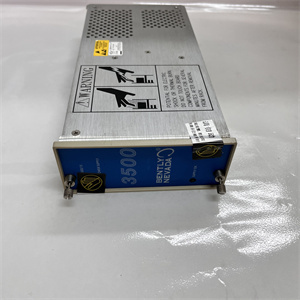

Description
Hard Numbers: Technical Specifications
(Note: The following specifications are compiled from typical 8405-series and verified 8405-029 actuator data. Always cross-reference with the official Woodward datasheet for exact project requirements.)
- Part Number: 8405-029
- Actuator Type: Electro-Hydraulic (Linear)
- Control Input Signal: 4–20 mA or 0–10 VDC (configurable)
- Operating Pressure: 1500–3000 PSI hydraulic supply
- Stroke Range: 0–2 inches (approx. 0–50 mm) linear displacement
- Power Supply: 18–32 VDC (24 VDC nominal)
- Response Time: <50 milliseconds for full stroke
- Position Feedback: Optional LVDT or potentiometer (configuration-dependent)
- Linearity: ±0.5% full scale
- Environmental Protection: IP65 / IP56 (dust and water-resistant)
- Operating Temperature: -40°C to +85°C (-40°F to +185°F)
- Weight: Approx. 2.5 kg (5.5 lbs)
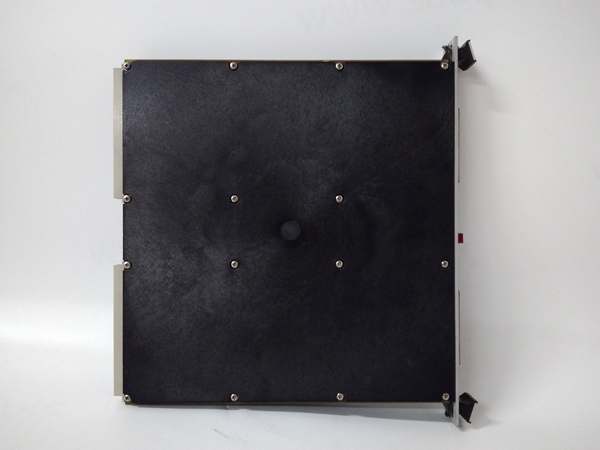
WOODWARD 5466-315
The Real-World Problem It Solves
In high-stakes power generation and marine propulsion, mechanical governors and standard electric actuators often struggle with hysteresis, wear, and slow response times. When a massive diesel engine or gas turbine experiences a sudden load spike (like a ship hitting a large wave or a data center transferring loads), the fuel system must react instantly to maintain frequency stability. A delayed response of even a few hundred milliseconds can cause generator droop, voltage sags, or even a complete system blackout.
The Woodward 8405-029 acts as the muscle behind the brain. By combining electrical control precision with hydraulic power, it delivers the extreme force needed to move heavy fuel racks and throttle valves in milliseconds . It takes the low-current command signal from a Woodward governor (like the 2301D or 505 series) and translates it into perfectly metered physical movement, ensuring the engine gets exactly the right amount of fuel exactly when it needs it .
Where you’ll typically find it:
- Marine Main Propulsion: Controlling the fuel rack on large two-stroke or four-stroke marine diesel engines to maintain strict speed regulations and handle dynamic load changes .
- Gas Compression Stations: Modulating the throttle of natural gas engines driving pipeline compressors, where precise speed control is critical for flow rates .
- Peaking Power Plants: Providing rapid fuel metering for gas turbines that need to go from cold standby to full load in minutes .
Hardware Architecture & Under-the-Hood Logic
Unlike a simple solenoid that is either fully on or off, the 8405-029 is a highly refined closed-loop positioning system.
- Electro-Hydraulic Pilot Stage: The actuator receives the 4–20 mA command signal, which energizes a torque motor or proportional solenoid. This creates a tiny, precise hydraulic pilot flow .
- Spool Valve Metering: The pilot flow shifts a sensitive spool valve inside the actuator. The position of this spool dictates the direction and volume of the main hydraulic fluid entering the power piston chamber .
- Closed-Loop Position Feedback: As the main piston moves the engine’s fuel rack, an internal Linear Variable Differential Transformer (LVDT) or precision potentiometer tracks the exact physical position. This feedback signal is continuously compared to the input command. If there is any deviation (e.g., hydraulic pressure fluctuation or changes in the fuel pump’s resistance), the spool valve instantly adjusts to correct the piston’s position . This loop repeats thousands of times per second, resulting in the ±0.5% linearity required for modern emissions compliance and stable power generation .
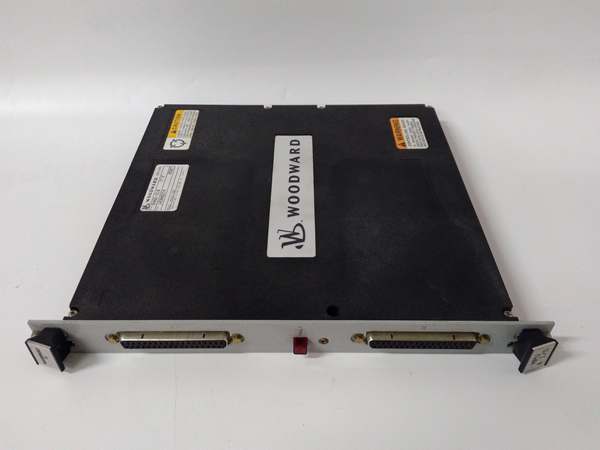
WOODWARD 5466-315
Field Service Pitfalls: What Rookies Get Wrong
Hydraulic Starvation (The “Sponge” Effect)
Rookies often focus entirely on the electrical signals when troubleshooting an 8405-029, ignoring the hydraulic side. The actuator requires a robust, clean hydraulic supply (1500–3000 PSI) to overcome the heavy spring tension of the engine’s fuel rack . If the supply pressure drops or the inlet filter clogs, the actuator becomes a “sponge”—it moves sluggishly or bottoms out before reaching the commanded position.
- Field Rule: Always check the hydraulic supply pressure at the actuator’s test port while the engine is under load. If the pressure dips below 1500 PSI during operation, inspect the hydraulic power unit’s pump and filters before condemning the actuator .
Ignoring LVDT Calibration (The “Wandering” Actuator)
Because the 8405-029 relies on an internal LVDT for position feedback, it must be calibrated to the specific stroke length of the engine’s fuel pump . If a rookie installs a new actuator but uses the old calibration settings, or worse, guesses the min/max stroke limits, the actuator will not map correctly to the governor’s commands.
- The Glitch: The engine might start fine at idle, but as soon as a load is applied, the governor will demand more fuel. The actuator will either hit its mechanical stop prematurely (causing an overspeed trip) or fail to reach full stroke (causing the engine to stall under load).
- Quick Fix: Never skip the “Stroke Calibration” routine in the governor software after installing a new 8405-029. Manually exercise the actuator through its full range and set the exact min/max positions in the control system .
Mismatched Signal Grounding (The “Ghost” Movement)
In industrial environments, electrical noise is rampant. Rookies often wire the 4–20 mA control signal using the same cable tray as high-voltage starter cables or alternator outputs. The resulting electromagnetic interference (EMI) induces phantom voltages on the signal wires.
- The Danger: The actuator might suddenly jerk open or closed even when the governor isn’t sending a command, leading to violent speed swings.
- Field Rule: Always use shielded twisted-pair cable for the control signal. Connect the shield drain wire to earth ground at the controller end only, and keep the signal cables physically separated from high-voltage AC wiring.
Commercial Availability & Pricing Note
Please note: The listed price is for reference only and is not binding. Final pricing and terms are subject to negotiation based on current market conditions and availability.