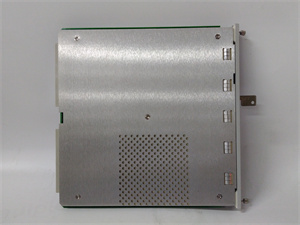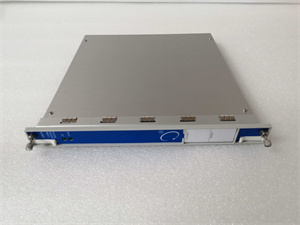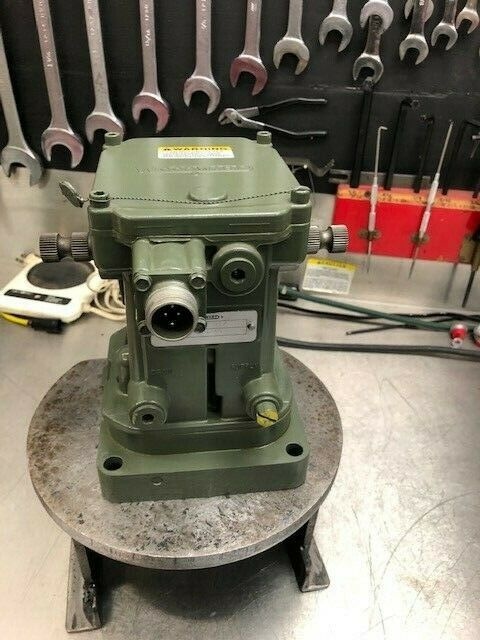
Description
Hard Numbers: Technical Specifications
- Processor: 32-bit High-Speed DSP (Dual-channel redundant architecture)
- Memory: 8-16 MB Flash (Firmware/Config), 4-8 MB RAM (Runtime Data)
- Power Supply: 18-32 V DC (24V DC Nominal) or 90-264 V AC (50/60 Hz)
- Speed Sensing Inputs: 2-4 MPU (Magnetic Pickup) or Proximity Probe inputs
- Analog I/O: 8 Inputs (4-20mA / 0-5V configurable), 4 Outputs (4-20mA)
- Discrete I/O: 12-16 Digital Inputs (24V DC), 6-8 Relay Outputs (Dry Contact)
- Actuator Outputs: 1-2 Channels (4-20mA or 0-200mA drive capability)
- Communication Interfaces: RS-232/RS-485 (Modbus RTU), CANopen (Standard), Optional Ethernet
- Operating Temperature: -40°C to +70°C (-40°F to +158°F)
- Enclosure Rating: IP20 (Chassis), NEMA 4X/IP65 (Optional External Enclosure)
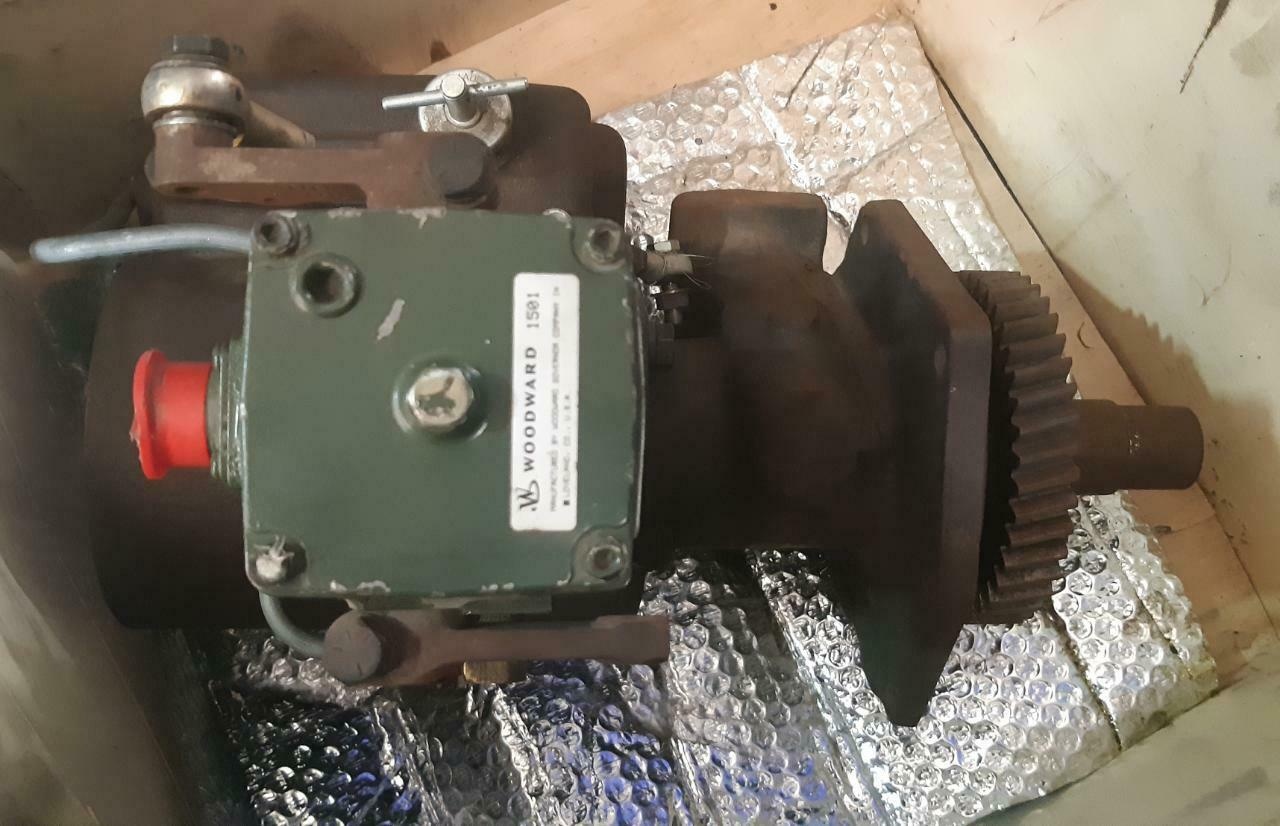
The Real-World Problem It Solves
Mechanical flyball governors and old analog control boxes are prone to drift, hysteresis, and catastrophic failure when engine tuning parameters change. The Woodward 8250-828 digitizes the entire governing process. It takes the sometimes erratic frequency readings from your MPU, crosses it with multiple analog process variables (like generator kW or steam header pressure), and drives the actuator with mathematical precision. It eliminates the “hunting” and stability issues common in older hydro-mechanical systems, ensuring your prime mover stays locked to the grid or maintains rock-steady shaft speed under varying loads.
Where you’ll typically find it:
- Bolted to the skid of large reciprocating gas compressors in pipeline stations, maintaining suction pressure control.
- In the MCC of a waste-to-energy plant, governing a small steam turbine driving a generator.
- Inside the control console of marine auxiliary diesel generators, handling isochronous load sharing across multiple buses.
It replaces a wall of analog proportional-integral controllers and provides a single, software-configurable drop-in solution for complex multi-variable governing.
Hardware Architecture & Under-the-Hood Logic
This unit is essentially a ruggedized, deterministic industrial computer with specialized I/O for rotating machinery. It doesn’t run Windows; it executes compiled control algorithms in a continuous, fixed scan-time loop to ensure nothing slips through the cracks during a critical transient.
- Signal Conditioning & Acquisition: The front-end circuitry filters the AC sine wave from the MPU and squares it up for the counter-timer hardware. Simultaneously, it buffers and scales the 4-20mA analog inputs (like speed setpoint or load bias) to prevent aliasing.
- Deterministic Execution: The 32-bit DSP executes the GAP (Graphical Application Programmer) logic. It calculates the error between the desired speed/load and the actual values, running it through the configured PID gain constants.
- Actuator Drive: Based on the PID output, the module generates a highly linear current drive to the connected actuator (e.g., a Woodward ProAct or EGB). It constantly monitors the actuator’s position feedback to ensure the physical mechanism matches the commanded position.
- Communications & Supervision: The MPU communicates via CANopen or Modbus to a human-machine interface (HMI) or a higher-level DCS, providing real-time diagnostics and accepting remote setpoint changes without introducing lag into the primary control loop.
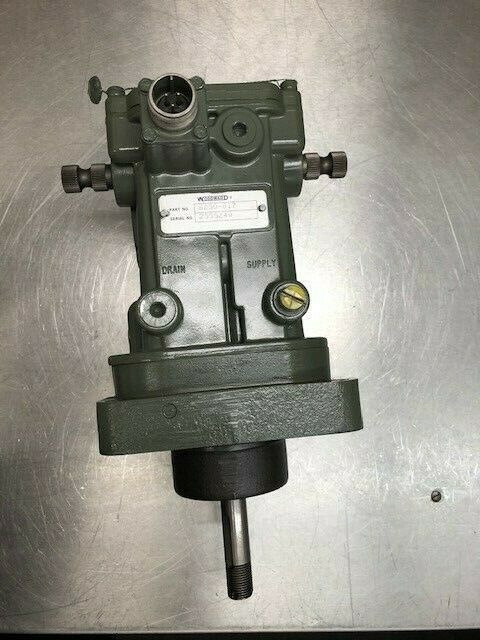
Field Service Pitfalls: What Rookies Get Wrong
Chasing Ghosts by Adjusting the Wrong PID Parameters
When an engine installation starts hunting (slowly oscillating around the setpoint), rookies immediately dive into the software and start cranking up the “P” (Proportional) gain or dialing in massive “D” (Derivative) terms. This usually excites the natural resonance of the fuel rack, making the oscillation worse or causing the engine to surge.
- Field Rule: Before touching the PID gains, verify your fundamentals. Check the MPU gap and ensure the signal isn’t picking up electrical noise from the ignition system. Confirm the actuator feedback linkage isn’t sloppy. If the mechanicals are tight, make微小 adjustments to the Integral (Reset) term first. A little Integral goes a long way in eliminating steady-state droop.
Ignoring the 24V DC Power Quality
Rookies assume any 24V DC supply is good enough to power the 8250-828. They tap into a shared control transformer that also powers solenoids and indicator lights. When a large relay kicks on elsewhere in the panel, the resultant voltage dip causes the 8250-828 to reboot mid-cycle, shutting down the engine or turbine.
- Quick Fix: Monitor the 24V DC supply rail with a scope during engine cranking and heavy load pick-up. If you see the voltage dip below 18V DC or spike above 32V DC, install a dedicated DC power supply or add a large capacitor bank (or SuperCap) to the input terminals to ride through the electrical noise.
Misconfiguring the MPH/RPM Scaling in Software
During commissioning, a rookie misreads the engine’s gear tooth count or enters the wrong MPU teeth-per-revolution in the Woodward GAP software. The controller thinks a 60Hz signal is 600 RPM when it’s actually 3600 RPM. The engine starts, the controller panics thinking it’s in an overspeed condition, and it immediately shuts down the unit.
- Field Rule: Always perform a “Measured vs. Calculated” speed check before enabling the governor. Disconnect the actuator, crank the engine, and compare the RPM reading on the 8250-828 display against a known good handheld tachometer. If they don’t match exactly, your gear ratio or MPU configuration is wrong. Fix the math before you try to control the speed.
Commercial Availability & Pricing Note
Please note: The listed price is for reference only and is not binding. Final pricing and terms are subject to negotiation based on current market conditions and availability.