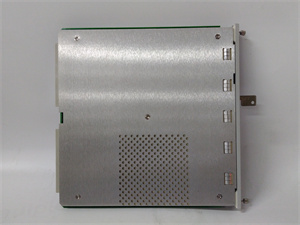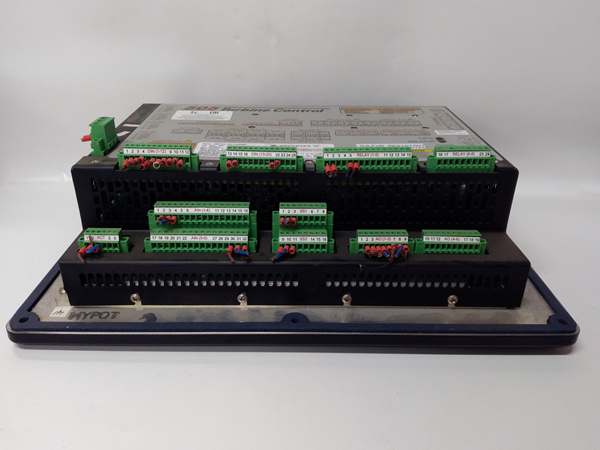
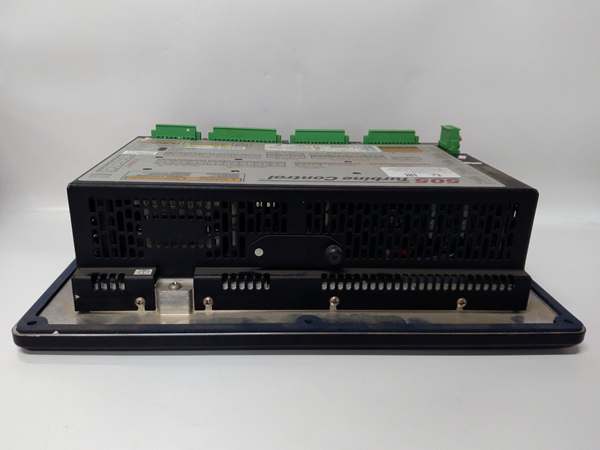
Description
Hard-Numbers: Technical Specifications
- Part Number: 8200-226
- Power Supply: 24 VDC Nominal (Operating Range: 18–32 VDC), Max 1.1A current draw
- Power Dissipation: 20 W typical heat load
- Actuator Driver Output: ±10 mA to ±250 mA (Selectable ranges: ±10, ±25, ±50, ±100, ±250 mA), 11-bit resolution, 0.2% full-scale linearity
- Analog Demand Input: 4–20 mA (Operating Range: 2–22 mA), 13-bit resolution, 0.1% full-scale linearity, with open-circuit (< 1 mA) and short-circuit (> 23 mA) fault detection
- Monitor Output: 4–20 mA (Operating Range: 0–25 mA), 12-bit resolution, 0.2% full-scale linearity, Max load 500 Ω
- LVDT/RVDT/DC Voltage Input: Max AC voltage 10 Vrms, DC range 0–12 Vdc, Input impedance min 100 kΩ, 14-bit resolution, 0.1% full-scale linearity
- Transducer Exciter Output: 4-10 Vrms, 1-5 kHz frequency range, Max load 120 mA
- Discrete Inputs: 10 mA operating current, Open threshold > 11 V, Closed threshold < 4 V
- Relay Driver Outputs: Max 32 VDC, 500 mA, Max voltage drop 1V @ 500 mA
- Communication Ports: DeviceNet, RS-232 Service Port (9-pin Sub-D)
- Isolation Voltage: 500 Vrms (Monitor Output, Relay Drivers, DeviceNet, Service Port)
- Operating Temperature: –40 to +70 °C (-40 to +158 °F)
- Environmental Rating: 95% humidity (condensing), Shock: 30g/11ms, Vibration: 0.7g/5-2000Hz
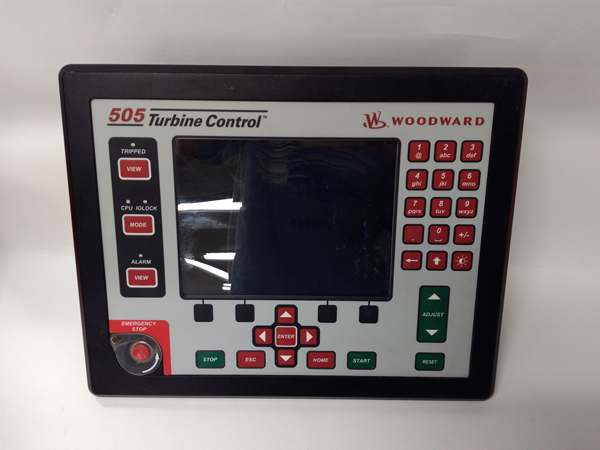
WOODWARD 8200-226
The Real-World Problem It Solves
Legacy mechanical-hydraulic control systems are notorious for deadband, nonlinearities, and slow response times, which lead to inefficient fuel consumption and excessive equipment wear. The Woodward 8200-226 eliminates these issues by acting as a high-precision, electronic middleman. It seamlessly bridges modern digital controllers (like Woodward 505 governors or plant DCS) with older or modern servo valves, ensuring that fuel, steam, or gas valves are positioned with pinpoint accuracy.
Where you’ll typically find it:
- Mounted in control cabinets driving electro-hydraulic servo valves for gas and steam turbines.
- Controlling anti-surge valves on critical natural gas compressors, where millisecond response times prevent costly equipment damage.
- Retrofitted into marine propulsion and power generation systems to replace failing 8200-224 or 8200-225 modules.
Hardware Architecture & Under-the-Hood Logic
The 8200-226 is a microprocessor-driven powerhouse designed specifically to handle the demands of heavy industrial rotating equipment.
- Signal Conditioning & Processing: The core microprocessor interprets position demand signals from either a 4-20mA analog loop or a DeviceNet network. It processes these commands with high-speed logic to determine the exact required valve position.
- Closed-Loop Feedback Control: The module continuously monitors the actual valve position using inputs from LVDT (Linear Variable Differential Transformer) or RVDT sensors. By comparing the commanded position to the actual position, it makes instantaneous adjustments to the output current, ensuring virtually zero steady-state error.
- High-Current Power Amplifier: The 8200-226 features a robust power stage capable of sourcing or sinking up to ±250 mA of continuous current. This high-power output is necessary to overcome the inertia and friction within large industrial servo valves.
- PC-Configurable Architecture: Using Woodward’s proprietary Toolbox software via the RS-232 service port, technicians can precisely tune gain, deadband, and ramp rates to match the specific dynamics of the attached valve and actuator.
Field Service Pitfalls: What Rookies Get Wrong
The “Valve Slam” Caused by Incorrect LVDT Phasing
A technician replaces an 8200-226 and, in a rush, reconnects the LVDT feedback wires using the same terminal positions as the old, failed unit. Upon powering up and enabling the output, the servo valve instantly slams to the mechanical stop, potentially damaging the valve or causing a dangerous overspeed condition.
- Field Rule: LVDT polarity is critical. Always connect the LVDT wires arbitrarily the first time, then perform a “Direction Test” using the Woodward Toolbox software. If the feedback moves in the opposite direction of the command, simply swap the A and B terminals of the LVDT until the software confirms correct polarity. Never assume wiring is standardized.
DeviceNet Communication Timeouts Due to Improper Shielding
An integrator connects the 8200-226 to a plant-wide DeviceNet network. During a lightning storm or when a large motor starts up on the same power feeder, the 8200-226 loses communication and defaults the valve to a safe position, tripping the turbine.
- Field Rule: Industrial environments are electrically noisy. Ensure the DeviceNet cable shield is grounded at only ONE point (typically at the power supply or main trunk line) to prevent ground loops. If the 8200-226 is located far from the main controller, use an isolated DeviceNet repeater to protect the sensitive communication ports from voltage spikes and differential ground potentials.
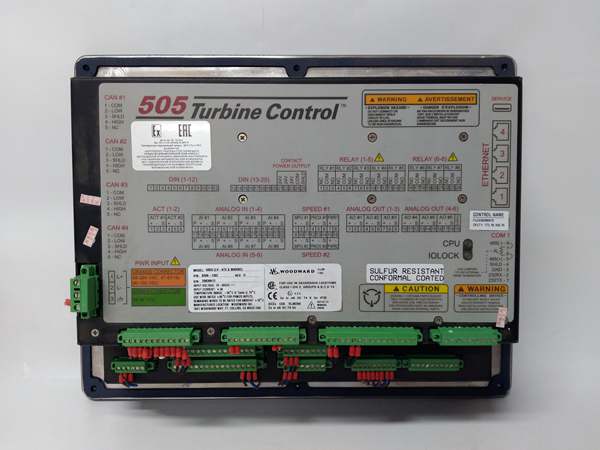
WOODWARD 8200-226
Commercial Availability & Pricing Note
Please note: The listed price is for reference only and is not binding. Final pricing and terms are subject to negotiation based on current market conditions and availability.