Description
Hard-Numbers: Technical Specifications
- Part Number: 8200-1508
- Power Supply (HV Model): 88–264 VAC / 90–150 VDC (Max consumption < 45W)
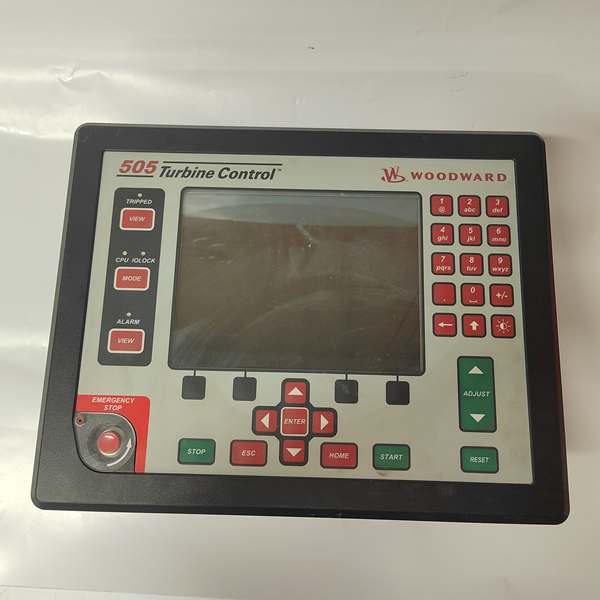
- User Interface: Integrated Graphical LCD Display and Keypad (HMI)
- Control Loops: Adaptive PID and Cascade PID control algorithms
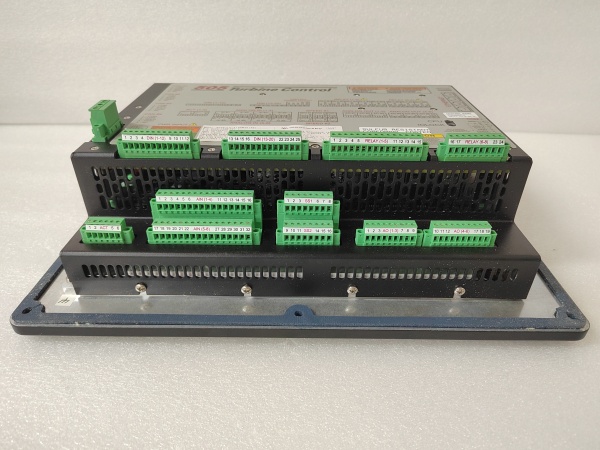
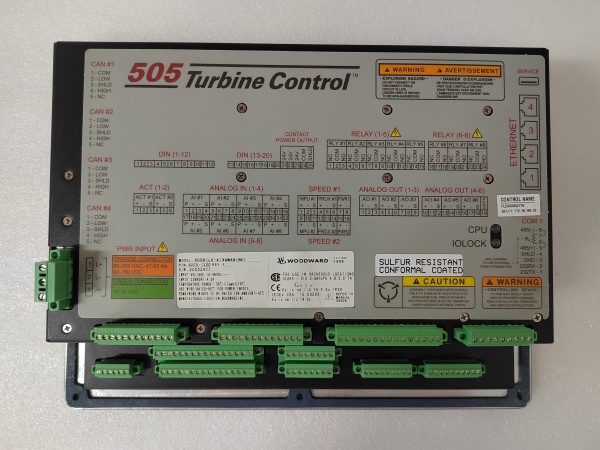
- Speed Sensor Inputs: 2 passive Magnetic Pickup (MPU) inputs (100–35,000 Hz)
- Analog I/O: 4 x 4-20 mA inputs, 3 x 4-20 mA outputs (scalable)
- Discrete I/O: 8 configurable discrete inputs, 4 relay outputs (scalable)
- Actuator Output: 1 x 4-20 mA or 20-200 mA (for driving electro-hydraulic valves)
- Communication Ports: 2 x Ethernet (Modbus TCP/UDP), 1 x Serial Modbus (RS-232/485), 2 x CAN (LinkNet-HT)
- Mounting Style: Bulkhead (Panel) Mount
- Environmental Rating: NEMA 4X / IP56 (front face), Class 1 Div 2 hazardous location certified
- Operating Temperature: -30°C to +70°C
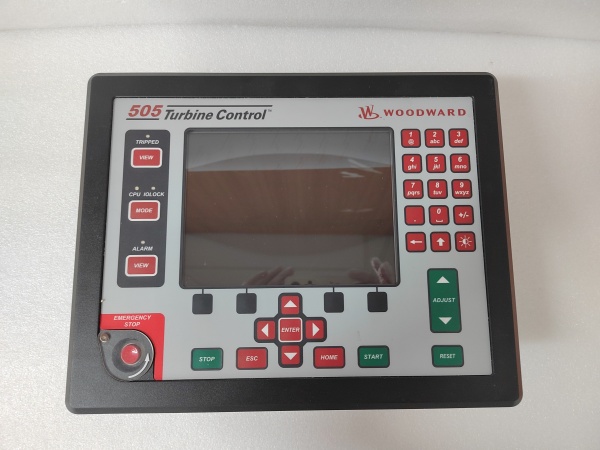
Woodward 8200-1300
The Real-World Problem It Solves
Trying to manually govern a single-valve steam turbine with old-school mechanical linkages is a recipe for disaster—especially in hazardous areas like refineries or chemical plants. You get “hunting,” poor load sharing, and a massive headache when ambient temperatures swing. The 8200-1508 completely replaces that archaic hardware. It gives you a bright, menu-driven graphical interface right at the turbine, allowing you to dial in precise RPM or process pressure without needing a laptop or a separate control room.
Where you’ll typically find it:
- Bolted to the side of a single-inlet valve steam turbine driving a centrifugal compressor in a gas processing plant.
- Serving as the primary local controller for boiler feedwater pumps in power generation facilities.
- Managing mechanical drive turbines in hazardous (Class 1 Div 2) environments where reliability and localized control are non-negotiable.
Hardware Architecture & Under-the-Hood Logic
The 8200-1508 is a self-contained industrial computer tailored specifically for the brutal physics of steam turbines.
- Core Processor & Control Algorithms: Executes fast, deterministic control loops. It doesn’t just do basic math; it runs adaptive and cascaded PID loops to smoothly transition the turbine from a cold start, through critical speeds, all the way to full-load operation.
- Integrated Graphical HMI: Unlike rack-mounted units that require an external screen, this unit has a built-in graphical LCD and keypad. It allows field technicians to view real-time turbine curves, acknowledge alarms, and modify setpoints directly at the machine.
- High-Voltage Power Conditioning: This specific variant (the -1508) is built to handle highly variable industrial power supplies (88-264 VAC or 90-150 VDC). Internal hold-up capacitors ensure the logic doesn’t crash during momentary power sags, maintaining valve position or executing a controlled trip.
- Multi-Port Communication Hub: Acts as a bridge between the turbine and the outside world. It uses Ethernet and serial ports to talk Modbus to the plant’s main DCS, while the internal CAN buses (LinkNet-HT) are reserved for high-speed communication with remote I/O drops or other Woodward devices.
Field Service Pitfalls: What Rookies Get Wrong
The “Phantom Trip” from Incorrect MPU (Magnetic Pickup) Phasing
A rookie tech installs the 8200-1508 and powers it up. Everything looks great until they try to roll the turbine. The controller immediately throws a “Speed Sensor Error” or, worse, an “Overspeed Trip” even though the turbine is barely turning.
- Field Rule: Magnetic pickups are highly sensitive to installation distance (gap) and phasing. Always use Woodward’s built-in “First-Out” indication and event logger to see which sensor triggered the fault. Never assume the sensor is bad; check the gap first (usually 0.010″ to 0.020″), and ensure the two MPUs are phased 90 degrees apart if required by the software configuration.
Slamming into the Mechanical Stop during Commissioning
An overzealous operator bypasses the software limits and manually drives the actuator output to 100% using the local HMI, thinking he is testing the valve. Instead, he drives the physical steam valve hard into its mechanical stop, bending the valve stem or stripping the actuator linkage.
- Field Rule: Before ever taking control of the turbine, always perform a “Safe Range” calibration. Use the 8200-1508’s internal simulator or “Service Mode” to map out the physical limits of the valve stroke. Set the software ramps and clamps to 5% and 95% of the physical travel respectively. Let the software save the hardware.
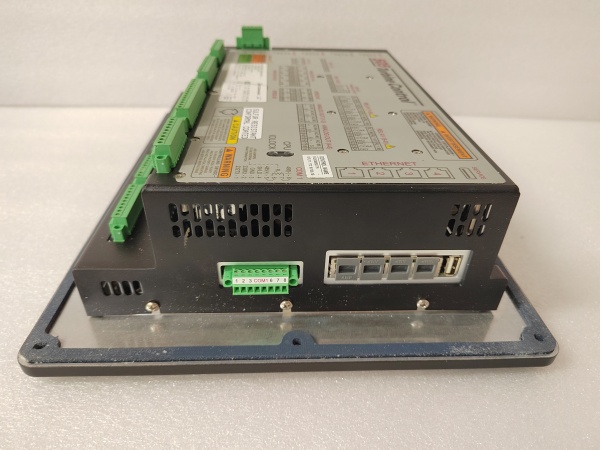
Woodward 8200-1300
Commercial Availability & Pricing Note
Please note: The listed price is for reference only and is not binding. Final pricing and terms are subject to negotiation based on current market conditions and availability.