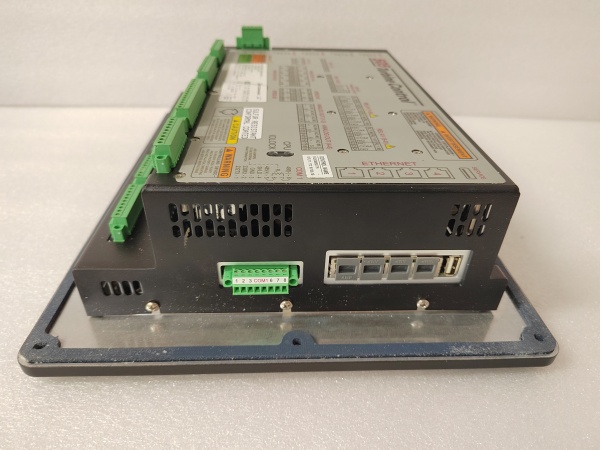
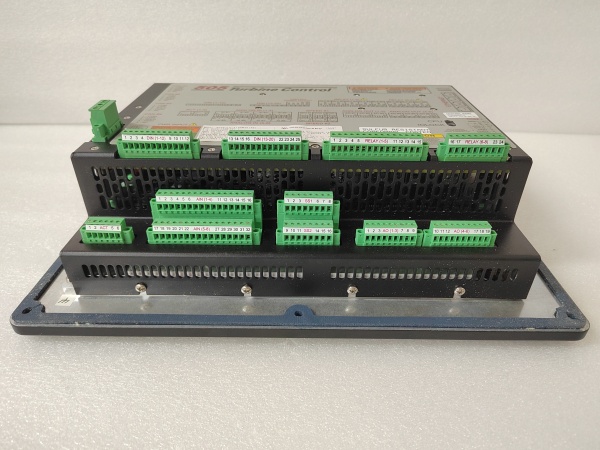
Description
Hard-Numbers: Technical Specifications
- Part Number: 8200-1340
- Power Supply: 18–36 VDC Nominal (LVDC Variant)
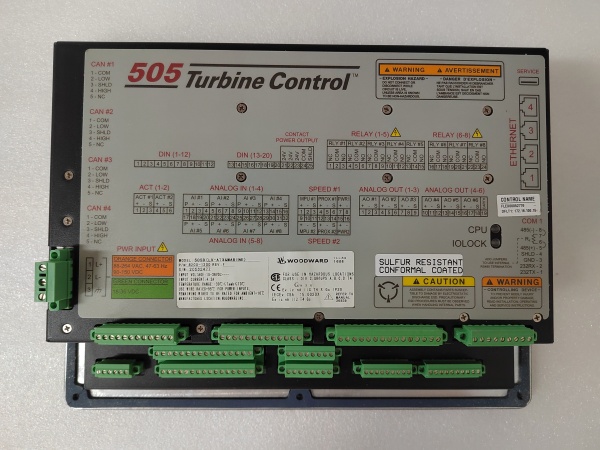
- User Interface: Integrated Graphical LCD Touchscreen HMI
- Control Loops: Real-time, deterministic PID control (scan rates down to 5 ms)
- Speed Sensor Inputs: Supports Magnetic Pickups (MPUs) and proximity sensors
- Analog I/O: Multiple configurable 4-20 mA inputs and outputs for process variable monitoring and actuator driving
- Discrete I/O: Configurable discrete inputs and relay driver outputs for alarms, trips, and status indication
- Communication Ports: 4 x Ethernet, 4 x CAN (LinkNet-HT/RTCnet), RS-232/485 (Modbus TCP/RTU)
- Programming Software: Woodward GAP (Graphical Application Programmer)
- Mounting Style: Panel (Bulkhead) Mount
- Environmental Rating: NEMA 4X / IP66 (front face), Class 1 Div 2 hazardous location certified
- Operating Temperature: –40°C to +70°C
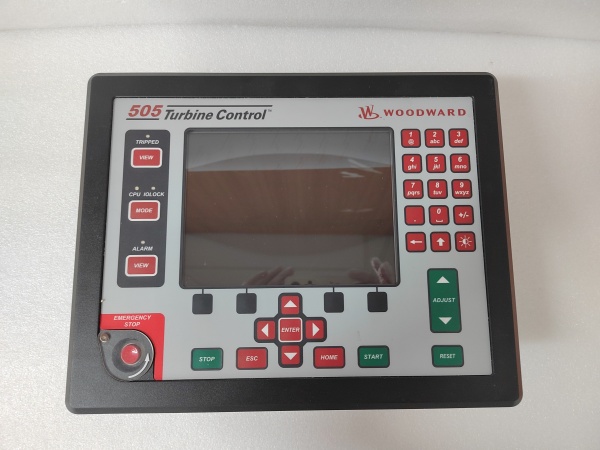
Woodward 8200-1300
The Real-World Problem It Solves
When you’re dealing with high-inertia rotating equipment like steam or gas turbines, a generic PLC often can’t react fast enough to prevent an overspeed condition or manage the nuances of a critical speed ramp-up. The Woodward 8200-1340 acts as a dedicated, deterministic safety and control system. It closes the loop between sensing shaft speed and positioning a massive steam or fuel valve in milliseconds, ensuring the turbine stays online and undamaged even if the main plant DCS goes offline.
Where you’ll typically find it:
- Bolted to the control panel door of a geothermal or hydro turbine generator in a remote powerhouse.
- Serving as the primary local governor for a steam turbine driving an oil refinery compressor.
- Managing the complex cascade control loops of a gas turbine package in a Class 1 Div 2 hazardous environment.
Hardware Architecture & Under-the-Hood Logic
The 8200-1340 is built on the proven 505D hardware platform, optimized to handle the extreme physics of rotating machinery without batting an eye.
- Deterministic Core Processor: Unlike standard PCs or PLCs that use preemptive multitasking, this unit runs a real-time operating system (RTOS). This guarantees that critical control loops (like overspeed protection) execute exactly when they are supposed to, every single time, with scan rates as fast as 5 milliseconds.
- Integrated HMI & GAP Programming: The front panel features a fully integrated color touchscreen for local monitoring and control. Internally, it runs logic created in Woodward’s GAP (Graphical Application Programmer) software, allowing engineers to drag-and-drop specific control function blocks (like valve ramping, cascade PIDs, and selector switches) tailored to the exact turbine skid.
- Industrial-Grade I/O Scanning: The module features dedicated, high-precision analog and discrete I/O channels. It conditions the raw, noisy signals from magnetic pickups and LVDTs, filtering out electrical interference to provide a rock-solid speed reference to the control algorithm.
- Multi-Protocol Communication Hub: It acts as the central node for the turbine’s control network. It uses high-speed CAN buses (LinkNet-HT) to talk to remote I/O drops and Ethernet/Modbus to report turbine health and accept load setpoints from the plant’s main DCS.
Field Service Pitfalls: What Rookies Get Wrong
The “Watchdog Bite” from Forgetting the Keep-Alive
A rookie technician uploads a modified GAP program to the 8200-1340. Everything seems fine until the turbine trips 10 minutes later, citing a “Watchdog Timeout” or “Task Overrun” fault.
- Field Rule: The 8200-1340 is a deterministic controller. If your custom GAP logic contains an infinite loop, or if a single program cycle takes longer than the configured “Watchdog” time limit, the processor assumes it has crashed and forces a hardware-level trip to the safe state. Always run a “Task Load” analysis in the GAP software before downloading code to ensure your logic executes well within the 5ms or 10ms scan window.
Chasing Ghosts Caused by Ungrounded Shielded Cables
An integrator wires the magnetic pickup (MPU) sensors for the 8200-1340 using standard twisted pair but leaves the cable shield unconnected at both ends. Whenever a nearby 480VAC motor starter kicks in, the 8200-1340 reads a massive speed spike and trips the turbine on overspeed.
- Field Rule: Electromagnetic interference (EMI) is the enemy of high-impedance sensor circuits. Always ground the shielded twisted-pair cable connecting the MPUs to the 8200-1340 at the controller end ONLY. Never ground both ends, as this creates a ground loop. Use ferrite beads on the sensor wires if you are in an extremely noisy electrical environment.
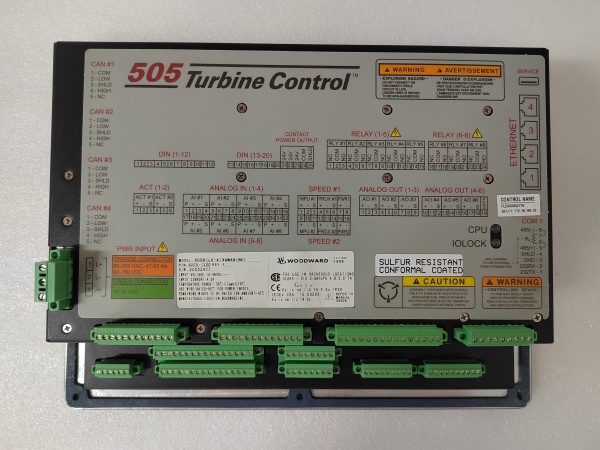
Woodward 8200-1300
Commercial Availability & Pricing Note
Please note: The listed price is for reference only and is not binding. Final pricing and terms are subject to negotiation based current market conditions and availability.