Description
Hard Numbers: Technical Specifications
- Analog Inputs: 24 channels (supports 4–20 mA, 0–5 V, or ±10 V configurations)
- Analog Outputs: 8 channels (supports 4–20 mA or 0–5 V configurations)
- Resolution: 16-bit for inputs, 14-bit for outputs (typical)
- Accuracy: ±0.1% of full scale (typical)
- Input Impedance: 250 Ω (for 4–20 mA), >1 MΩ (for voltage inputs)
- Output Load: ≤ 600 Ω (for 4–20 mA), ≥ 2 kΩ (for voltage outputs)
- Isolation: Optically isolated inputs/outputs (up to 1500 V)
- Response Time: ≤ 10 ms (typical for input to output processing)
- Power Supply: 18–32 VDC (24 VDC nominal, via MicroNet chassis backplane)
- Power Consumption: Approx. 20–30 W (depending on signal load)
- Operating Temperature: -40°C to +70°C (-40°F to +158°F)
- Communication Interface: Internal MicroNet proprietary bus
- Diagnostics: Overrange/underrange detection, open circuit detection, module fault reporting, and status LEDs
- MTBF: Exceeds 200,000 hours under normal operating conditions
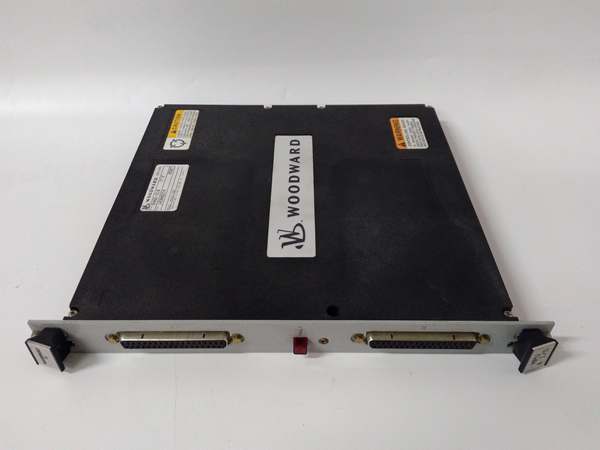
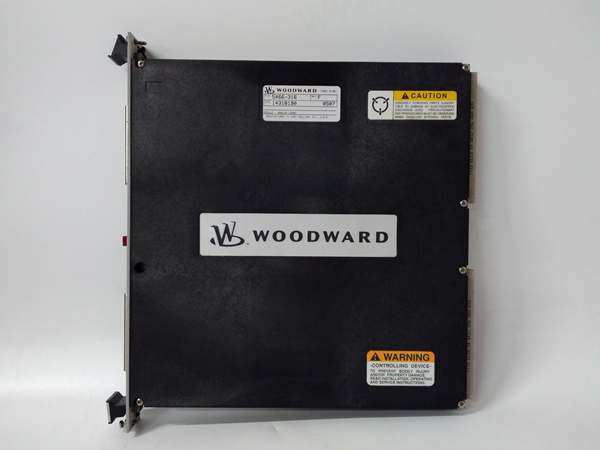
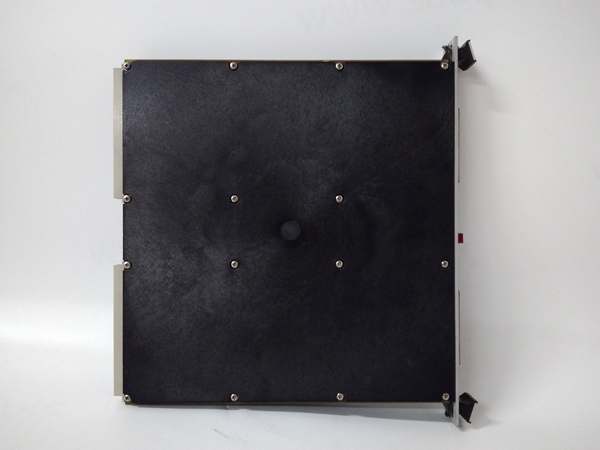
WOODWARD 5466-315
The Real-World Problem It Solves
In mission-critical environments like power plants or offshore oil platforms, a single faulty analog signal (like a stuck thermocouple or a shorted transmitter) can trigger a false trip, shutting down an entire turbine and costing hundreds of thousands of dollars in lost revenue. Traditional non-redundant I/O cards turn a minor sensor glitch into a major system failure.
The Woodward 5466-315 is engineered specifically to eliminate this single point of failure. By operating within a Triple Modular Redundant (TMR) MicroNet architecture, this module cross-compares its analog readings with two other identical modules. If one channel drifts or fails, the TMR voting logic automatically masks the faulty reading and relies on the healthy modules, allowing the turbine to continue running safely without human intervention . Furthermore, it consolidates 24 inputs and 8 outputs into a single high-density card, drastically reducing cabinet footprint and wiring complexity compared to older, single-channel-per-point legacy systems .
Where you’ll typically find it:
- In the control cabinets of combined-cycle power plants, processing temperature and pressure feedback from gas turbines to prevent overspeed and overheating .
- On offshore oil rigs, driving proportional valves for fuel gas control while monitoring vibration and oil pressure on critical compressors .
- Retrofitted into legacy turbine control systems (replacing older HydroNet or NetCon systems) to bring modern TMR fault tolerance and high-density I/O into a compact footprint .
Hardware Architecture & Under-the-Hood Logic
The 5466-315 is not just a passive conduit for 4-20mA signals; it is a highly intelligent, self-diagnosing bridge between the physical world and the MicroNet CPU.
- Integrated Signal Conditioning: Unlike basic I/O cards that require external Marshalling panels and signal isolators, the 5466-315 has built-in filtering, cold-junction compensation (for thermocouples), and optical isolation (up to 1500V). This allows it to reject electrical noise from large motor starters or Variable Frequency Drives (VFDs) directly at the card edge .
- TMR Voting & Disagreement Detection: The true genius of this module lies in its interaction with the MicroNet CPU. Each analog channel continuously broadcasts its digitized value (16-bit resolution) to the CPU. The CPU then performs a “2-out-of-3” vote. If one module’s reading deviates beyond a programmable tolerance (e.g., 5%) from the other two, it is instantly flagged as “Failed” or “Disagreed,” and its output is mathematically excluded from the control loop .
- On-Board Diagnostics (LEDs & Self-Test): The module constantly runs internal self-tests on its ADCs (Analog-to-Digital Converters) and DACs (Digital-to-Analog Converters). Front-panel LEDs provide instant visual cues for Module OK, Communication Active, and specific Channel Faults, allowing technicians to identify a failed card in seconds rather than hours .
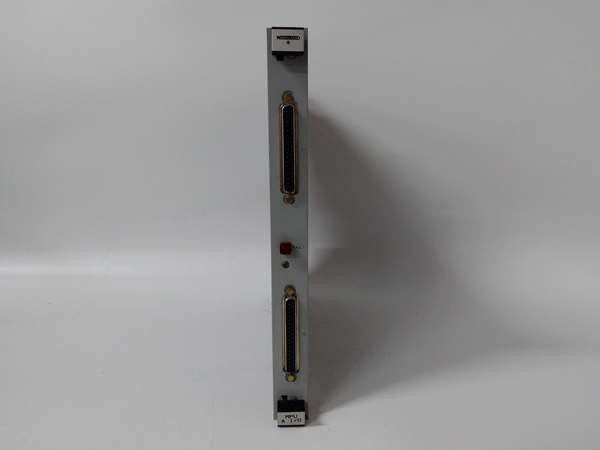
WOODWARD 5466-315
Field Service Pitfalls: What Rookies Get Wrong
The “Disagree” Trip Caused by Ground Loops
Rookies often treat the 5466-315 like a standard PLC analog card, daisy-chaining the 0V (common) return of multiple 4-20mA loops to the card’s ground terminal. In a TMR system, this creates a disastrous “ground loop.” Because each of the three redundant controllers has its own isolated power supply, tying their analog commons together forces current to flow through unintended paths. This introduces minute voltage offsets that cause the three redundant channels to read slightly differently. The MicroNet CPU, seeing a “disagreement” between the three modules, will trip the turbine on a spurious Analog Disagreefault.
- Field Rule: Keep your analog commons strictly isolated. Never jumper the 0V returns of different loops together on the terminal block unless explicitly called out in the Woodward grounding drawing. Use isolated barrier transmitters for any 4-20mA signals coming from outside the control cabinet to completely break ground loops.
Ignoring the “Last Value Held” Default on Outputs
When a 5466-315 analog output channel fails or loses communication with the CPU, it defaults to “Hold Last Value” to prevent a sudden spike or drop that could trip the turbine. Rookies, unaware of this, will troubleshoot a sticky control valve by forcing the output to 0% in the software. When they exit the software or cycle power, the output snaps back to the “Held” last value (which might be 100%), causing a dangerous uncontrolled ramp-up of fuel or steam.
- Quick Fix: Before forcing outputs in the software, physically disconnect the loop at the field terminal or use the “Initialize” command in the MicroNet GUI. Always verify the actual loop current with a precision multimeter after making changes. Never assume a software force overrides the hardware hold-state during a power cycle.
Swapping a Failed Card Without Synchronizing the Internal Database
Because the 5466-315 is an intelligent I/O module (not just a dumb peripheral), it stores part of its configuration and calibration data in on-board memory. Rookies will rush to replace a faulted card, pop the new one in, and wonder why the system immediately throws a Module Mismatchor Wrong Hardwarealarm, preventing the turbine from restarting.
- Field Rule: You cannot just “hot-swap” these cards blindly. Before removing the faulty module, use the MicroNet service tool to “Unconfigure” the slot. After inserting the new module, you must “Configure” the slot, which downloads the correct personality and calibration constants from the main CPU to the new card. Wait for the “OK” LED to turn solid green before attempting to close the control loop.
Commercial Availability & Pricing Note
Please note: The listed price is for reference only and is not binding. Final pricing and terms are subject to negotiation based on current market conditions and availability.