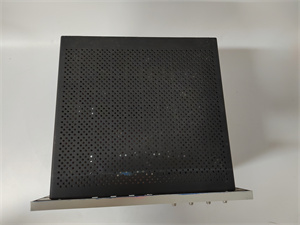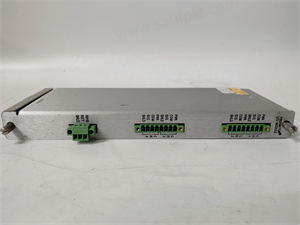
Description
Hard-Numbers: Technical Specifications
- Part Number: 5466-1045
- Output Channels: 32 Discrete (Sinking / Open Collector)
- Output Voltage: 24 VDC (External Supply Required)
- Max Output Current: 0.5 A per channel (Typical), 2.0 A max per module
- Isolation: 3000 VDC (Outputs to Logic / Backplane)
- Power Supply: 5 VDC (Backplane powered), 24 VDC (Field powered)
- Communication Interface: VME bus / Proprietary Backplane
- Operating Temperature: -25°C to +70°C
- Mounting: DIN Rail / Card Guide Mounting
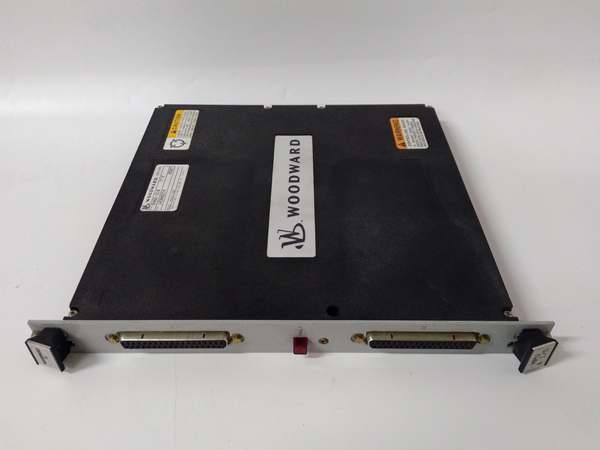
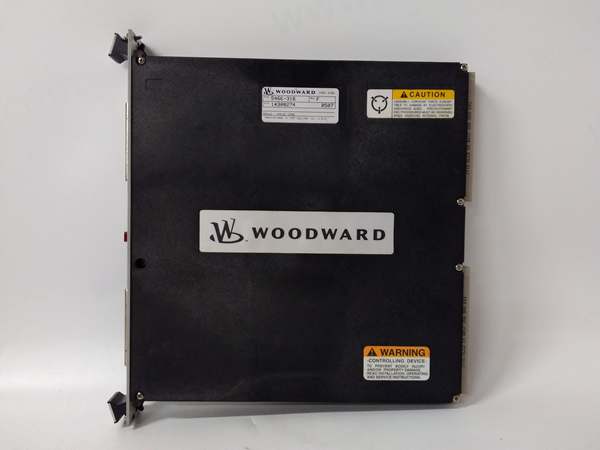
Woodward 5466-1045
The Real-World Problem It Solves
When you need to energize 32 different devices—solenoids, alarm horns, or auxiliary relays—running individual wires back to a remote I/O rack wastes cabinet space and turns the terminal strip into a tangled nightmare. The 5466-1045 crams 32 sinking outputs onto a single, compact PCB that slots directly into the main 5400-series rack. It handles the heavy lifting of switching 24VDC field loads while keeping ground loops and inductive voltage spikes completely isolated from the sensitive 5V backplane logic.
Where you’ll typically find it:
- Inside the main control cabinet of a GE LM6000 or similar aeroderivative gas turbine, driving the fuel trip solenoids and variable geometry vane (VGV) actuators.
- Mounted in the DCS interface panel of a refinery compressor station, controlling the open/close sequences of motor-operated valves (MOVs).
- Retrofitted into aging power generation control panels to replace failing relay banks, consolidating the wiring and adding microprocessor-level diagnostics.
It replaces a wall of electromechanical relays with a single solid-state card.
Hardware Architecture & Under-the-Hood Logic
This module acts as a power-switching buffer between the MicroNet processor’s low-voltage logic and the harsh reality of the plant floor. It protects the CPU while reliably executing on/off commands.
- Command Reception: The module monitors the VME backplane for output state commands broadcast by the main CPU.
- Optical Isolation: Upon receiving a command, an internal opto-isolator fires, bridging the gap between the 5V logic side and the 24V field side without a physical electrical connection.
- Driver Activation: The opto-isolator triggers a robust MOSFET (Metal-Oxide-Semiconductor Field-Effect Transistor) configured as a sinking output (switching the 0VDC/ground leg of the external device).
- Status Feedback: The module constantly monitors the actual state of the MOSFETs and reports any open-circuit or short-circuit failures back to the CPU via the backplane.
Field Service Pitfalls: What Rookies Get Wrong
Forgetting the External 24VDC Supply
New technicians assume that because the card is plugged into a powered backplane, the outputs will magically have power. They connect a 24VDC solenoid to the output terminal, pull the trigger in the software, and nothing happens. The 5466-1045 requires a dedicated external 24VDC supply to drive the field devices.
- Field Rule: Always verify the presence of the 24VDC field power supply before troubleshooting why an output isn’t firing. Check the onboard LEDs; if the “Power” light is out, you’ve lost your 24VDC field feed.
Blowing Outputs with Inductive Loads
Techs often connect 24VDC solenoid valves or contractor coils directly to the terminals without suppressing the voltage spike generated when the coil de-energizes. This “inductive kickback” punches right through the MOSFETs, killing the output channel instantly.
- Field Rule: If you are switching inductive loads (solenoids, relays, contactors), you must install a flyback diode (for DC) or a snubber circuit (RC network) across the load terminals. Don’t rely on the module’s internal protection alone; it’s there for transients, not continuous abuse.
Miswiring Sourcing vs. Sinking
A classic blunder is connecting a 24VDC device to the output terminal and wondering why it won’t turn off. The 5466-1045 is a sinkingoutput, meaning it switches the ground (0VDC) side of the circuit. If the tech wired the positive 24VDC to the output terminal, the device is permanently powered, regardless of the software command.
- Field Rule: For sinking outputs, connect the positive (+) side of the external 24VDC supply directly to the device. Connect the negative (-) side of the device to the module’s output terminal. When the output activates, it completes the circuit to ground.
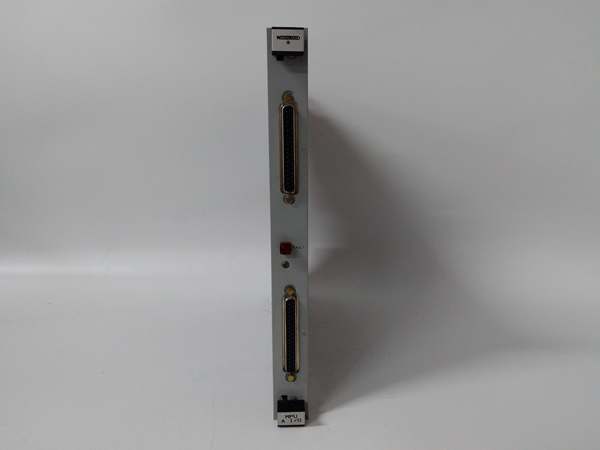
Woodward 5466-1045
Commercial Availability & Pricing Note
Please note: The listed price is for reference only and is not binding. Final pricing and terms are subject to negotiation based on current market conditions and availability.