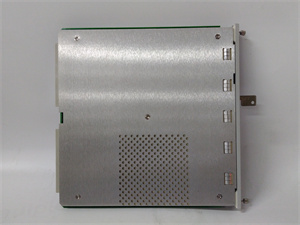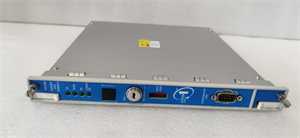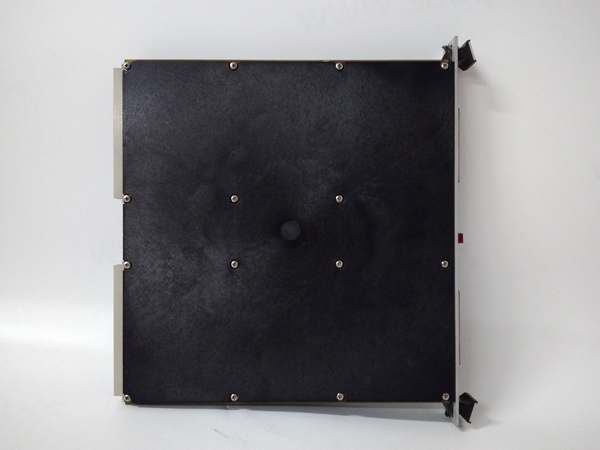
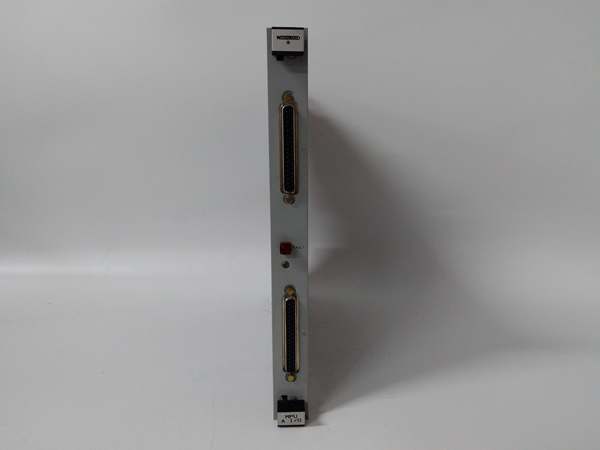
Description
Hard Numbers: Technical Specifications
- Processor: PowerPC MPC5200 (High-performance RISC architecture)
- Memory: 128 MB DDR RAM (Runtime), 64 MB Flash (Firmware & Storage)
- Communication Interfaces: 10/100 Base-T Ethernet, RS-232/485, CANopen, Real-Time Network (RTN) ports
- Power Supply: 18-32 V DC (24V DC Nominal via Backplane)
- Redundancy Modes: Simplex or Redundant (requires second CPU in specific chassis slot)
- Operating Temperature: 0°C to +55°C (32°F to 131°F)
- Vibration Compliance: Lloyd’s ENV2 test 1, CSA Class 1 Division 2
- Form Factor: Standard VME chassis slot compatible
- Special Features: Integrated Real-Time Clock (RTC) with battery backup, Service Port for local diagnostics
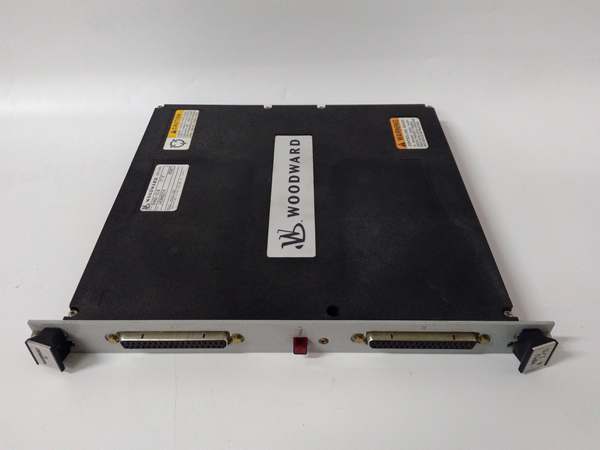
WOODWARD 5466-1002
The Real-World Problem It Solves
Imagine trying to conduct an orchestra where the musicians are diesel generators, gas turbines, and utility grids, all speaking different languages and prone to drifting out of tempo. The Woodward 5466-1035 is the maestro that brings them into perfect harmony. Whether deployed as a MicroNet Plus CPU handling complex steam turbine sequencing or as an EGCP-3 Master Controller balancing reactive power across 16 generators, it replaces a chaotic web of PID loops and mechanical linkages with deterministic, software-driven precision. It eliminates “nuisance trips” during load transients and ensures that when your facility switches from grid power to island mode, the transition is so smooth you barely hear the generators grunt.
Where you’ll typically find it:
- In the scorching-hot MCC room of a data center, orchestrating the N+1 redundancy of diesel generators to ensure the UPS never drops.
- Mounted in the local control panel of a combined heat and power (CHP) plant, managing the delicate dance between a gas turbine’s speed governor and the facility’s steam header pressure.
- On an offshore supply vessel, acting as the primary interface between the power management system (PMS) and the main propulsion diesels.
Hardware Architecture & Under-the-Hood Logic
This isn’t a generic PLC you buy off the shelf; it’s a ruggedized, deterministic execution engine built specifically for the unforgiving physics of rotating machinery.
- Deterministic Core Execution: At its heart, the PowerPC MPC5200 doesn’t mess around with Windows or Linux overhead. It runs a highly optimized real-time kernel that executes the GAP (Graphical Application Programmer) logic in microsecond scan times. When a turbine experiences a sudden load reject, this CPU calculates the new fuel stroke reference and adjusts the inlet guide vanes before the rotor even has a chance to accelerate.
- Multi-Protocol Traffic Director: The 5466-1035 acts as a network traffic cop. It uses its dedicated silicon to handle high-speed CANopen for actuator positioning, Modbus TCP for talking to the DCS, and proprietary RTN (Real-Time Network) protocols to synchronize with peer CPUs or expansion I/O chassis without introducing jitter .
- Seamless State Machine Management: For EGCP-3 applications, the module continuously solves complex power equations. It monitors PT/CT inputs, calculates real versus reactive load division, and drives the sync check relays. It ensures that when the breaker closes, the voltage, frequency, and phase angle are matched within incredibly tight tolerances (e.g., ±0.05 Hz and ±5°), preventing destructive mechanical stress on the generators .
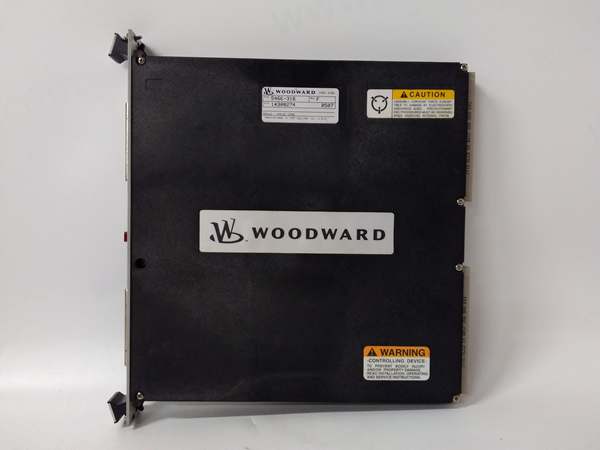
WOODWARD 5466-1002
Field Service Pitfalls: What Rookies Get Wrong
The “Ghost in the Machine” Caused by Mixed Firmware
Rookies often treat a CPU swap like changing a lightbulb. They grab a spare 5466-1035, pop out the failed unit, and slot in the new one, expecting it to magically adopt the system’s configuration. Suddenly, the turbine throws a “Watchdog Timeout” or the generators refuse to sync because the firmware revision on the new CPU interprets the GAP code slightly differently than the older unit.
- Field Rule: Never hot-swap a CPU without verifying the firmware revision first. If you are running a redundant pair (CPU A and CPU B), they mustbe running the exact same firmware build. If the spare on the shelf is newer, you must either downgrade the spare or plan a coordinated shutdown to update both units simultaneously.
Starving the Beast: Undersized Power Supplies
Because the 5466-1035 is packed with high-speed processors and multiple network PHYs, its inrush current during boot-up is significant. Rookies wire it to the same 24V DC rail that’s powering the relay bank and indicator lights. When the CPU initializes and the Ethernet ports link up, the sudden current draw causes a momentary voltage sag. The CPU interprets this brownout as a critical fault and initiates a hard reset, leaving the turbine in an unknown state.
- Quick Fix: Check the power supply sizing. A 24V DC supply for a MicroNet rack should be sized at least 150% of the calculated continuous load to handle inrush currents. Better yet, give the CPU its own dedicated 24V DC supply with reverse polarity protection and transient suppression diodes.
Ignoring the RTC Battery Until It’s Too Late
The 5466-1035 has a non-user-replaceable battery backing up the Real-Time Clock (RTC) . Rookies ignore the “RTC Battery Low” alarm because the CPU is running fine. Six months later, a momentary power blip resets the CPU. When it reboots, the system clock is set to the year 2000. The DCS detects the massive time jump, declares a communication failure, and forces a trip on the entire compressor station.
- Field Rule: If you see an RTC battery warning, order a replacement CPU module immediately. Since the battery is non-field-replaceable, you have to swap the whole unit. Schedule the swap during a planned outage, and make sure to upload the latest GAP code and set the correct system time immediately after the swap.
Commercial Availability & Pricing Note
Please note: The listed price is for reference only and is not binding. Final pricing and terms are subject to negotiation based on current market conditions and availability.