Description
Hard Numbers: Technical Specifications
(Note: The following specifications are compiled from typical 5464-334 operational parameters. Please consult the official Woodward documentation for exact project engineering.)
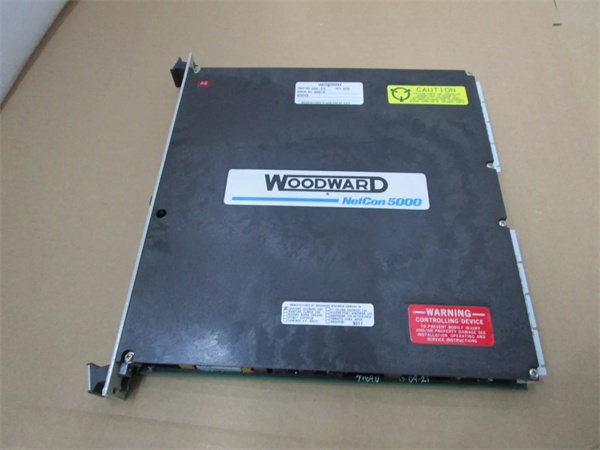
- Part Number: 5464-334
- Series: 5400 Series
- Number of Input Channels: 8 Isolated Analog Inputs
- Input Type: 4-20mA DC (Supports 2-wire ungrounded and isolated self-powered transducers)
- Isolation Protection: 3000VDC continuous reinforced insulation between channels and ground
- Supply Voltage: 10-60VDC (24VDC nominal)
- Power Consumption: Typical 14W (depending on system configuration)
- Status Indication: Onboard LED (Indicates I/O faults and self-test status)
- Core Component: Onboard Microcontroller for signal processing and diagnostics
- Operating Temperature: -25°C to +70°C (-13°F to 158°F)
- Storage Temperature: Per Woodward 5400 Series standards
- Relative Humidity: 5% to 95%, non-condensing
- Physical Dimensions: Approx. 30cm × 20cm × 25cm (dimensions may vary based on packaging/enclosure)
- Physical Weight: Approx. 0.8 kg (1.76 lbs)
- Mounting Method: Standard 5400 Series module mounting (typically DIN rail or chassis slot)
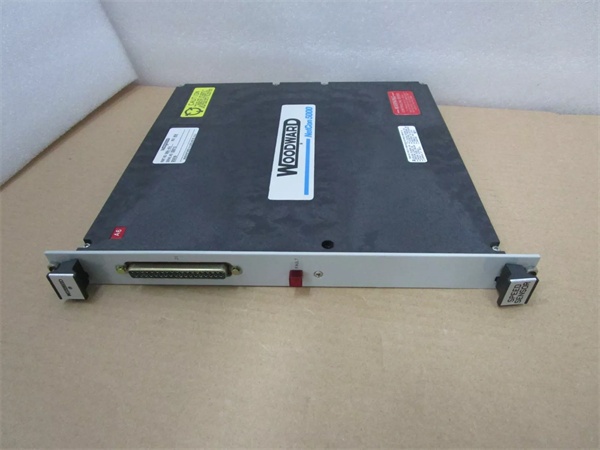
WOODWARD 5464-334
The Real-World Problem It Solves
In complex power generation or oil & gas compression stations, a single turbine control system (like a Woodward 505 or Micronet) might need to monitor dozens of critical parameters simultaneously: lube oil pressure, exhaust temperature, fuel gas pressure, and generator voltage.
The challenge arises from the industrial environment itself. Massive Variable Frequency Drives (VFDs), high-voltage switchgear, and heavy inductive loads create an electrically “noisy” environment. If you run a standard analog signal wire past a 4160V motor cable, the induced electromagnetic interference (EMI) can corrupt the 4-20mA signal, making a reading of “12mA” jump wildly to “15mA.” To a turbine controller, this looks like a sudden pressure spike, which could trigger an unnecessary emergency trip, shutting down the entire plant.
The Woodward 5464-334 is specifically engineered to act as an impenetrable fortress against this electrical noise. By utilizing independent 3000VDC isolation on each of its 8 channels, it ensures that a voltage spike or ground fault on one sensor loop cannot affect the others or the main controller . It filters out the industrial “static” and delivers clean, precise DC current values, ensuring your turbine only shuts down when there is a realproblem, not because of a noisy wire .
Where you’ll typically find it:
- Turbine Control Panels: Interfacing pressure transmitters and thermocouples to the main turbine governor .
- Power Generation Switchgear: Acquiring generator voltage and current feedback for load sharing .
- Compressor Stations: Monitoring suction and discharge pressures of gas compressors in real-time .
Hardware Architecture & Under-the-Hood Logic
Unlike passive analog input cards that merely route current to a resistor, the 5464-334 is an active, intelligent I/O component.
- Precision Signal Conditioning: As the 4-20mA current enters the module, it passes through an isolation barrier. A precision shunt resistor converts the current to a voltage, which is then fed into a high-resolution Analog-to-Digital Converter (ADC).
- Onboard Microcontroller Processing: The onboard MCU reads the digital values from the ADC. It doesn’t just pass the raw number; it performs “input scaling” (converting 4mA to 0% and 20mA to 100%) and can apply linearization curves if the sensor is non-linear .
- Advanced Diagnostics: The MCU constantly runs self-diagnostics. During power-up, it executes a self-test routine. If it detects an open circuit (broken wire), short circuit, or out-of-range current on any of the 8 channels, it immediately flags an I/O fault and illuminates the onboard LED .
- Data Transmission: The processed, noise-free digital data is then packaged and transmitted to the main turbine controller via the backplane bus, ensuring the master CPU receives accurate, ready-to-use engineering units without having to do the heavy lifting of signal filtering.
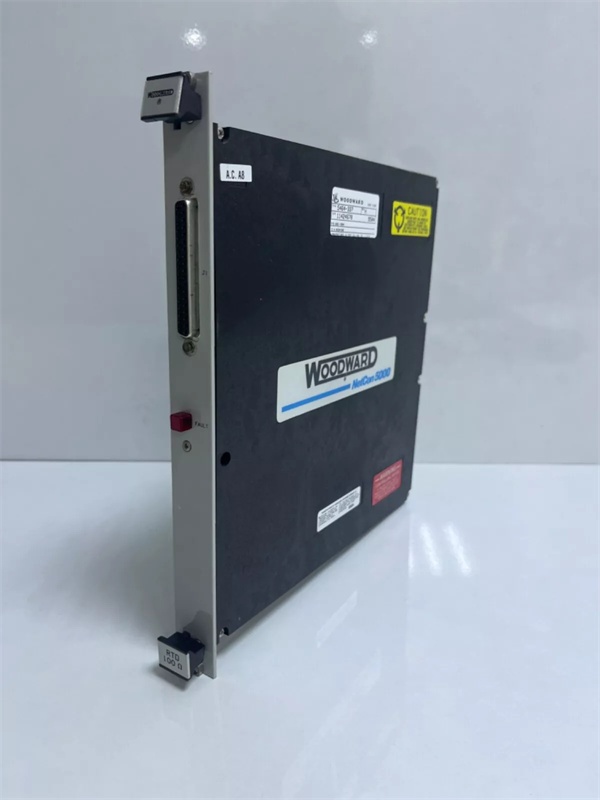
WOODWARD 5464-334
Field Service Pitfalls: What Rookies Get Wrong
The “Floating Transmitter” Ground Issue
While the 5464-334 boasts 3000VDC isolation, it cannot defy the laws of physics regarding common-mode voltage limits if the field wiring is done incorrectly. Rookies often use “ungrounded” 2-wire transmitters without a solid reference point.
- The Glitch: If you have an ungrounded transmitter and a power surge occurs in the plant, the transmitter’s 24V DC power supply might float up to 500VDC relative to the Woodward controller’s common ground. Even with 3000VDC isolation, this can exceed the transient common-mode rejection rating, causing the ADC to saturate and report maximum current (20mA or 20.5mA), tricking the controller into thinking the pressure has spiked .
- Field Rule: Always ensure that 2-wire transmitters have a proper, solid DC ground reference at the power supply. If using intrinsically safe (IS) barriers or non-isolated transducers, ensure the 5464-334’s analog common (A_COM) is properly tied to the system ground to bleed off any static buildup or transient voltages.
Ignoring the “Ghost Current” from Adjacent Channels
Because the 8 channels are packed tightly together, and the module is often mounted near high-power equipment, capacitive coupling between adjacent wires inside the terminal block can occur.
- The Consequence: A rookie might configure Channel 1 for a 4-20mA pressure sensor and leave Channel 2 completely disconnected (open circuit). Due to the high density of the wiring, Channel 1’s current flow can induce a “ghost current” into Channel 2. The 5464-334 will faithfully report this induced current as a valid signal, showing a fluctuating, random milliamp value on the unused channel .
- Field Rule: Never leave analog inputs floating. If a channel is not in use, either configure it as “disabled” in the software (if the controller allows) or, as a hardwired fix, place a 250-ohm resistor across the input terminals to drain any stray induced current to the common bus.
Improper 24VDC Power Supply Wiring (The Ripple Effect)
The 5464-334 relies on a stable DC power supply (10-60VDC) to power its internal microcontroller and isolation circuitry.
- The Symptom: If the 24VDC supply feeding the module is shared with large solenoids or relays, and those devices switch on and off, they create voltage dips (sags) and spikes (transients) on the 24VDC line. The 5464-334’s MCU might reset momentarily during a deep voltage sag, causing all 8 analog readings to drop to zero for a split second. This can trigger “Low Signal” alarms or cause the turbine to trip on “Loss of Speed/Load Feedback” .
- Field Rule: Always run a dedicated, fused 24VDC supply line directly from the DC power supply to the 5464-334. Use twisted-pair wiring for the 24VDC input to the module to minimize inductive pickup. If possible, add a small inline EMI filter (ferrite bead) on the 24VDC feed to the module to block high-frequency noise from neighboring relays.
Commercial Availability & Pricing Note
Please note: The listed price is for reference only and is not binding. Final pricing and terms are subject to negotiation based on current market conditions and availability.