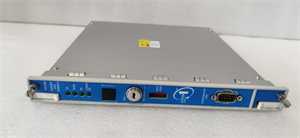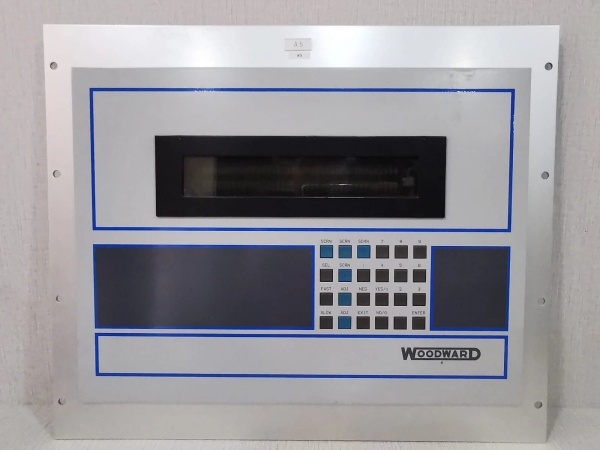
Description
5453-203: Product Overview
The 5453-203 functions as a dedicated operator interface panel within Woodward’s MicroNet Digital Control ecosystem, specifically engineered for gas turbine control applications. In the control system architecture, this unit occupies the critical human-machine interface (HMI) layer—bridging the gap between the turbine control computer and operating personnel who require real-time visibility into turbine status and manual intervention capability.
Positioned typically in turbine control panels, local control stations, or skid-mounted enclosures, the 5453-203 connects via serial communication links to the primary MicroNet controller. Its primary role is information display and command input: the two-line vacuum fluorescent or LCD display presents critical operating parameters such as turbine speed, temperature, vibration levels, and operational status, while the integrated keypad allows operators to acknowledge alarms, adjust setpoints, and initiate control actions without requiring a personal computer or portable service tool.
The panel’s communication architecture utilizes RS-232 for local service connections and RS-422 for longer-distance panel-to-controller links, supporting Modbus RTU protocol for reliable data exchange. This dual-port configuration allows simultaneous connection of a service laptop (via RS-232) while maintaining continuous communication with the main controller (via RS-422)—a valuable capability during commissioning and troubleshooting activities when engineers need real-time diagnostic access without disrupting normal control system operation.
As part of the MicroNet platform, the 5453-203 benefits from Woodward’s extensive experience in gas turbine control. The display format and menu structure are optimized for turbine-specific applications, presenting information in formats familiar to power plant operators and gas compression technicians. Alarm messages use plain language rather than cryptic codes, reducing training requirements and operator error during stressful upset conditions.
The panel’s environmental design reflects the harsh conditions typical of gas turbine installations—temperature extremes from arctic pipelines to desert power plants, vibration from adjacent rotating equipment, and electromagnetic noise from high-voltage ignition systems. The wide -40°C to +70°C operating range and robust enclosure ensure reliable operation without climate-controlled enclosures in most applications.

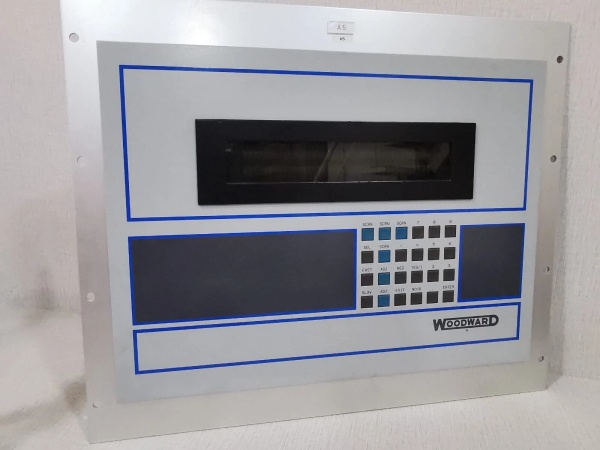
WOODWARD 5453-203
5453-203: Technical Specifications
-
Model Number: 5453-203
-
Manufacturer: Woodward Inc.
-
Product Type: MicroNet 2-Line Display Operator Interface Panel
-
Series: Woodward MicroNet Digital Control Series
-
Application: Gas turbine control system operator interface
-
Input Power: 12 VDC, 650 mA nominal
-
Power Consumption: 7.8 W typical
-
Display Type: Two-line vacuum fluorescent or LCD alphanumeric display
-
Display Capacity: 2 lines × 16 or 24 characters per line
-
Character Set: Alphanumeric, numeric values, limited graphics symbols
-
Backlighting: LED backlight for low-light visibility
-
Keypad: Integrated membrane keypad with navigation and function keys
-
Communication Ports:
-
RS-232 serial port (DB9 connector) for local service
-
RS-422 serial port (DB9 connector) for controller communication
-
-
Communication Protocol: Modbus RTU slave
-
Baud Rate: Configurable (typically 9600-19200 bps)
-
Cable Type: HDMI or proprietary (per system configuration)
-
Connector Type: DB9 (DE-9) male/female per port function
-
Mounting: Panel mount or DIN rail mount (35mm) depending on configuration
-
Enclosure Material: Powder-coated steel or aluminum
-
Enclosure Rating: IP40 minimum (control cabinet installation)
-
Operating Temperature: -40°C to +70°C (-40°F to +158°F)
-
Storage Temperature: -40°C to +85°C (-40°F to +185°F)
-
Relative Humidity: 5% to 95%, non-condensing
-
Vibration Resistance: 1.0 G, 5-2000 Hz per IEC 60068-2-6
-
Shock Resistance: 15 G, 11 ms half-sine per IEC 60068-2-27
-
EMC Compliance: IEC 61000-4-2 (ESD), IEC 61000-4-4 (EFT)
-
Dimensions: 305 mm H × 356 mm W × 152 mm D (12.0″ × 14.0″ × 6.0″)
-
Weight: 1.82 kg (4.0 lbs)
-
Certifications: CE, UL, cUL (typical for Woodward MicroNet series)
-
Country of Origin: United States
Core Features & Customer Value
Dedicated Turbine-Specific Operator Interface: Unlike generic industrial HMIs that require extensive customization for turbine applications, the 5453-203 arrives pre-configured with display formats and alarm prioritization schemes optimized for gas turbine operation. Operators see immediately relevant parameters—firing temperature, compressor discharge pressure, exhaust temperature spread—without navigating through irrelevant menus. This specialization reduces operator training time and improves situational awareness during critical operating transients such as startup, load changes, and emergency shutdowns.
Dual Serial Ports for Flexible Connectivity: The RS-232/RS-422 dual-port architecture solves the common commissioning dilemma of needing simultaneous connection to the control network and a service laptop. Technicians can monitor real-time controller data via RS-422 while uploading software or trending variables via RS-232, eliminating the need to repeatedly disconnect and reconnect cables. This capability significantly reduces commissioning time and improves diagnostic efficiency during troubleshooting.
Rugged Environmental Design for Field Installation: The -40°C to +70°C operating range accommodates installation in uncontrolled environments—outdoor compressor stations, unmanned pipeline facilities, and remote power generation sites—without auxiliary heating or cooling. The sealed membrane keypad resists dust and moisture ingress common in industrial settings, while the robust metal enclosure withstands the physical abuse of control room traffic and maintenance activities. This durability translates to lower lifecycle costs compared to consumer-grade displays requiring frequent replacement.
Plain Language Alarm Annunciation: Gas turbine control systems generate numerous alarm conditions during startup, shutdown, and upset events. The 5453-203 presents these alarms as descriptive text messages rather than numeric codes, allowing operators to immediately understand the nature and severity of problems without consulting reference manuals. This clarity reduces response time during emergencies and decreases the likelihood of operator error when multiple alarms occur simultaneously.
Low Power Consumption for Battery-Backed Applications: The 650 mA current draw at 12 VDC allows operation from battery-backed power supplies or small uninterruptible power systems (UPS) during utility outages. In critical applications where turbine control must survive temporary power loss, this low power requirement extends battery autonomy and simplifies emergency power system design. The 12 VDC compatibility also integrates easily with standard industrial control power architectures.
Compact Panel Footprint for Space-Constrained Installations: The 305 × 356 mm front panel dimension fits standard industrial control panel cutouts, allowing retrofit installation in existing enclosures without extensive metalwork. The shallow 152 mm depth accommodates mounting in shallow wall-mounted panels or on swing-out door panels where space behind the panel is limited. This compact form factor proves valuable in packaged turbine skids where every square inch of panel space carries premium value.
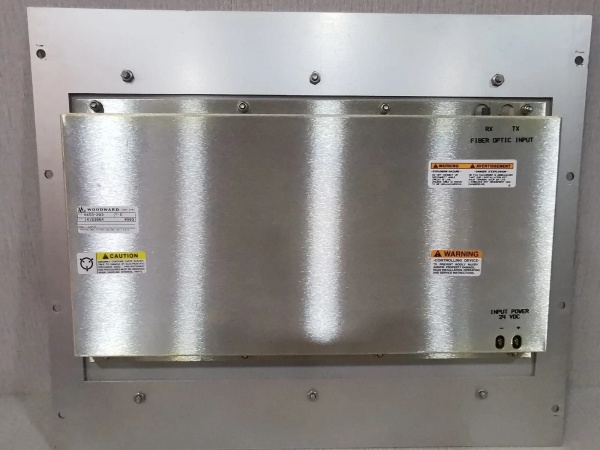
WOODWARD 5453-203
Typical Applications
Gas Turbine-Driven Compressor Stations: In natural gas pipeline and storage applications, the 5453-203 provides local operator interface for centrifugal and reciprocating compressor drives powered by gas turbines. Mounted in the compressor control panel, the display presents suction/discharge pressures, turbine speed, and vibration levels to field technicians performing local startups or responding to alarms. The RS-422 connection to the MicroNet controller allows remote monitoring from the pipeline control center while maintaining local control capability for maintenance activities.
Industrial Cogeneration Plants: Facilities with on-site power generation utilizing gas turbines (1-50 MW range) deploy the 5453-203 in turbine control panels for operators managing electrical output and steam production. The interface displays turbine operating hours, start cycles, and performance parameters used for maintenance planning and efficiency optimization. During automatic synchronization to the utility grid, operators monitor voltage, frequency, and phase match information presented on the two-line display before closing the generator breaker.
Oil and Gas Production Facilities: Offshore platforms and onshore production sites utilize the 5453-203 for gas turbine-driven generator sets and mechanical drive applications (pumps, compressors). The panel’s environmental rating withstands the corrosive atmospheres and temperature extremes of marine and desert environments. Local operators use the interface to manage turbine fuel selection (dual-fuel turbines), monitor lube oil conditions, and execute manual emergency stops when process conditions demand immediate shutdown.
Emergency/Standby Power Generation: Hospitals, data centers, and critical infrastructure facilities employ the 5453-203 as the local interface for standby gas turbine generators. During utility outages, operators monitor turbine startup sequences, generator voltage buildup, and load transfer status through the display. The manual control capability allows operators to override automatic sequences if necessary—blocking automatic transfer during testing or manually initiating emergency starts during control system faults.
Aeroderivative Gas Turbine Packages: Aviation-derived gas turbines used in power generation and mechanical drive applications utilize the 5453-203 as the primary operator interface. The display presents aero-specific parameters such as turbine inlet temperature (TIT), compressor stall margin, and variable stator vane position. Technicians use the interface to execute proprietary Woodward startup algorithms that protect the aero engine’s delicate compressor and turbine blading from thermal and mechanical stress during ground-based operation.