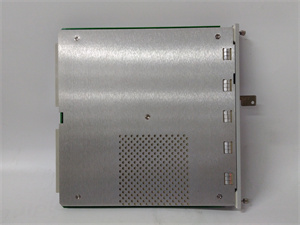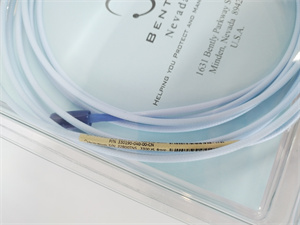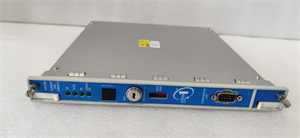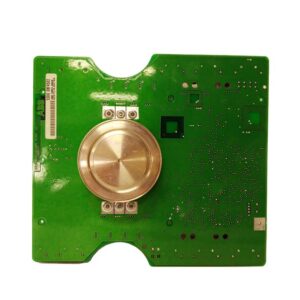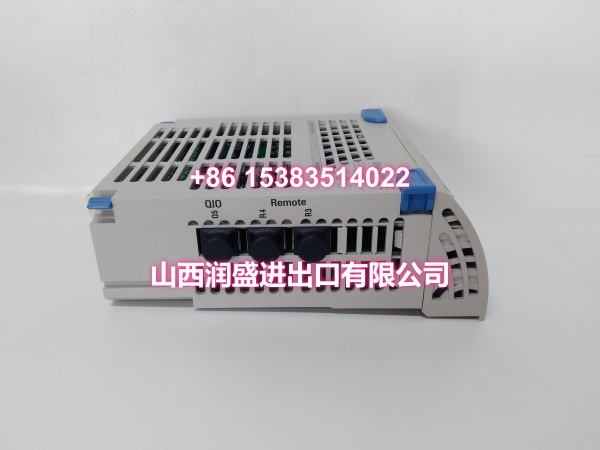
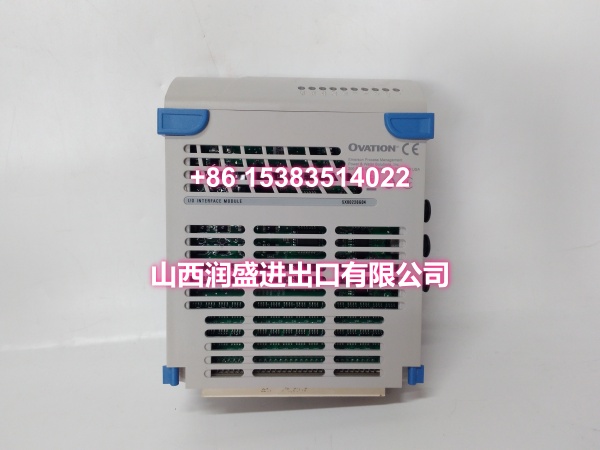
Description
Product Core Brief
- Model: 5X00241G04
- Brand: Sold under Westinghouse and Emerson names, tied to Ovation spares
- Most Likely Function One: Communication module, based on a Chinese listing that sells 5X00241G04 as an Emerson communication module, control room installed, 24V working voltage, around 6395 RMB
- Most Likely Function Two: Ovation controller side hardware, since the closely related 5X00241G01 is widely described as an Ovation processor or controller board, backplane powered, no direct field I/O, slide into a controller rack, often paired in A/B redundant setups
- Other Claims: One page describes 5X00241G01 as a 64-bit processor module with 200V supply, Ethernet RS-485 CAN interfaces, STEP 7 configuration tools, and DeltaV scalability from 25 to over one million I/O, which is obviously mixed copy from Siemens and DeltaV material rather than real Ovation data Another page groups 5X00241G01 with Ovation controllers that run on a PCI bus PC architecture with a real time operating system and can build up to 32000 points
- Product Type: Legacy Ovation controller or communication side hardware, function unconfirmed by factory documentation
- Condition: New Surplus / New Old Stock, varies by lot
Blunt take. Nobody has posted a real factory datasheet for 5X00241G04. The communication module claim is the only one tied directly to this suffix, and it comes with template specs like 30Hz output frequency and 2MB program capacity, which read like filler pasted from a PLC listing The controller story comes from the G01 sibling, not from this part Treat any seller who quotes you a confident spec sheet without a manual as guessing. Check your cabinet BOM, controller build sheet, rack layout, and the physical label.
Product Introduction
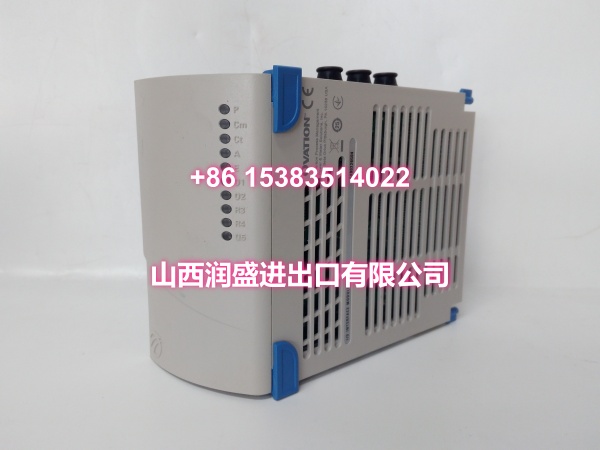
Westinghouse 5X00241G04 is a legacy part usually hunted to keep aging Ovation cabinets running. Ovation is a distributed control system from Emerson Process Control used heavily for thermal plant heat work automation, and it is a critical system, with a multi network structure that links multiple unit DCS and auxiliary control systems through redundant core switches, supporting different Ovation versions, different platforms including Windows and Solaris, and different network structures such as fast Ethernet and FDDI
Why this number creates panic buys. If it is controller hardware, a failure can take a whole controller down, and if the standby is unhealthy or out of sync, failover never happens and loops run open. If it is a communication card, a failure can isolate an entire rack or cut a data path to an auxiliary system, while the HMI keeps showing stale values that look normal. That second failure mode is sneaky and dangerous, because operators trust frozen data. The market confusion comes from traders copying specs between sibling part numbers and even between vendors, which is how an Ovation card ends up advertised with STEP 7 tools and DeltaV scaling
Key Technical Specifications
| Parameter | Value |
|---|---|
| Part Number | 5X00241G04 |
| Brand | Westinghouse / Emerson grouped |
| Claimed Function One | Communication module, control room installation, 24V working voltage, per supplier listing |
| Claimed Function Two | Ovation controller or processor side hardware, grouped with 5X00241G01 |
| Sibling Claim | 5X00241G01 as backplane powered processor card, no direct field I/O, rack slide-in, A/B redundancy support |
| Architecture Note | Ovation I/O uses an electronic module plus a personality module that must match |
| Network Note | Ovation multi network designs use redundant core switches and routers for isolation between networks |
| Sourcing Risk | Very high, extreme listing noise, relabeled and repaired stock |
| Documentation | No reliable public factory datasheet located |
Ignore claims of 200V supply, 1800W power, 50Hz output frequency, STEP 7 configuration, DeltaV scalability, PROFINET, EtherNet/IP, CANopen, DIN rail plug and play, USB connection, and hot swap attached to this number. Most of that text belongs to Siemens, generic PLC, or modern remote I/O listings, and controller side cards do not hot swap safely.
Quality Control Process
When the function itself is disputed, identification comes before any power up.
- Document cross check. We compare your controller build sheet, cabinet BOM, rack layout, network diagram, station database, firmware baseline, and installed label before applying power.
- Function trace. We confirm whether your system treats this as controller hardware or a communication card, since one drops a controller and the other can silently freeze data.
- Label and silk screen audit. Sanded markings, overprinted stickers, reflowed solder, replaced capacitors, patched traces, and swapped connectors usually mean a repaired board.
- Connector and edge inspection. Bent pins, burned sockets, corroded edge connectors, and cracked rails cause intermittent faults that are miserable to chase after install.
- Rail short check. A Fluke multimeter confirms no short across supply and logic rails before power up.
- Variac ramp up. Power rises slowly while we watch current draw, since spikes point to failed switching stages or dried capacitors.
- Boot and storage validation. We confirm the board boots, loads configuration, and holds non volatile data through a power cycle.
- Redundancy or link test. If controller side, we force a switchover and confirm clean failover with no stuck outputs. If communication side, we confirm the rack or network stays visible with no dropped nodes and no stale points on the HMI.
- Fail safe validation. We pull communication and power to confirm outputs fall to the defined state your strategy expects instead of freezing energized.
- Thermal soak and packaging. Two hours under load with a thermal camera, then anti static shielding bag, desiccant, humidity indicator, rigid double box, and a written test summary.
Replacement Pitfall Guide
❗ Buying on a reseller headline alone. Communication module, processor card, power supply, and generic I/O all get attached to this family of numbers. Your drawing decides.
❗ Trusting a spec sheet with STEP 7 or DeltaV text. That is copied material from other vendors and proves the seller has not read an Ovation manual
❗ Assuming redundancy will save you. If the standby controller is unhealthy or the database is out of sync, failover never happens and you find out during a disturbance.
❗ Missing stale data after a comm card failure. A dead communication path can leave frozen values on the operator screen, so verify live values change after the swap.
❗ Skipping firmware and database baseline. A healthy card can still refuse to come online if station software, firmware, or the point database does not match your generation.
❗ Confusing card failure with network or power failure. Core switches, routers, power supplies, distribution boards, and fuses mimic dead cards constantly and are far cheaper to check first, especially since Ovation relies on redundant core switches and routers for network isolation
❗ Forgetting the electronic and personality module pairing. If your real problem is a bad field signal, Ovation usually needs a matched electronic and personality module pair, not controller or comm hardware
❗ Running a flaky cabinet to buy time. Repeated losses during grid or load disturbances are far more dangerous than planning a short outage to fix the root cause.
Keep these in mind and you’ll cut 90% of rework time.
Compatibility Matrix & Benchmarks
| Original Model | Replacement / Successor Model | Compatibility Level | Migration Notes |
|---|---|---|---|
| 5X00241G04 | Same part, same suffix | Direct | Confirm label, revision, rack, controller build sheet, firmware |
| 5X00241G04 as communication card | Same generation Ovation comm or link hardware | Needs Verification | Check network diagram, switch config, routing, isolation |
| 5X00241G04 as controller hardware | Same generation Ovation controller parts | Needs Verification | Check database, firmware, redundancy pairing |
| Suspected dead card | Core switch, router, power supply, fuse, cabling check first | Needs Verification | Network and power faults mimic dead cards |
| Bad field signal rather than card | Matched Ovation electronic module plus personality module | Needs Verification | Match range, isolation, wiring, scaling |
| Need Modbus to third party gear | Dedicated link card or gateway integration | Needs Adaptation | Recheck protocol, latency, network isolation |
| Aging Ovation cabinet with scarce spares | Retrofit I/O panel or planned migration to a newer platform | Needs Adaptation | Recheck I/O mapping, grounding, fusing, trip logic |
| Safety critical trip function | Certified safety system with hardwired trip | Needs Adaptation | Never rely on comms or one controller for protection |
- Confirm whether your plant runs the Windows or Solaris platform, since support and upgrade paths differ between generations
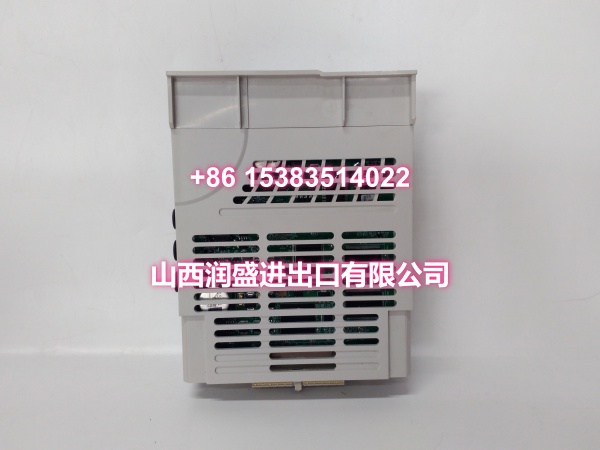
- Ask any seller for a real photo of the installed label and board silk screen, not a stock image, plus the actual test record they hold.