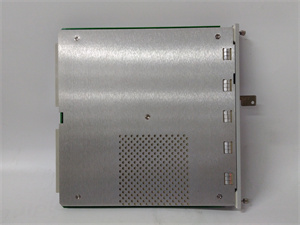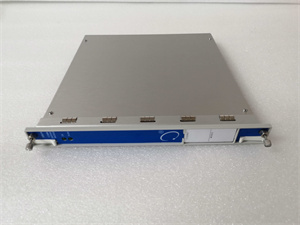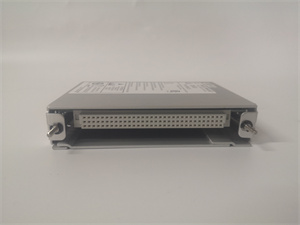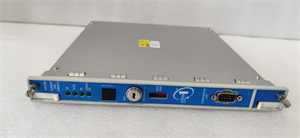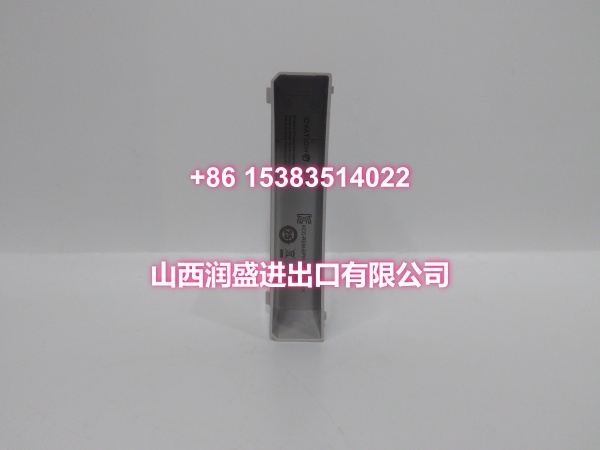
Description
Product Core Brief
- Part: 1C31238H01
- Brand: Westinghouse / Emerson Ovation
- Product Type: Digital input personality module, also listed as a P MOD cavity insert for compact digital input, contact input, and events input builds
- Common Pairing: 1C31234G01 compact contact input electronic module with 48VDC on board auxiliary power for 16 contact inputs with common return
- Core Function: Defines input behavior and completes the assembly for the paired contact input electronic module, including cavity and terminal arrangement
- Condition: New Surplus / New Old Stock, varies by lot
One correction up front. Many sellers call this a standalone digital input card or a high density analog input module. It is not. It is the personality side of a compact contact input assembly, and it does nothing useful by itself.
Product Introduction
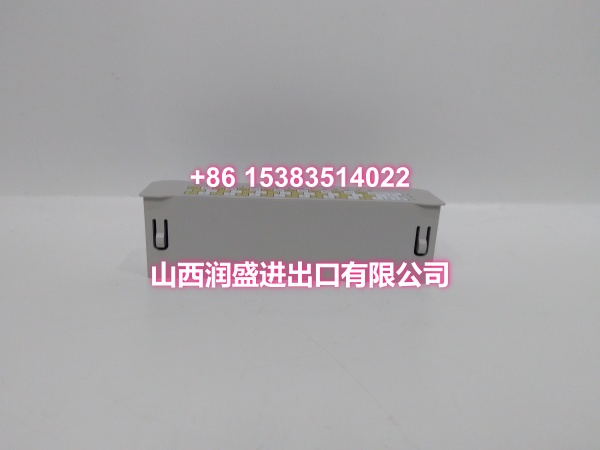
Westinghouse 1C31238H01 is a digital input personality module used in Ovation compact I/O racks. It works with the matching contact input electronic module and terminal block so field contacts can feed clean state data into the controller.
For system integrators, the value is predictable outage recovery. A missing, wrong, or damaged personality piece makes a healthy electronic module read stuck or float, and that usually burns a full shift tracing wiring. Keeping correct shelf stock turns that into a ten minute swap.
Key Technical Specifications
| Parameter | Value |
|---|---|
| Function | Digital input personality module, P MOD cavity insert |
| Host System | Ovation DCS compact I/O |
| Paired Electronic Module | 1C31234G01 compact contact input |
| Channel Count | 16 contact inputs typical on the paired assembly |
| On Board Auxiliary Power | 48VDC on card supply with common return |
| Terminal Convention | Positive to C column, return to B column |
| Propagation Delay | 7 ms maximum on the paired contact input module |
| Bounce Rejection | Rejects contact state change under 3 ms, accepts beyond 7 ms |
| Closed Contact Current | 4 mA minimum to 8 mA maximum |
| Isolation | Channel to logic around 1000V AC/DC |
| Diagnostics | Internal module operating faults and ground fault detection on the paired EMOD |
| Operating Temperature | 0 to 60C on the paired contact input module |
| Environment | Conditioned control room cabinet, low dust, non condensing |
Quality Control Process
Personality pieces fail quietly and get blamed on the electronic module, so we test the assembly.
- Label and cavity audit. The part silk screen, cavity shape, and insert style must match the installed base. A near miss will not seat correctly.
- Edge and pin inspection. Pushed or corroded pins create intermittent reads that look like field noise. Checked under magnification.
- Rail short check. A Fluke multimeter confirms no short across backplane supply paths before power up.
- Bench mate test. We install the unit with a known good 1C31234G01 and terminal block, then pulse channels and confirm clean open and closed states.
- Bounce rejection check. A signal generator pulses fast transitions to confirm the assembly rejects chatter instead of flooding the event log.
- Ground fault verification. We create a deliberate ground path to confirm the paired module actually reports ground fault rather than reading stuck inputs.
- ESD and moisture packaging. Anti-static shielding bag, desiccant, humidity indicator, rigid box.
Replacement Pitfall Guide
❗ Buying only the personality piece. If the electronic module failed, no personality module revives it. Confirm which half is bad before ordering.
❗ Confusing it with an SOE card. Compact contact input assemblies are not the same as dedicated sequence of events hardware. If you need reliable trip reconstruction, verify time tagging and controller clock sync, not just the part number.
❗ Splitting common wires across modules. Signals sharing a common must stay on the same assembly, otherwise channels float and trigger randomly.
❗ Ignoring the 48V on board supply path. The paired contact input relies on on card auxiliary power with a common return. Wiring a field powered loop into that arrangement gives flat or false reads.
❗ Skipping the I/O database check. Swapping hardware without confirming point configuration and scaling leaves tags wrong even when the card is healthy.
❗ Trusting copied seller specs. Some listings describe this as a 32 channel universal analog input with thermocouple, RTD, 16 bit resolution, Modbus TCP, or redundant power. That is copied from unrelated hardware and does not match a compact contact input personality piece. Always cross check the Ovation I/O manual.
Keep these in mind and you will cut most rework time on Ovation DI swaps.
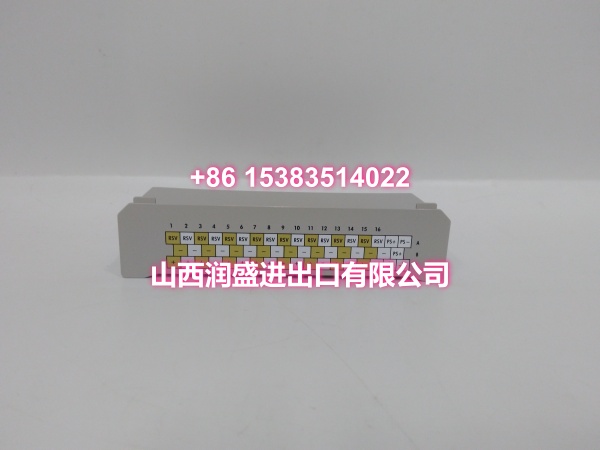
Compatibility Matrix & Benchmarks
| Original Setup | Replacement Option | Compatibility Level | Migration Notes |
|---|---|---|---|
| 1C31238H01 | Same part, later date code | Direct | Confirm cavity, label, and seating on the base |
| 1C31234G01 assembly | 1C31234G01 with matching personality piece | Direct | EMOD, personality piece, and terminal block must match as a set |
| 1C31234G01 assembly | 1C31232G03 differential DI 120VAC/DC | Needs Adaptation | Different voltage class and wiring, field review required |
| 1C31234G01 assembly | Dedicated SOE hardware | Needs Adaptation | Verify time tagging, clock sync, and event database |
| Legacy Ovation compact I/O | Modern Ovation I/O or remote I/O | Needs Adaptation | Database, terminal layout, grounding, and power review required |
- Practical DI performance on the paired assembly is driven by propagation delay around 7 ms maximum and bounce rejection under 3 ms, not by the personality piece alone.
- Usable event data depends on controller clock synchronization and I/O scan behavior, so verify sync after any controller or battery work.
Send a photo of your installed electronic module label plus the terminal block and base numbers, and I can confirm whether this personality module is the correct match for your rack.