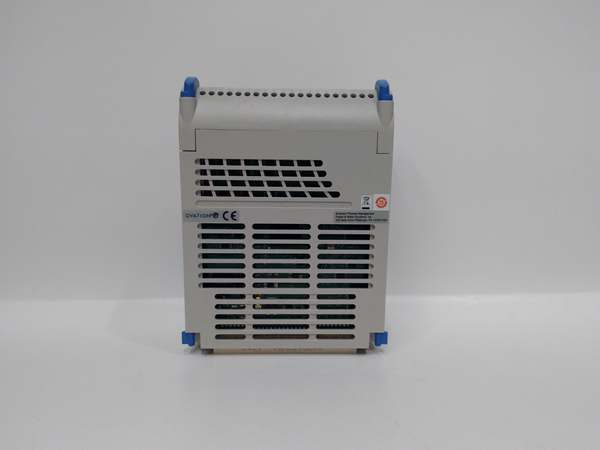
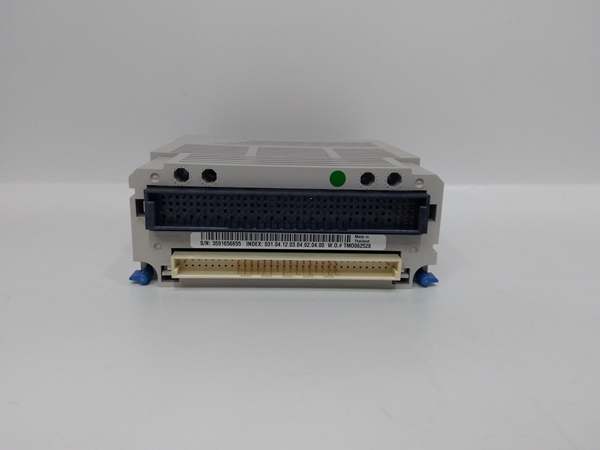
Description
Key Technical Specifications
-
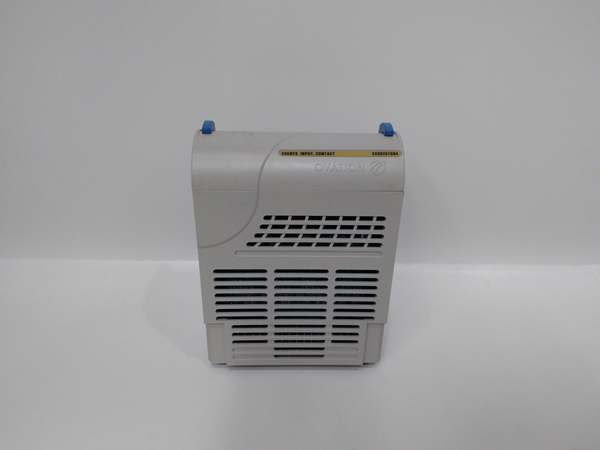
Model Number: 5X00357G04
-
Manufacturer: Emerson (formerly Westinghouse)
-
Function: 16-channel enhanced digital input contact module – converts dry-contact or 24 VDC signals to digital events
-
Input Channels: 16 isolated digital inputs (dry or 24 VDC wet)
-
Input Voltage Range: 0-24 VDC (18-30 VDC wetting)
-
Input Current: ≤2 mA per channel typical
-
Response Time: ≤1 ms edge detection
-
Isolation: 2 kV channel-to-bus; 500 V channel-to-channel
-
Communication: RS-485 Modbus-RTU (9600-38400 bps)
-
Power Supply: 24 VDC module power (±10 %)
-
Operating Temperature: –40 °C…+85 °C
-
Protection Degree: IP65 module rating; DIN-rail mount
-
Dimensions / Weight: 121 × 52 × 165 mm, 0.32 kg
-
Certifications: CE, UL, RoHS
-
Status: Factory discontinued – new & tested spares available

5X00357G04
Field Application & Problem Solved
In the field the biggest headache is catching high-speed contact changes—turbine trip relays, breaker auxiliaries, valve limit switches—without missing an edge or pulling hundreds of copper cables. The 5X00357G04 solves that by living in a remote node: it detects a 24 VDC edge in ≤1 ms, time-stamps the event, and ships the data over a single RS-485 pair to the Ovation controller. You’ll typically find one per protection panel on Frame-7/9 peakers—swap time is under two minutes with the unit on turning gear. Core value: it collapses 16 isolated digital inputs, surge protection, and a 2 kV isolator into one 0.32 kg plug-in module you can bolt to the skid without pulling new cable.
In the field the biggest headache is catching high-speed contact changes—turbine trip relays, breaker auxiliaries, valve limit switches—without missing an edge or pulling hundreds of copper cables. The 5X00357G04 solves that by living in a remote node: it detects a 24 VDC edge in ≤1 ms, time-stamps the event, and ships the data over a single RS-485 pair to the Ovation controller. You’ll typically find one per protection panel on Frame-7/9 peakers—swap time is under two minutes with the unit on turning gear. Core value: it collapses 16 isolated digital inputs, surge protection, and a 2 kV isolator into one 0.32 kg plug-in module you can bolt to the skid without pulling new cable.
Installation & Maintenance Pitfalls (Expert Tips)
24 V Wetting Must Be Isolated – Don’t Double-Ground
The module sources 24 V for dry contacts. If you land a wet contact that is already grounded you’ll create a ground loop and the input LED flickers. Verify wetting supply isolation with a megger before you land the wires.
The module sources 24 V for dry contacts. If you land a wet contact that is already grounded you’ll create a ground loop and the input LED flickers. Verify wetting supply isolation with a megger before you land the wires.
RS-485 Termination Must Be Correct – Or You’ll See Garbage
The RS-485 bus is 120 Ω terminated at each end. If you forget the terminator at the remote node the SNR drops and you’ll chase “comm-loss” that isn’t there. Pop a 120 Ω resistor across A-B if this node is the last one on the spur.
The RS-485 bus is 120 Ω terminated at each end. If you forget the terminator at the remote node the SNR drops and you’ll chase “comm-loss” that isn’t there. Pop a 120 Ω resistor across A-B if this node is the last one on the spur.
IP65 Doesn’t Mean Wash-Down – Don’t Pressure-Wash
The module is sealed but the DIN-rail gasket can be displaced. If you blast the cabinet with a pressure washer water will wick into the connector and you’ll get intermittent “input flicker.” Bag the module or use a low-pressure rinse.
The module is sealed but the DIN-rail gasket can be displaced. If you blast the cabinet with a pressure washer water will wick into the connector and you’ll get intermittent “input flicker.” Bag the module or use a low-pressure rinse.
Spare Lead-Time Is 6-8 Weeks – Keep One on the Shelf
Factory stock is gone; new & tested spares are available but not overnight. If you crack a layer or burn the RS-485 transceiver you’ll be down until the part arrives—keep one in stores or you’ll discover the weakness during the next grid event.
Factory stock is gone; new & tested spares are available but not overnight. If you crack a layer or burn the RS-485 transceiver you’ll be down until the part arrives—keep one in stores or you’ll discover the weakness during the next grid event.
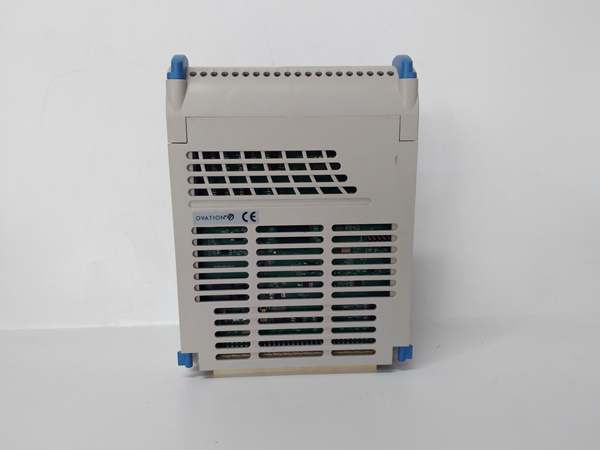
5X00357G04
Technical Deep Dive & Overview
Internally the module is a 16-channel opto-isolator array bolted to a 2 kV isolation barrier. Each input drives an LED that latches the edge; the FPGA time-stamps the event and pushes the data over RS-485. Lose the 24 V rail and the module goes dark; lose a single input and the CPU throws “DI FLT” for that channel only. No firmware to reload—pure hardware—so you can hot-swap it: pull the old module, land the field wires exactly where they came from, snap the DIN-rail latch, and the DCS sees all sixteen inputs again in under ten seconds.
Internally the module is a 16-channel opto-isolator array bolted to a 2 kV isolation barrier. Each input drives an LED that latches the edge; the FPGA time-stamps the event and pushes the data over RS-485. Lose the 24 V rail and the module goes dark; lose a single input and the CPU throws “DI FLT” for that channel only. No firmware to reload—pure hardware—so you can hot-swap it: pull the old module, land the field wires exactly where they came from, snap the DIN-rail latch, and the DCS sees all sixteen inputs again in under ten seconds.