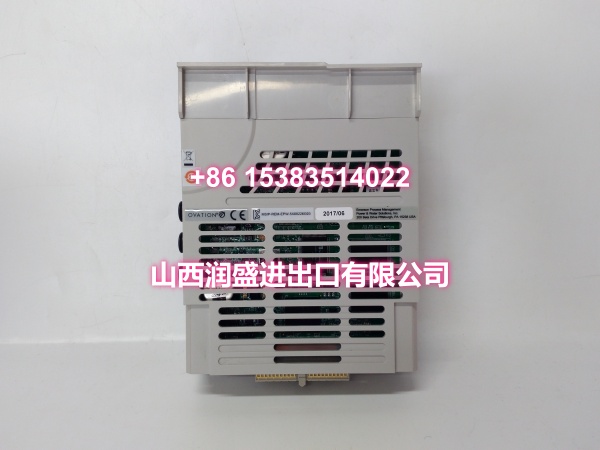
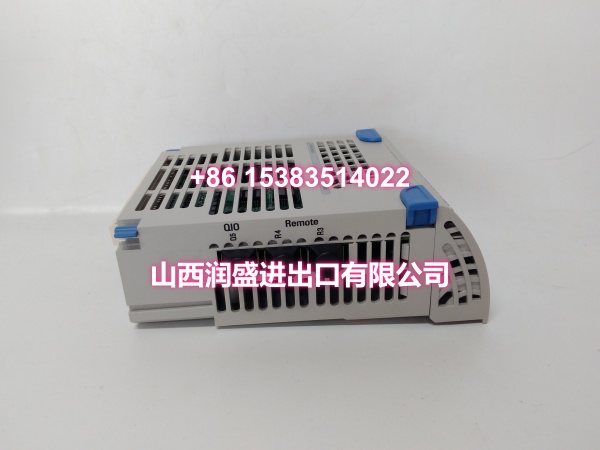
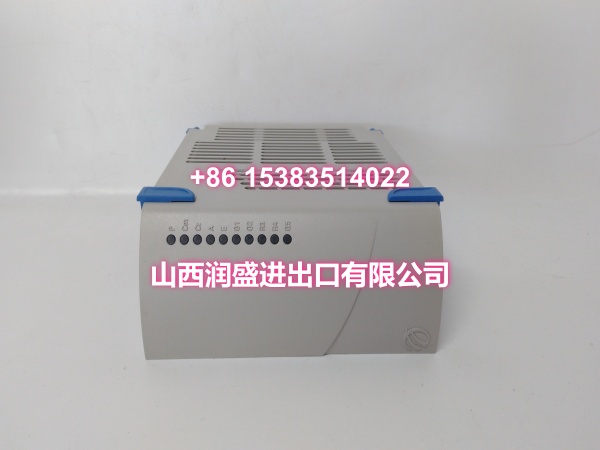
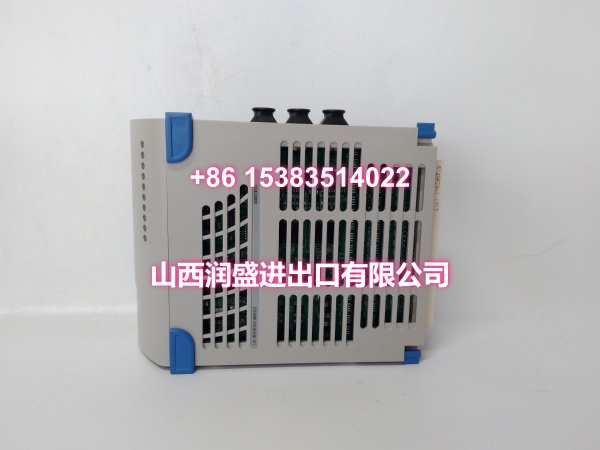
Description
Product Core Brief
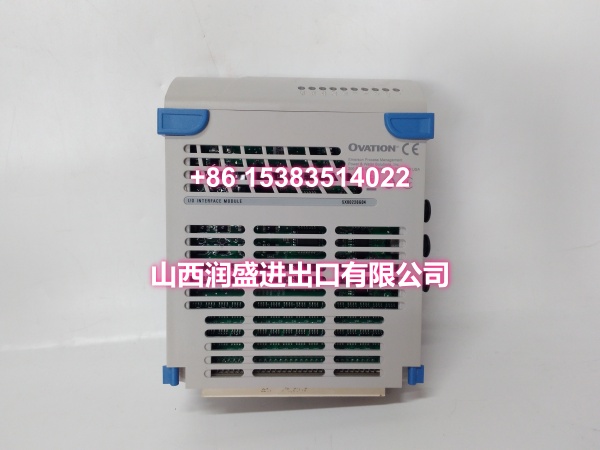
- Model: 5X00226G04
- Brand: Sold under Westinghouse and Emerson names, tied to Ovation spares
- Most Likely Function: Ovation controller hardware, tied to the OCR1100 controller family, which some Chinese sources list as 5X00481G04 or 5X00226G04
- Claimed Controller Traits: Interference free automatic failover between redundant controllers, low footprint and fanless operation, local and remote Ovation and WDPF I/O interfaces, non volatile storage of application software, point database, configuration and tuning constants, 1 millisecond sequence of events resolution, IEC 61131-3 compliance, Intel based processor running up to five control tasks with cycle times from 10 milliseconds to 30 seconds, and up to 32,000 points
- Other Claims: One trading site calls it an I/O interface module with 220V operating voltage, 15 by 15 by 4 cm dimensions, 0.36 kg weight, CE and UL certification, and tags it as a power supply and Modbus device Another page sells it as an Emerson Ovation DCS controller module, backplane powered, not a direct field I/O termination module, plug-in for Ovation racks, with redundancy in many configurations
- Product Type: Legacy Ovation controller side hardware, function unconfirmed by factory documentation
- Condition: New Surplus / New Old Stock, varies by lot
Blunt take. The OCR1100 controller story is the most credible, because two separate Chinese sources tie 5X00226G04 to that controller model The I/O interface story with 220V supply and Modbus tags looks like template filler, since a backplane based Ovation card does not run off 220V field power and Modbus usually comes through dedicated data link or gateway hardware Do not buy this on a headline. Check your controller build sheet, cabinet drawing, and the physical label.
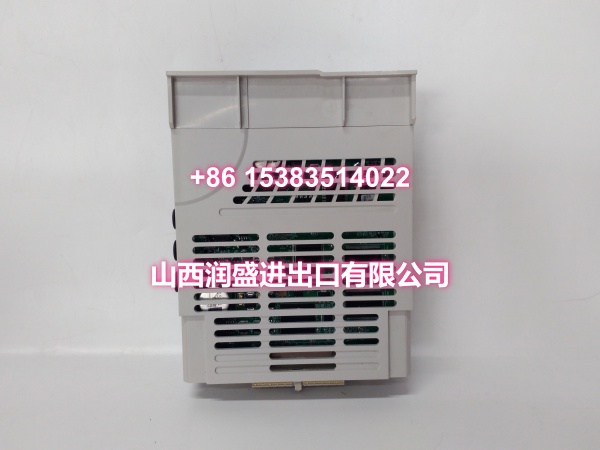
Product Introduction
Westinghouse 5X00226G04 is a legacy part usually hunted to keep aging Ovation cabinets running. Ovation is a distributed control system from Emerson Process Control designed for critical control in power generation and water and wastewater treatment, split into Windows and Solaris platforms, with hardware covering controllers, I/O modules, operator stations, engineer stations and servers
Why this number causes panic buying. If it really is controller hardware, a failure is not one bad point. You can lose a whole controller, and if redundancy is not healthy, failover never happens and a control loop runs open or a permissive drops. On top of that, traders paste whatever spec belongs to a nearby part number, which is how one number gets sold as a controller, an I/O interface card, a power supply, and a Modbus device at once. Price and origin fields on these listings are usually copied, not verified. Confirm against your own documentation before wiring money.
Key Technical Specifications
| Parameter | Value |
|---|---|
| Part Number | 5X00226G04 |
| Brand | Westinghouse / Emerson grouped |
| Claimed Function One | Ovation OCR1100 controller hardware, grouped with 5X00481G04 |
| Claimed Function Two | Ovation I/O interface module, 220V operating voltage, CE and UL tagged |
| Claimed Function Three | Emerson Ovation DCS controller module, backplane powered, plug-in for Ovation racks |
| Claimed Controller Traits | Redundant failover, fanless, local and remote Ovation and WDPF I/O, non volatile config storage, 1ms SOE, IEC 61131-3 |
| Claimed Environment | 0 to 55 Celsius non condensing, typical control room conditions |
| Architecture Note | Ovation I/O uses an electronic module plus a personality module, and configuration lives in the controller |
| Sourcing Risk | Very high, extreme listing noise, relabeled and repaired stock |
| Documentation | No reliable public factory datasheet located |
Ignore claims of USB connectivity, standalone power supply use, direct 220V field powering, PROFINET, EtherNet/IP, CANopen, DIN rail plug and play replacement, and hot swap on a controller card attached to this number. Some generic Ovation marketing mentions single point DIN rail fastening for I/O components, but that does not turn a controller card into a DIN rail device
Quality Control Process
For controller side hardware, identification and baseline matching matter far more than a quick power up.
- Document cross check. We compare your controller build sheet, cabinet BOM, rack layout, station database, firmware baseline, and installed label before applying power.
- Function trace. We confirm whether your system treats this as controller hardware or I/O interface hardware, since one can drop a whole controller and the other can drop a group of points.
- Label and silk screen audit. Sanded markings, overprinted stickers, reflowed solder, replaced capacitors, patched traces, and swapped connectors usually mean a repaired board.
- Connector and edge inspection. Bent pins, burned sockets, corroded edge connectors, and cracked rails cause intermittent faults that are miserable to chase after install.
- Rail short check. A Fluke multimeter confirms no short across supply and logic rails before power up.
- Variac ramp up. Power rises slowly while we watch current draw, since spikes point to failed switching stages or dried capacitors.
- Boot and storage validation. We confirm the board boots, loads configuration, and holds non volatile data through a power cycle.
- Redundancy test. If your system runs paired controllers, we force a switchover and confirm failover is clean with no lost outputs and no stuck commands.
- I/O path validation. We confirm the controller still sees every I/O group, with no dropped nodes and no stale values held on the HMI.
- Thermal soak and packaging. Two hours under load with a thermal camera, then anti-static shielding bag, desiccant, humidity indicator, rigid double box, and a written test summary.
Replacement Pitfall Guide
❗ Buying on a reseller headline alone. Controller, I/O interface card, power supply, and Modbus device all get attached to this number. Your build sheet decides.
❗ Assuming redundancy will save you. If the standby controller is unhealthy or the database is out of sync, failover never happens and you find out during a disturbance.
❗ Skipping firmware and database baseline. A healthy card can still refuse to come online if station software, firmware, or the point database does not match your generation.
❗ Trusting the 220V and Modbus spec. That text looks like template filler, and Ovation usually reaches third party gear through dedicated data link or gateway paths rather than a random card
❗ Confusing controller failure with power or network failure. Power supplies, distribution boards, fuses, switches, and cabling mimic dead controllers constantly and are far cheaper to check first.
❗ Forgetting the electronic and personality module pairing. If your real problem is a bad field signal, Ovation usually needs a matched electronic and personality module pair, not controller hardware
❗ Accepting a one year warranty with no test record. A warranty claim from a trader with no manual and no test data proves nothing.
❗ Running a flaky cabinet to buy time. Repeated controller loss during grid or load disturbances is far more dangerous than planning a short outage to fix the root cause.
Keep these in mind and you’ll cut 90% of rework time.
Compatibility Matrix & Benchmarks
| Original Model | Replacement / Successor Model | Compatibility Level | Migration Notes |
|---|---|---|---|
| 5X00226G04 | Same part, same suffix | Direct | Confirm label, revision, controller build sheet, firmware |
| 5X00226G04 as OCR1100 controller hardware | Same generation Ovation controller parts | Needs Verification | Check database, firmware, redundancy pairing, license |
| Suspected dead controller | Power supply, distribution board, fuse, switch, cabling check first | Needs Verification | Power and network faults mimic dead controllers |
| Bad field signal rather than controller | Matched Ovation electronic module plus personality module | Needs Verification | Match range, isolation, wiring, scaling |
| Need Modbus to third party gear | Dedicated data link card or gateway integration | Needs Adaptation | Recheck protocol, latency, network isolation |
| Aging Ovation cabinet with scarce spares | Retrofit I/O panel or migration toward newer Ovation platform | Needs Adaptation | Ovation offers migration paths from other vendor systems, recheck I/O mapping, grounding, fusing, trip logic |
| Safety critical trip function | Certified safety system with hardwired trip | Needs Adaptation | Never rely on comms or one controller for protection |
- Confirm whether your plant runs the Windows or Solaris Ovation platform, since support and upgrade paths differ between generations
- Ask any seller for a real photo of the installed label and board silk screen, not a stock image, plus the actual test record they hold.