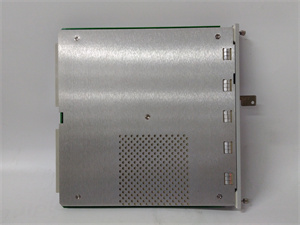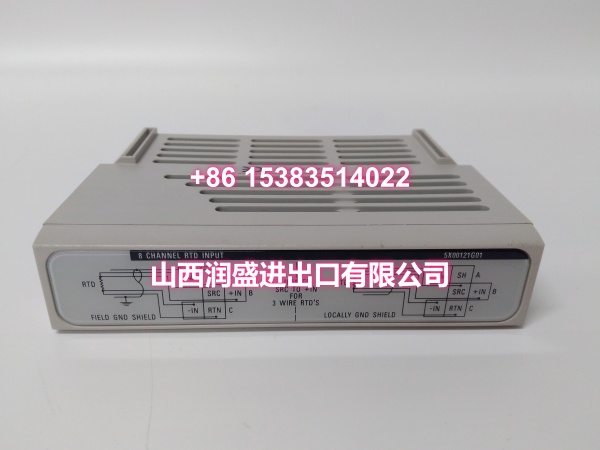
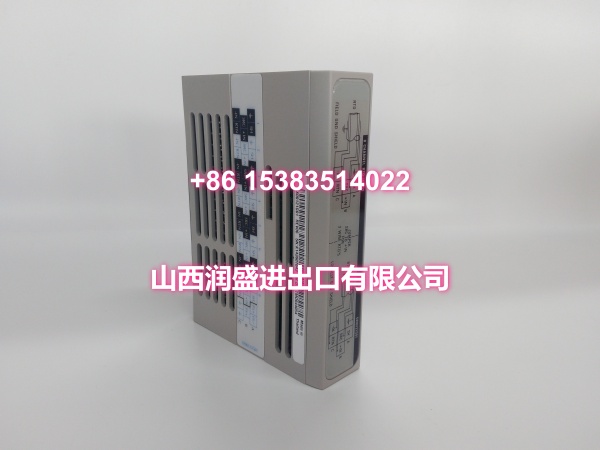
Description
Product Core Brief
- Model: 5X00121G01
- Brand: Westinghouse / Emerson Ovation heritage
- Core Function: Acts as the RTD personality module, also called a PMOD or characteristic module, that pairs with the 5X00119G01 RTD EMOD so the rack can read resistance based temperature
- Product Type: RTD input PMOD, commonly listed as an 8 channel RTD pairing
- Common Naming: Sold as a matching small card alongside the 5X00119G01 round head big card
- Common Confusion: Some reseller pages call it a PWM controller for actuators, a high performance analog isolator with HART, or a module with a 10 to 240VDC input range, none of which fit an Ovation RTD PMOD
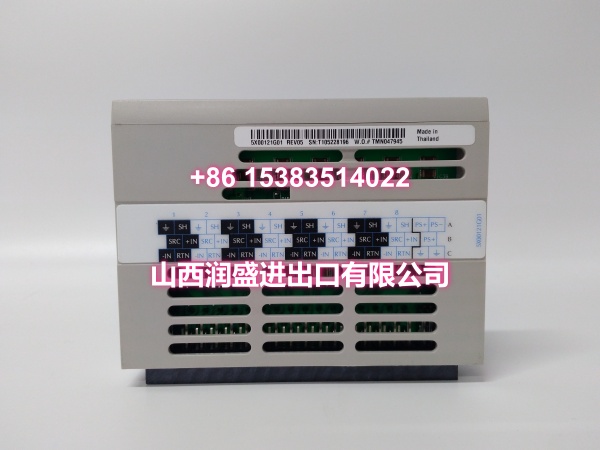
- Condition: New Surplus / Pulled Used, nameplate photo required
Product Introduction
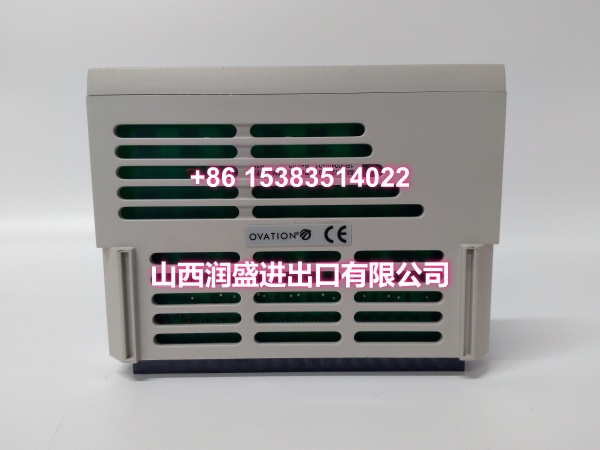
Westinghouse 5X00121G01 is most consistently listed as the RTD PMOD that travels with the 5X00119G01 RTD EMOD, showing up in Ovation spare tables as the hot resistance input card pair 5X00119G01 with 5X00121G01 Some Westinghouse lists describe it as the RTD PMOD characteristic module sitting next to the RTD EMOD, while also loosely labeling both as thermocouple input modules, which is a translation habit rather than a real spec
The noise around this number is unusually bad. One catalog calls it a PWM controller for electric pneumatic actuators that balances signal pressure against a feedback spring, another calls it a high performance analog isolator that converts field signals to 4 to 20mA with HART, and a third claims 8 RTD channels with a 10 to 240VDC input range, IP65 and Ethernet or RS485 communication Those are three different products copied from templates, and none of them match how Ovation splits an I/O point into an electronic module and a personality module.
It runs no logic, drives nothing and does not isolate a loop. Its real job is giving the EMOD the correct signal conditioning path so resistance turns into a believable temperature. Pull the wrong half of the pair and the channel stays dead or reads nonsense even though the rack looks healthy.
Key Technical Specifications
| Parameter | Value |
|---|---|
| Part Number | 5X00121G01 |
| Brand Grouping | Westinghouse, Emerson Ovation heritage |
| Product Class | RTD PMOD, personality or characteristic module |
| Matching EMOD | 5X00119G01, RTD input electronic module |
| Typical Point Count | Listed as 8 channel RTD pairing in Ovation spare tables |
| Mounting | Ovation standard and compact modules install in base units on DIN rails, and each base unit holds two I/O modules with two terminal blocks even if only one is used |
| Jumper Behavior | Most Ovation personality modules have no configurable jumpers, and where jumpers exist the card usually must come out of the PMOD case to change settings |
| Configuration Dependency | RTD type, range scaling, EMOD and PMOD pairing, terminal wiring, point generator setup |
| Common Failure Signs | Dead channel, flat temperature, out of range, wrong value after a swap, drift after rewiring |
| Conflicting Reseller Claims | PWM actuator controller, high performance analog isolator with HART, 10 to 240VDC input with IP65 and RS485 or Ethernet |
| Verification Method | Nameplate photo, cabinet I/O drawing, EMOD and PMOD pairing, resistance box injection, config export |
| Environment | Climate controlled cabinet, low dust, stable cooling, single point grounding |
No confirmed factory datasheet is publicly available under this number alone, so treat catalog blurbs as leads until matched to your own project files.
Quality Control Process
RTD pairs get tested as a pair, with a resistance box, never one board alone.
- Nameplate and suffix check. Confirm it really is 5X00121G01, since template listings push this number onto completely unrelated products.
- EMOD and PMOD pairing confirmation. Verify 5X00119G01 is the electronic module in that slot, because the pair decides what the channel actually measures.
- Base unit and terminal block check. Confirm the correct Ovation base unit is installed with both terminal blocks present, since bases mount on DIN rails and hold two I/O modules
- Resistance box injection. Feed known resistance across the range and confirm the faceplate converts correctly for the configured RTD type.
- Three wire short verification. If the loop was converted from three wire to four wire, confirm the source to positive short was removed, since leaving it produces a stable but wrong temperature.
- Shield grounding review. Ovation temperature and analog wiring is generally grounded on the DCS side with the field floating, and double grounding injects noise
- Jumper review. Check whether the module has configurable jumpers, because some require pulling the card out of the PMOD case to change defaults
- ESD bag with desiccant. Pulled PMODs often sit in humid warehouses for years and fail silently later.
I once watched a maintenance team replace an RTD element twice because a bearing kept reading high. The PMOD had been swapped with a similar looking card during a spare cleanout, so the EMOD was conditioning the wrong signal path the whole time and nothing in the alarm log looked wrong.
Replacement Pitfall Guide
❗ Buying it as a PWM actuator controller. Some catalogs describe this number as a PWM controller for electric pneumatic actuators using pressure feedback, which has nothing to do with Ovation RTD measurement
❗ Buying it as an analog isolator with HART. Other listings call it a high performance isolator converting signals to 4 to 20mA with HART diagnostics, which conflicts with a passive personality module role
❗ Trusting a 10 to 240VDC range and IP65 rating. Those specs appear on reseller pages with no factory backing and do not describe an Ovation RTD PMOD
❗ Replacing only the EMOD. Ovation splits function between electronic and personality modules, so swapping one half often leaves the channel dead or mis scaled.
❗ Confusing it with the TC pair. Thermocouple loops run on 5X00070G04 with 1C31116G04, and that pair depends on cold junction behavior, not resistance conversion
❗ Ignoring the base unit. Bases hold two modules and their terminal blocks, and a wrong or missing base creates wiring that does not match the drawing
❗ Trusting blanket one year warranties and instant delivery. Placeholder specs, sealed box claims and flat warranties are catalog habits, not proof of verified stock.
Keep these in mind and you’ll cut 90% of rework time.
Compatibility Matrix & Benchmarks
| Original Model | Replacement / Successor Model | Compatibility Level | Migration Notes |
|---|---|---|---|
| 5X00121G01 | Refurbished same part | Needs Verification | Confirm nameplate, pairing, resistance injection and scaling |
| 5X00121G01 | 5X00119G01 | Required Pair | RTD input electronic module commonly listed with this PMOD |
| 5X00121G01 | 1B30035H01 base | Required Accessory | Ovation I/O base, confirm terminal layout against your cabinet drawing |
| 5X00121G01 | 5X00070G04 with 1C31116G04 | Not Compatible | Thermocouple input pairing with cold junction behavior |
| 5X00121G01 | 1C31224G01 with 1C31227G01 | Not Compatible | 4 to 20mA analog input electronic and characteristic pair |
| 5X00121G01 | RTD to 4 to 20mA transmitter with AI card | Needs Adaptation | Removes PMOD dependency but adds power, conversion error and a new failure point |
| 5X00121G01 | Ovation upgrade with current generation RTD I/O | Needs Adaptation | Rewiring, FAT, point regeneration and operator training |
Benchmark references
- Acceptance criterion: injected resistance converts within about 0.5 degree C of expected temperature across the range with a stable faceplate over a 24 hour watch.
- Stability target: no out of range alarms during cabinet HVAC cycling and large motor starts, with shields grounded on the DCS side only.