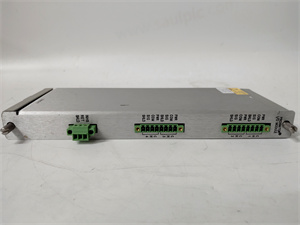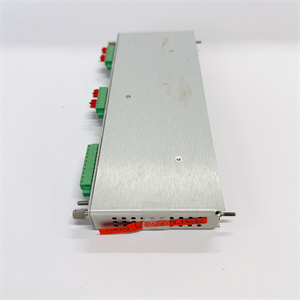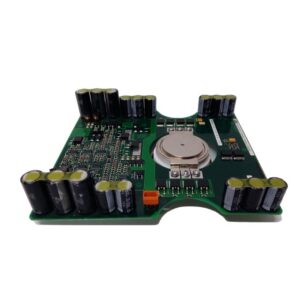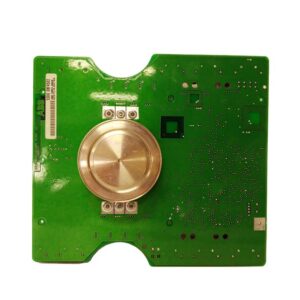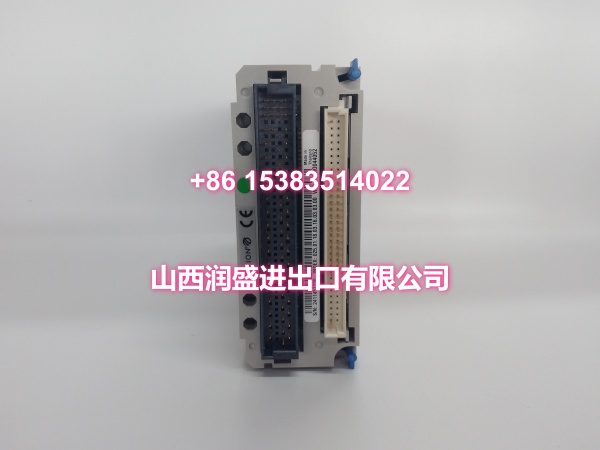
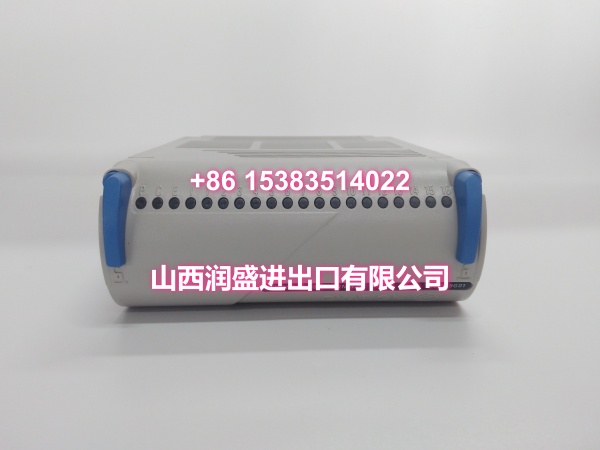
Description
Product Core Brief
- Model: 5X00119G01
- Brand: Westinghouse / Emerson Ovation heritage
- Core Function: Serves as the RTD analog input card in an Ovation rack, converting resistance from a platinum or nickel RTD into a temperature process value for the controller
- Product Type: RTD input electronic module, commonly listed as 8 points per module
- Matching P Mod: 5X00121G01, the paired characteristic module that most Ovation spare lists bundle with it
- Common Confusion: Some reseller pages call it an Emerson 8 channel RTD input module that supports a 20 to 90V DC input or output range, which does not match how a resistance temperature measurement card actually works
- Condition: New Surplus / Pulled Used, nameplate photo required
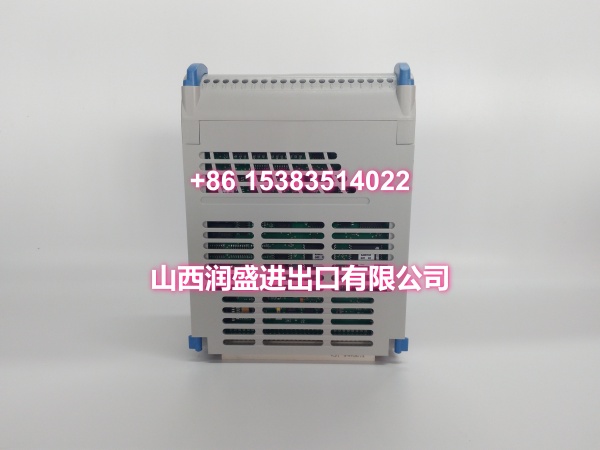
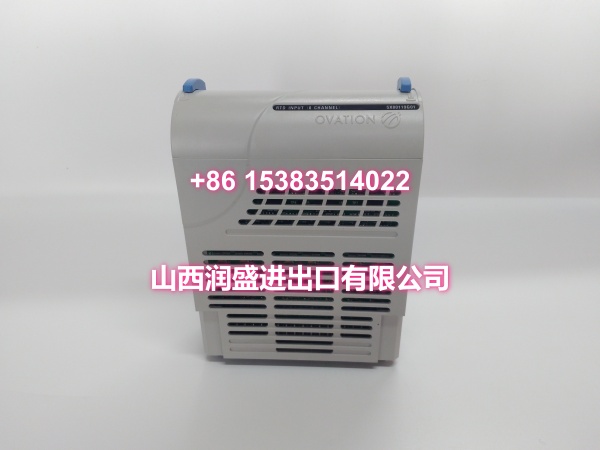
Product Introduction
Westinghouse 5X00119G01 is most consistently listed as the Ovation analog input RTD card at 8 points per module, paired with 5X00121G01 as its characteristic module. It sits in the temperature measurement group alongside the TC input card 5X00070G04 with 1C31116G04, and away from the 4 to 20mA AI pair 1C31224G01 with 1C31227G01.
The market noise on this part is loud. Some listings describe it as an 8 channel RTD module with a 20 to 90V DC input or output range, high accuracy sensing and self diagnosis, which reads like a generic template rather than a real RTD spec. Other pages simply drop the number into a long spare list with no data at all. That is why a nameplate photo and your cabinet I/O drawing matter more than any catalog blurb.
It runs no logic and drives nothing. Its job is keeping resistance to temperature conversion stable so bearing metal, steam and lube oil readings stay believable, and it depends heavily on correct wiring, since RTD loops use source, positive, negative and shield terminals that are easy to mix up during a retrofit.
Key Technical Specifications
| Parameter | Value |
|---|---|
| Part Number | 5X00119G01 |
| Brand Grouping | Westinghouse, Emerson Ovation heritage |
| Product Class | RTD analog input card for Ovation |
| Typical Point Count | 8 points per module per Ovation spare listings |
| Matching P Mod | 5X00121G01, commonly bundled with 5X00119G01 |
| Wiring, 8 Point Four Wire | SRC to even B terminals, positive to odd B terminals, negative to odd C terminals, shield to odd A terminals |
| Wiring, Three Wire | SRC and positive shorted, for example B1 with B2, B3 with B4 and so on |
| Wiring, 4 Point Card | Three wire setup shorts SRC and positive, for example A1 with A2, A5 with A6 |
| Shield Grounding | DCS side grounded, field floating, except split shield on externally powered AI loops |
| Configuration Dependency | RTD type, range scaling, P Mod selection, terminal wiring, point generator setup |
| Common Failure Signs | Flat temperature, jumping value, out of range, reading stuck at one extreme, drift after rewiring |
| Conflicting Reseller Claims | 20 to 90V DC input or output range, universal AI, high speed converter, analog output card |
| Verification Method | Nameplate photo, cabinet I/O drawing, EM and P Mod pairing, resistance box injection, config export |
| Environment | Climate controlled cabinet, low dust, stable cooling, single point grounding |
No confirmed factory datasheet is publicly available under this number alone, so treat catalog blurbs as leads until matched to your own project files.
Quality Control Process
RTD cards get tested with a resistance box, not powered up and hoped for the best.
- Nameplate and suffix check. Confirm it really is 5X00119G01, since it is easy to confuse with TC and 4 to 20mA cards that sit in the same cabinet.
- EM and P Mod pairing confirmation. Verify 5X00121G01 is installed, because Ovation splits function into electronic and characteristic modules and a missing pair leaves the channel dead or mis scaled.
- Resistance box injection. Feed known resistance values across the range and confirm the faceplate converts correctly for the configured RTD type.
- Four wire and three wire wiring trace. Confirm SRC, positive, negative and shield land on the right terminals, and that three wire loops have SRC and positive properly shorted.
- Shield grounding review. Shield should be grounded on the DCS side and floating in the field, since double grounding injects noise into low level measurements.
- Lead resistance check on long runs. Thin or corroded lead wire adds resistance and pushes the reading high in a way that looks like card failure.
- Terminal torque and corrosion inspection. Loose RTD terminals cause intermittent out of range alarms that come and go with vibration.
- ESD bag with desiccant. Pulled cards often sit in humid warehouses for years and fail silently later.
I once watched a team blame a card for a bearing temperature that read 40 degrees high. The plant had converted a three wire loop to four wire during a retrofit and never removed the SRC to positive short, so the card was measuring the wrong path the whole time.
Replacement Pitfall Guide
❗ Buying it as a 20 to 90V DC I/O module. Some listings push that range and generic high accuracy claims, which conflicts with RTD resistance measurement. Ask for a nameplate photo and the cabinet it came out of.
❗ Swapping in a TC card. Thermocouple loops run on 5X00070G04 with 1C31116G04, not on this RTD card, and the two need completely different compensation logic.
❗ Skipping the P Mod. Ovation divides boards into electronic and characteristic modules, so replacing only the electronic half often leaves the channel dead or reading nonsense.
❗ Leaving the three wire short in place after converting to four wire. That single mistake produces a stable but wrong temperature that nobody questions until a trip.
❗ Grounding shields at both ends. Shield should sit on the DCS side with the field floating, otherwise you create drifting readings that look like hardware failure.
❗ Ignoring RTD type and scaling. A PT100 configured as another type still trends, just at the wrong value, which is far more dangerous than a flat signal.
❗ Trusting blanket one year warranties and instant delivery. Placeholder specs, sealed box claims and flat warranties are catalog habits, not proof of verified stock.
Keep these in mind and you’ll cut 90% of rework time.
Compatibility Matrix & Benchmarks
| Original Model | Replacement / Successor Model | Compatibility Level | Migration Notes |
|---|---|---|---|
| 5X00119G01 | Refurbished same part | Needs Verification | Confirm nameplate, P Mod pairing, resistance injection and scaling |
| 5X00119G01 | 5X00121G01 | Required Pair | Characteristic module commonly bundled with the RTD card |
| 5X00119G01 | 5X00070G04 with 1C31116G04 | Not Compatible | Thermocouple input pairing with cold junction compensation |
| 5X00119G01 | 1C31224G01 with 1C31227G01 | Not Compatible | 4 to 20mA analog input electronic and characteristic pair |
| 5X00119G01 | 1C31113G02 or 1C31113G03 | Not Compatible | Listed as ±50mV and ±100mV analog input electronic modules |
| 5X00119G01 | RTD to 4 to 20mA transmitter with AI card | Needs Adaptation | Simplifies wiring but adds power, conversion error and a new failure point |
| 5X00119G01 | Ovation upgrade with current generation RTD I/O | Needs Adaptation | Rewiring, FAT, point regeneration and operator training |
Benchmark references
- Acceptance criterion: injected resistance converts within about 0.5 degree C of expected temperature across the range with a stable faceplate over a 24 hour watch.
- Stability target: no out of range alarms during cabinet HVAC cycling and large motor starts, with shields grounded at one point only on the DCS side.