Description
System Role and Integration
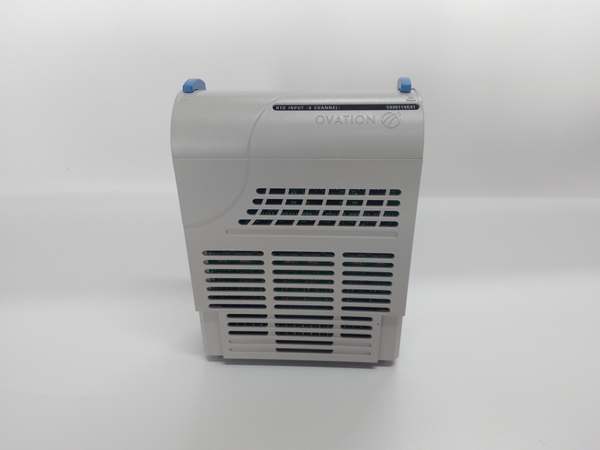
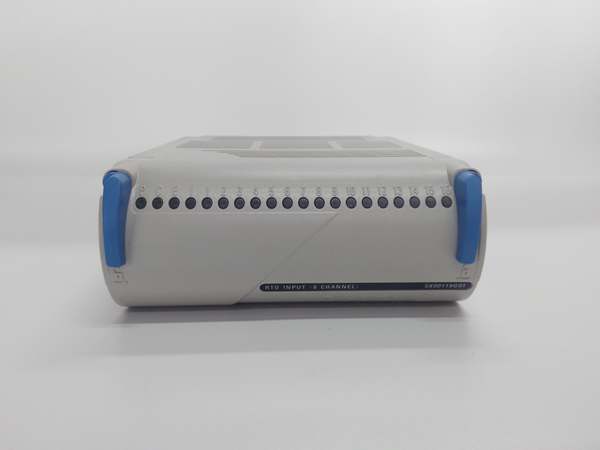
The 5X00119G01 serves as the precision temperature measurement interface within the Ovation Distributed Control System architecture, functioning as the critical signal conditioning layer between field-mounted resistance temperature detectors and the controller processor. As an Electronics Module (EMOD), it mounts in standard Ovation I/O bases and requires pairing with a companion Personality Module (specifically the 5X00121 series) to configure the specific RTD type, range, and wiring mode for each channel.
This module occupies a critical position in process control applications where precise temperature measurement directly impacts operational safety and efficiency—such as boiler steam temperature monitoring, turbine bearing temperature surveillance, and reactor coolant loop measurements. It bridges the gap between analog sensor elements and digital control algorithms, providing the high-resolution data acquisition necessary for tight temperature control loops in power generation and heavy process industries.
Core Functionality and Signal Handling
The module provides eight independent isolated input channels, each capable of measuring resistance values from RTD sensors or direct resistance inputs. It supports multiple industry-standard RTD types including platinum (Pt100, Pt200), copper (Cu50, Cu53), and nickel (Ni120) elements, accommodating 2-wire, 3-wire, and 4-wire connection configurations to compensate for lead wire resistance errors. A 12-bit analog-to-digital converter digitizes the sensor signals with 0.10% guaranteed accuracy at reference temperature.
Sophisticated signal conditioning circuitry includes lead wire compensation algorithms for 3-wire configurations, current source excitation for RTD elements, and programmable filtering to reject electrical noise. The module offers dual sampling rates—16.67 samples per second in 50Hz environments and 20 samples per second in 60Hz environments—with temporary rate reduction during lead resistance measurement cycles in 3-wire mode. On-demand self-calibration capability allows the Ovation controller to initiate internal reference checks, maintaining long-term measurement stability without requiring field calibration equipment.
Platform Heritage and Operational Benefits
As a core component of the Emerson Ovation platform (originating from Westinghouse Process Control), the 5X00119G01 benefits from decades of deployment in mission-critical temperature monitoring applications. The modular EMOD/PMOD architecture separates the electronics from the personality-specific signal conditioning, allowing the same electronics module to serve diverse sensor types through appropriate personality module selection.
The robust isolation design—200V AC/DC between channels and 1000V AC/DC from channels to logic—ensures that ground faults or high common-mode voltages in field wiring cannot propagate to damage expensive controller assets or create safety hazards. High common-mode rejection (120dB) and normal-mode rejection (100dB) specifications ensure signal integrity in electrically noisy industrial environments typical of power plant switchyards and motor control centers.

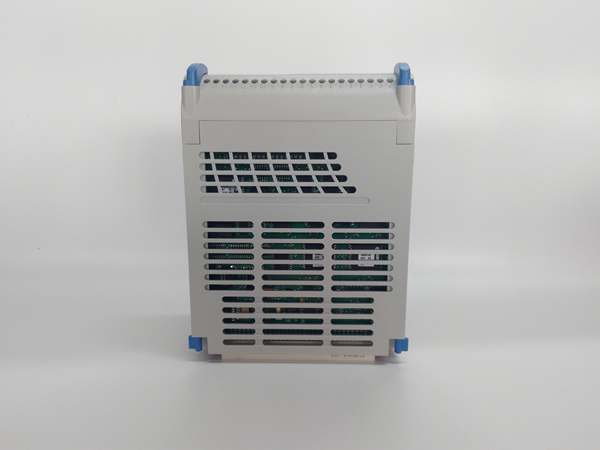
WESTINGHOUSE 5X00119G01
Part 4: Technical Specifications
-
Model Number: 5X00119G01
-
Manufacturer: Westinghouse Electric Corporation (Emerson Ovation product line)
-
Product Type: 8-Channel RTD Input Electronics Module (EMOD)
-
Number of Channels: 8 isolated RTD/resistance input channels
-
Supported RTD Types: Pt100, Pt200, Cu50, Cu53, Ni120 (via personality module configuration)
-
Wiring Configurations: 2-wire, 3-wire, 4-wire
-
ADC Resolution: 12 bits
-
Guaranteed Accuracy (@25°C): 0.10% ± [0.045(Rcold/Rspan)]% ± [((Rcold+Rspan)/4096)]% ± [0.5 OHM/Rspan]% ± 10×V×1/2LSB
-
Temperature Coefficient: 10 ppm/°C
-
Sampling Rate: 50Hz mode: 16.67/sec; 60Hz mode: 20/sec (reduced during 3-wire lead resistance measurement)
-
Input Impedance: 100 MΩ (normal operation), 50 KΩ (power down)
-
Dielectric Isolation: Channel-to-channel: 200V AC/DC; Channel-to-logic: 1000V AC/DC
-
Common Mode Rejection: 120 dB @ DC and nominal line frequency ±0.5%
-
Normal Mode Rejection: 100 dB @ DC and nominal line frequency ±0.5%
-
Self-Calibration: On-demand via Ovation controller
-
Power Consumption: 3.6W typical, 4.2W maximum
-
Operating Temperature: 0°C to 60°C (32°F to 140°F)
-
Storage Temperature: -40°C to 85°C (-40°F to 185°F)
-
Humidity: 0% to 95% RH (non-condensing)
-
Module Weight: 0.32 kg (0.7 lbs) electronics module only
-
Personality Module: Requires 5X00121G0x series PMOD for complete functionality
-
Compatible I/O Bases: Standard Ovation I/O base assemblies
-
Approvals: UL, CE (depending on system configuration)
Part 5: Core Features & Customer Value
Precision Temperature Measurement: The 12-bit resolution and sophisticated signal conditioning deliver temperature measurements with ±0.1% full-scale accuracy, enabling precise process control for critical applications such as boiler steam temperature regulation and exothermic reactor monitoring. For process engineers, this precision translates to tighter control loops, improved product quality, and enhanced safety margins in temperature-critical processes.
Flexible RTD Compatibility: Support for multiple RTD types (platinum, copper, nickel) and wiring configurations (2, 3, and 4-wire) through software-configurable personality modules allows standardization on a single electronics spare inventory. Rather than stocking multiple specialized input cards, facilities can deploy the 5X00119G01 across diverse temperature applications—from cryogenic gas processing with Cu50 sensors to high-temperature furnace monitoring with Pt200 elements—reducing spare parts costs and simplifying maintenance logistics.
Advanced Noise Rejection: The 120dB common-mode rejection and 100dB normal-mode rejection specifications ensure accurate temperature readings even in harsh electromagnetic environments. In power plant turbine halls and switchgear compartments where large motor drives and high-voltage equipment generate substantial electrical noise, this noise immunity prevents signal corruption that could lead to spurious control actions or unnecessary process trips.
On-Demand Self-Calibration: The self-calibration capability allows the Ovation controller to verify internal reference accuracy and correct for drift without removing the module from service or requiring external calibration equipment. For maintenance teams, this feature extends calibration intervals, reduces labor costs associated with scheduled maintenance, and ensures continuous measurement confidence throughout the module operational life.
Galvanic Isolation and Safety: The 1000V isolation between field channels and controller logic, combined with 200V channel-to-channel isolation, provides robust protection against ground loop currents and high-voltage transients. This isolation architecture ensures that wiring faults or insulation failures in field temperature sensors cannot damage expensive controller electronics or create safety hazards for maintenance personnel working on the system.
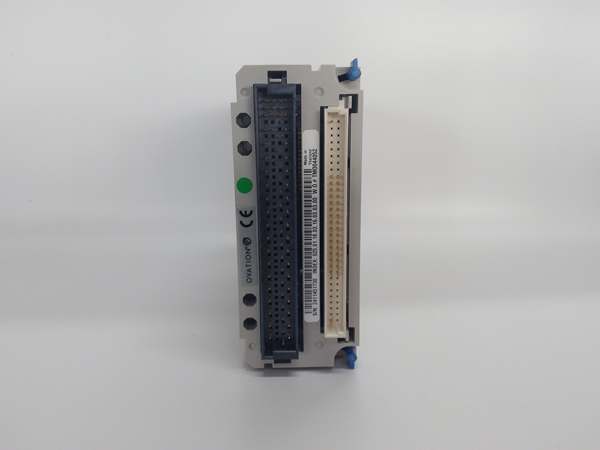
WESTINGHOUSE 5X00119G01
Part 6: Typical Applications
Power Generation Steam Temperature Monitoring: The 5X00119G01 is extensively deployed in fossil fuel and nuclear power plants for precise measurement of main steam temperature, superheated steam temperature, and turbine metal temperatures. In boiler control applications, the module monitors steam temperatures at multiple points in the drum, superheater, and reheater sections, providing the control system with the high-accuracy data required for attemperator control and turbine thermal stress management.
Turbine Bearing and Winding Temperature Supervision: Within turbine generator control systems, this module provides continuous monitoring of bearing pad temperatures, thrust bearing wear indicators, and stator winding temperatures. The fast sampling rates support early detection of bearing distress or cooling system failures, while the high isolation ratings protect control electronics from ground faults that can occur in bearing insulation monitoring circuits.
Chemical Reactor Temperature Control: In petrochemical and specialty chemical plants, the module monitors exothermic reaction vessel temperatures, distillation column tray temperatures, and catalyst bed temperatures. The 0.1% accuracy enables precise control of reaction rates and product quality, while the 3-wire lead compensation capability ensures accurate measurements despite long cable runs between control rooms and outdoor process units.
Steel and Metals Heat Treatment: In rolling mill and heat treatment applications, the 5X00119G01 monitors furnace zone temperatures, soaking pit temperatures, and quench bath temperatures. The module’s ability to handle multiple RTD types accommodates the diverse temperature ranges encountered in metals processing—from cryogenic treatments requiring Cu50 sensors to high-temperature furnace monitoring using Pt200 elements.
Water Treatment and Environmental Systems: In demineralizer and wastewater treatment facilities, the module monitors process water temperatures, digester temperatures, and heat exchanger performance. The robust noise rejection ensures reliable operation in electrically noisy environments near large pump motors and aeration blowers, while the modular design facilitates rapid replacement during maintenance windows.