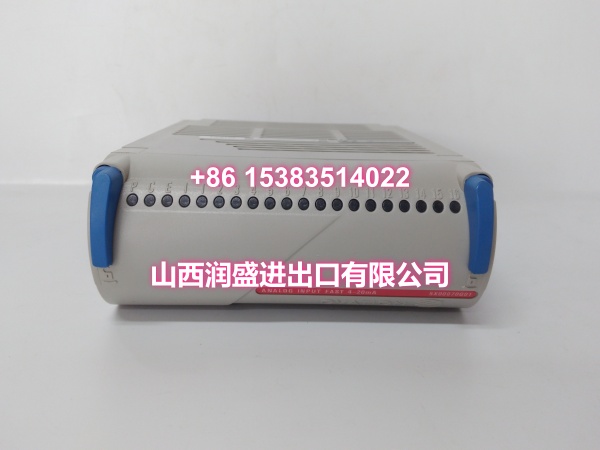
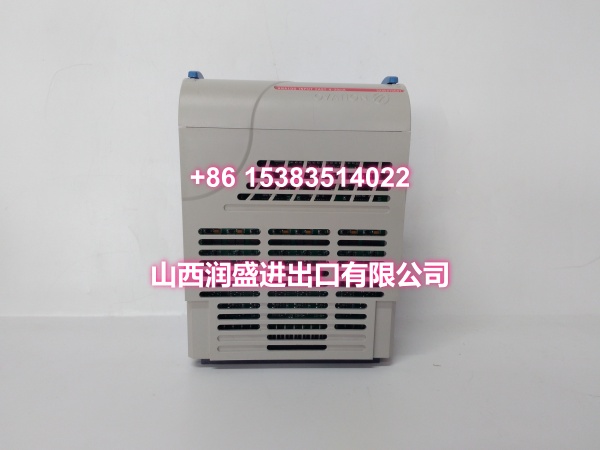
Description
Product Core Brief
- Model: 5X00070G01
- Brand: Westinghouse Process Control, later grouped under Emerson Ovation spares
- Series: 5X00070 high speed analog input electronic module family
- Core Function: High speed analog input electronic module providing a 4 to 20mA current input range
- Product Type: Legacy Ovation E-Mod, usually paired with a matching personality module
- Key Specs: 4 to 20mA input range | sibling G02 covers plus or minus 1V and plus or minus 250mV, G03 covers plus or minus 5V and plus or minus 10V, G04 covers thermocouple ranges | matching current input personality module is commonly listed as 1C31227G01
- Condition: New Surplus / New Old Stock, varies by lot
Read this first. Some sellers call this an analog input module and an I/O bus terminator at the same time, which is a copy paste error, not a real spec. Other listings simply post the part number with no data at all. The most credible description places it in the Ovation high speed analog input electronic module group with a 4 to 20mA range. Confirm against your own cabinet BOM before ordering.
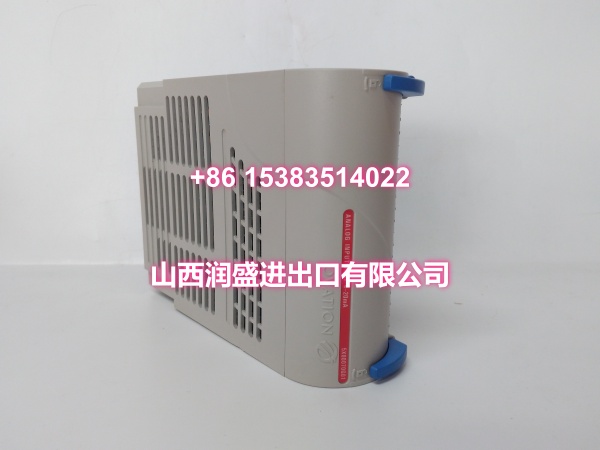
Product Introduction
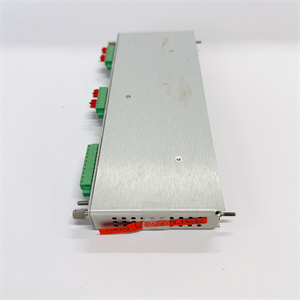
Westinghouse 5X00070G01 is a legacy Ovation high speed analog input electronic module used to bring 4 to 20mA field signals into the control system. Like most Ovation analog hardware, it works as part of a pair, with the electronic module handling processing and communication and the personality module handling the specific signal conditioning.
Why it still gets hunted. Ovation runs in power plants, steel mills, and nuclear and water facilities, and many cabinets are far past their support windows. A dead analog input card can freeze a control loop or hide a real process deviation, so crews keep spares on the shelf. Since factory documentation rarely circulates, most market listings are trader stock with copied specs, which is why so much wrong info sits behind this number.
Key Technical Specifications
| Parameter | Value |
|---|---|
| Part Number | 5X00070G01 |
| Brand | Westinghouse Process Control / Emerson grouped |
| Function | High speed analog input electronic module |
| Input Range | 4 to 20mA current input |
| Sibling E-Mods | G02 plus or minus 1V and plus or minus 250mV, G03 plus or minus 5V and plus or minus 10V, G04 thermocouple ranges |
| Matching P-Mod | 1C31227G01 for 4 to 20mA current input |
| Common Mislabeling | Analog input and I/O bus terminator combined in one listing |
| HART | Not integrated by default, external HART modem sometimes claimed |
| System Integration | Tied to Ovation bus design, other systems usually need gateways and custom drivers |
| Maintenance Notes | User replaceable fuses may exist, match the exact spec from the manual |
| Environment | Conditioned control room cabinet, low dust, non condensing |
| Sourcing Risk | High, heavy listing noise, relabeled and repaired stock |
| Documentation | No reliable public factory datasheet located |
Ignore claims of DIN rail mounting, IP67 rating, Modbus networking, or motor control attached to this number. That text usually belongs to Foxboro FBM hardware or unrelated gear.
Quality Control Process
Analog input cards get validated on signal accuracy, not just on whether LEDs light up.
- Document cross check. We compare your BOM, loop drawing, base part number, and installed label before anything gets powered.
- Pair confirmation. We verify the matching personality module, since an E-Mod without the correct P-Mod will not read your signal.
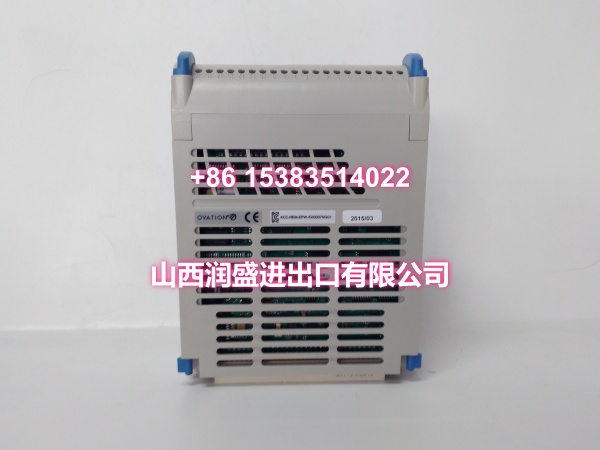
- Label and silk screen audit. Sanded markings, overprinted stickers, reflowed solder, and replaced capacitors usually mean a repaired board.
- Rail short check. A Fluke multimeter confirms no short across supply and logic rails before power up.
- Calibrated mA injection. We feed 4, 8, 12, 16, and 20mA with a calibrated source and log the value the system sees on each channel.
- Linearity and drift sweep. We sweep the full range, then repeat after a warm soak, since drifting readings are the classic failing symptom.
- Open loop and short detection. We break and short the loop to confirm the system flags a bad signal instead of holding a stale value.
- Thermal soak. Two hours under load with a thermal camera hunting hot spots.
- ESD and moisture packaging. Anti-static shielding bag, desiccant, humidity indicator, rigid double box, plus a written test summary.
Replacement Pitfall Guide
❗ Buying the wrong suffix. G01, G02, G03, and G04 cover completely different signal ranges, so a wrong suffix gives you garbage data or no data at all.
❗ Forgetting the personality module. Ovation analog functions usually need a matching E-Mod and P-Mod pair, so swapping only the card often does not restore the loop.
❗ Trusting the I/O bus terminator claim. That description floats around on copy paste pages and does not match a high speed analog input module.
❗ Assuming HART works out of the box. HART is not integrated by default, and an external modem has to be configured alongside the controller to avoid signal conflicts.
❗ Swapping fuses by look instead of spec. Replace only with the exact specified fuse, since the wrong one can damage the module or the rack.
❗ Ignoring jumper and scaling settings. Incorrect jumpers or scaling can make a healthy card read completely wrong values.
❗ Running a drifting input to buy time. A slow drifting analog input can quietly push a control loop off target and cause a trip far from the real cause.
Keep these in mind and you’ll cut 90% of rework time.
Compatibility Matrix & Benchmarks
| Original Model | Replacement / Successor Model | Compatibility Level | Migration Notes |
|---|---|---|---|
| 5X00070G01 | Same part, same suffix | Direct | Confirm label, revision, base, cabinet drawing |
| 5X00070G01 | 5X00070G02 or G03 | Not Compatible | Different voltage ranges, will not read a mA loop |
| 5X00070G01 | 5X00070G04 | Not Compatible | Thermocouple ranges, not a current input |
| 5X00070G01 with wrong P-Mod | 1C31227G01 current input personality module | Needs Verification | Match range and terminal wiring |
| 5X00070G01 in a non Ovation rack | Third party gateway plus custom driver | Needs Adaptation | Backplane voltage and protocol must match |
| Aging Ovation cabinet with scarce spares | Retrofit I/O panel or DCS migration | Needs Adaptation | Recheck loop power, grounding, fusing, trip logic |
| Safety critical trip function | Certified safety system with hardwired trip | Needs Adaptation | Never rely on comms only for protection |
- Confirm whether your loop is truly 4 to 20mA and system powered before buying, since field powered and local powered paths use different personality modules.
- Check the Ovation point configuration after any swap, because scaling and cold junction or range settings can make a good card look dead.
Send a photo of the installed label, the base or terminal board, and the loop drawing page, and I can help confirm whether this is the right E-Mod for your loop or whether a retrofit I/O panel makes more sense than chasing obsolete spares.