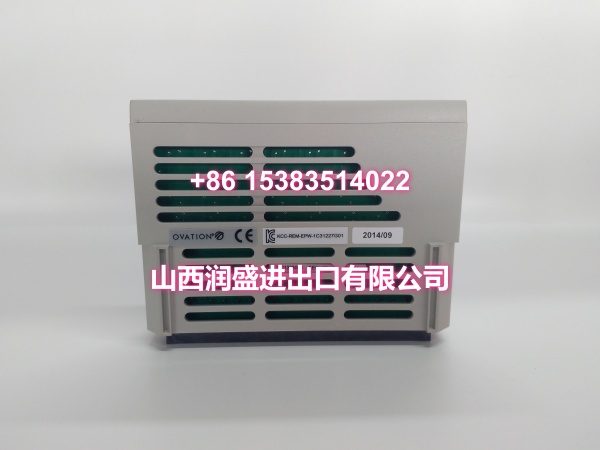
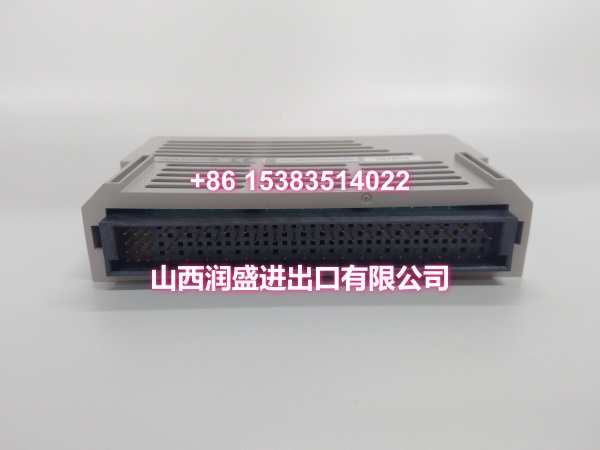
Description
Product Core Brief
- Model: 4D33900G19
- Brand: Westinghouse, later grouped under Emerson Ovation spare lists
- Series: Legacy Ovation rack power supply family
- Core Function: Converts wide range AC mains into multiple DC rails feeding rack I/O and control boards
- Product Type: Rack or cabinet power supply module
- Key Specs: 85 to 264VAC wide input | multiple DC outputs | over voltage, over current and short circuit protection
- Condition: New Surplus / New Old Stock, varies by lot
One caution before you order. Most public pages on this part are reseller copy, including the wide input and multi rail claims. I have not located a factory datasheet. Confirm the nameplate, rail voltages, connector pinout, and backplate against your cabinet drawing.
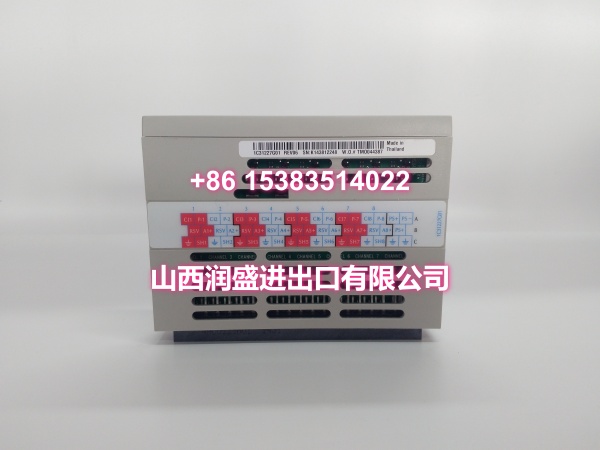
Product Introduction
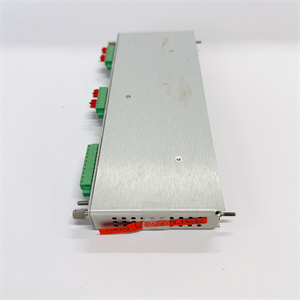
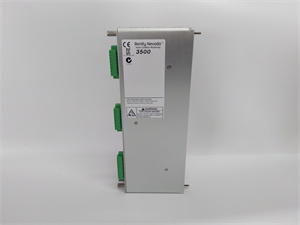
Westinghouse 4D33900G19 is a rack power module used in older Westinghouse Ovation cabinets. It takes AC mains and holds regulated DC rails for I/O and control boards, with protection against over voltage, over current, and shorts.
Why it matters. Weak supplies fail slowly. Ripple drifts analog readings, sag causes random I/O faults, and crews replace good cards. In WDPF style designs, 13VDC feeds I/O cards while 24VDC feeds transmitters and relay cabinets, so a bad rail shows up far from the fault.
Key Technical Specifications
| Parameter | Value |
|---|---|
| Part Number | 4D33900G19 |
| Brand | Westinghouse |
| Typical Application | Legacy Ovation DCS rack or cabinet power |
| Input Voltage | 85 to 264VAC per reseller data, verify nameplate |
| Output | Multiple regulated DC rails, confirm from drawing |
| Protections | Over voltage, over current, short circuit |
| Form Factor | Card style plug in, matches system backplate per reseller data |
| Indication | Power status LED reported by resellers |
| Coating | Conformal coating claimed for dusty plant environments |
| Redundancy | Parallel or redundant feeding possible with proper ORing, not automatic |
| Environment | Conditioned control room cabinet, low dust, non condensing |
| Sourcing Risk | High, heavy spec noise and relabeled refurbished stock |
| Documentation | No reliable public factory datasheet located |
Ignore copied claims of Ethernet monitoring, Modbus, hot swap, or IP67 rating under this number. That text comes from unrelated gear.
Quality Control Process
Power modules get tested under load, never at idle.
- Nameplate and drawing match. Rail voltages, connector keying, and backplate part number must line up before anything gets powered.
- Short check. A Fluke multimeter confirms no short across input and each output rail.
- Variac ramp. Voltage rises slowly from low input while we watch current. Spikes point to failed switching stages or dried capacitors.
- Load bank run. The unit runs at 50, 80, and 100 percent of the cabinet’s real draw, logging sag on every rail.
- Ripple capture. An oscilloscope with an AC coupled probe measures peak to peak ripple. Spiky rails get rejected, since ripple corrupts analog inputs.
- Protection trigger test. We briefly short an output through a current limiting bulb and confirm shutdown instead of smoke.
- Thermal soak. Two hours under load with a thermal camera hunting hot spots on transformers, regulators, and heat sinks.
- Insulation check. A Megger verifies input to chassis integrity on metal housed units.
- ESD and moisture packaging. Anti-static shielding bag, desiccant, humidity indicator, rigid double box, plus a written test summary.
Replacement Pitfall Guide
❗ Assuming parallel means redundancy. Two supplies tied together without ORing diodes or a redundancy module backfeed each other and can drag both down.
❗ Sizing by nameplate wattage only. Controller inrush, fan starts, and relay banks trip supplies rated just above steady draw. Measure real cabinet current, then add margin.
❗ Ignoring derating in sealed cabinets. A closed enclosure at 55C cuts usable output on most supplies, even when the label claims a wide range.
❗ Skipping ripple checks after a swap. If analog points drift or DI channels ghost trigger post replacement, scope the rail before blaming I/O cards. That mistake cost one crew an entire weekend.
❗ Overlooking the split rail design. On WDPF era systems, 13VDC and 24VDC serve different loads, so one bad rail can look like a field wiring problem.
Keep these in mind and you’ll cut 90% of rework time.
Compatibility Matrix & Benchmarks
| Original Model | Replacement / Successor Model | Compatibility Level | Migration Notes |
|---|---|---|---|
| 4D33900G19 | Same part, later date code | Direct | Confirm nameplate, rails, connector, backplate |
| 4D33900G19 | 4D33900G series other suffix | Needs Verification | Suffix change may alter rails or keying |
| 4D33900G19 cabinet feed | 1X00024H01 MAGNETEK WH1-2FF | Needs Adaptation | 24V output only, recheck total draw and fusing |
| 4D33900G19 rack feed | Modern DIN rail 240W industrial supply | Needs Adaptation | Match rails, margin, mounting, hold-up time |
| Single feed cabinet | Dual supply with ORing diodes or redundancy module | Needs Adaptation | Prevent backfeed between supplies |
| Aging Ovation or WDPF cabinet | Retrofit power panel or DCS migration | Needs Adaptation | Recheck grounding, fusing, trip logic |
- Verify regulation under real cabinet current, since idle tests hide dried capacitors and hidden sag.
- Keep peak to peak ripple low and stable, because rising ripple usually shows up first as noisy analog readings.