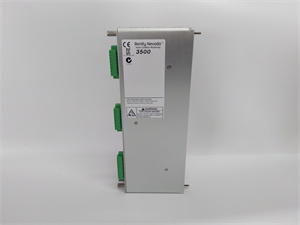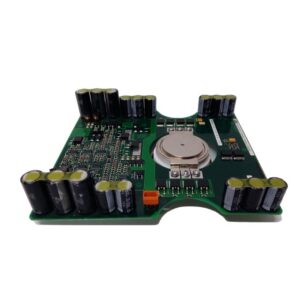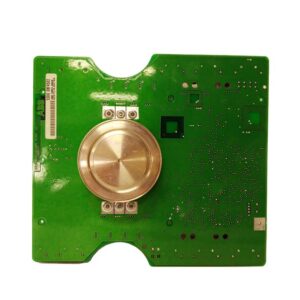
Description
Product Core Brief
- Model: 1C31238H01
- Brand: Westinghouse / Emerson Ovation
- Series: Ovation digital input family
- Core Function: Serves as the personality module that conditions 48VDC contact inputs for the matching Ovation digital input electronic module.
- Product Type: P-Mod personality module for digital input
- Key Specs: 48VDC on-board contact input | 16 channel contact input with common return | Pairs with 1C31234G01 E-Mod
- Condition: New Surplus / Refurbished, nameplate photo required
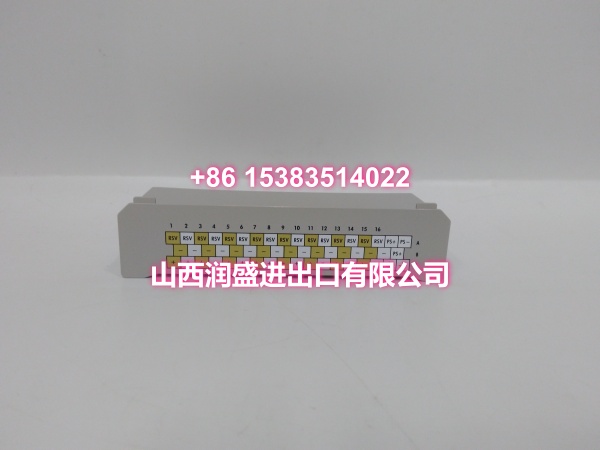
Product Introduction
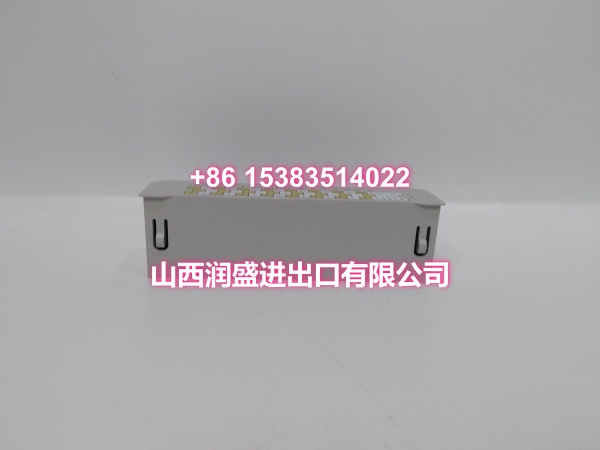
WESTINGHOUSE 1C31238H01 is the DI 48VDC on-board P-Mod, the personality module that sits under the electronic module in an Ovation digital input slot. It does not run logic. It shapes the field signal so the E-Mod can read it.
That pairing is the whole story. The matching E-Mod, 1C31234G01, provides 48VDC on-card auxiliary power for 16 contact inputs with a common return. Buy the wrong PMOD and you get dead channels, not a failed rack. Typical module power sits near 4.56W with an operating range of 0 to 60C on the related electronics.
Key Technical Specifications
| Parameter | Value |
|---|---|
| Part Number | 1C31238H01 |
| Platform | Ovation DCS, Westinghouse and Emerson heritage |
| Product Class | P-Mod personality module, digital input |
| Signal Type | 48VDC on-board contact input |
| Channel Count | 16 contact inputs with common return |
| Paired E-Mod | 1C31234G01 |
| Wiring Column Rule | Positive to C column, negative or common to B column |
| Common Handling | Signals sharing a common must sit on the same card |
| Shield Grounding | Ground on the DCS side, field floating, with externally powered AI as the exception |
| Related SOE Card | 1C31233G04, wired with the same C and B column convention |
| Unverified Claims | High density 32 channel analog input, RTD and thermocouple universal input, Modbus TCP port, standalone controller |
| Verification Method | Confirm PMOD, E-Mod, base, terminal block and Ovation point config against your cabinet drawing |
No confirmed factory datasheet is publicly available for this number alone, so validate against your own Ovation documentation before energizing.
Quality Control Process
A personality module gets continuity and pairing checks, not a firmware flash.
- Nameplate and cavity check. Confirm it is a P-Mod cavity insert and not a relay base or an analog PMOD. Sellers mix these constantly.
- Pairing confirmation. Verify the installed E-Mod matches a 48VDC on-board contact input arrangement before you trust any reading.
- Pin and socket inspection. Look for bent, pushed back or oxidized pins. A forced insert ruins both parts.
- Continuity trace with a Fluke multimeter. Probe from the terminal block through to the E-Mod pins, including the common return.
- Contact injection test. Short channels one at a time with a known 48VDC source and confirm the state flips in the Ovation faceplate.
- Insulation and ground check with a Megger on the field side, since a ground on the common kills several channels at once.
- Anti-static packaging. Ship and store in ESD bags with the desiccant intact. Dry pack failure causes more silent damage than rough handling.
I once chased a phantom dead card for two days. The PMOD was fine. Someone had landed the common on the wrong column.
Replacement Pitfall Guide
❗ Buying it as an analog input card. Some listings describe this part as a 32 channel high density analog input with RTD, thermocouple, 16 bit resolution and 500Vrms isolation. That is a pasted template. Do not build a loop around it.
❗ Ignoring the C and B column rule. On Ovation DI and SOE wiring, positive goes to the C column and negative or common goes to the B column, and signals sharing a common must be on the same card. Break that and channels read stuck.
❗ Mixing voltage levels in one loop. Dry contact circuits must never串 different voltage levels, and trip protection should stay on independent hardwiring rather than relying on comms. Cheap shortcut, expensive outcome.
❗ Assuming hot swap is safe on protected loops. Even where the platform allows module service, points feeding trip or bypass logic need a controlled takeover and someone watching the field device.
❗ Trusting flat catalog offers. Pages listing it as an Ovation controller with one day delivery and one year warranty, or as a generic PLC module, are catalog dumps rather than verified stock.
Keep these in mind and you’ll cut 90% of rework time.
Compatibility Matrix & Benchmarks
| Original Model | Replacement / Successor Model | Compatibility Level | Migration Notes |
|---|---|---|---|
| WESTINGHOUSE 1C31238H01 | Refurbished same part | Needs Verification | Confirm nameplate, pin condition, paired E-Mod and channel injection test |
| WESTINGHOUSE 1C31238H01 | 1C31234G01 E-Mod | Direct Pairing | E-Mod supplies 48VDC on-card power for 16 contact inputs with common return |
| WESTINGHOUSE 1C31238H01 | 1C31233G04 SOE setup | Needs Adaptation | SOE wiring follows the same C and B column convention but needs SOE config and time sync |
| WESTINGHOUSE 1C31238H01 | 1C31232G03 differential DI 120VAC/DC | Not Compatible | Different input family and signal conditioning |
| WESTINGHOUSE 1C31238H01 | Intermediate relay conversion to 24VDI | Needs Adaptation | Adds relay failure points and latency, but isolates mixed voltage loops |
| WESTINGHOUSE 1C31238H01 | Signal conditioner feeding a current input PMOD | Needs Adaptation | Requires rewiring and point redesign, plus new scaling checks |
Benchmark references
- Acceptance criterion: every channel flips state on injection with no stuck or mirrored reading across the full 16 points.
- Stability target: no false state change during large motor starts and VFD switching, with shielding grounded at one point only on the control cabinet side.