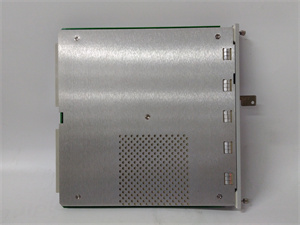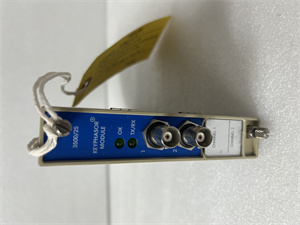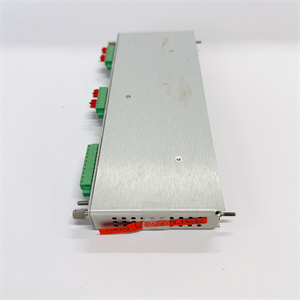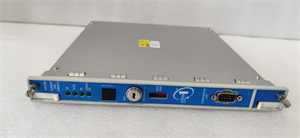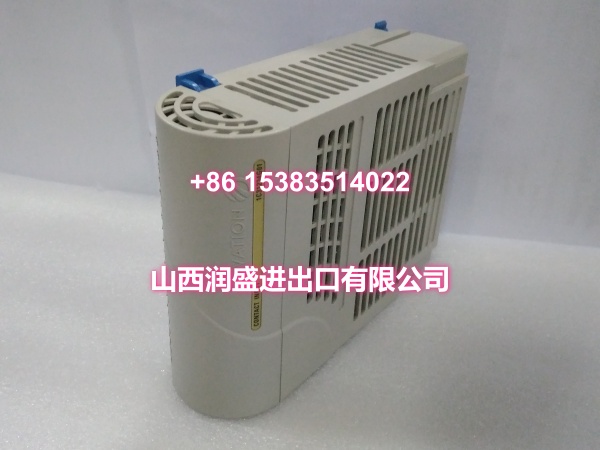
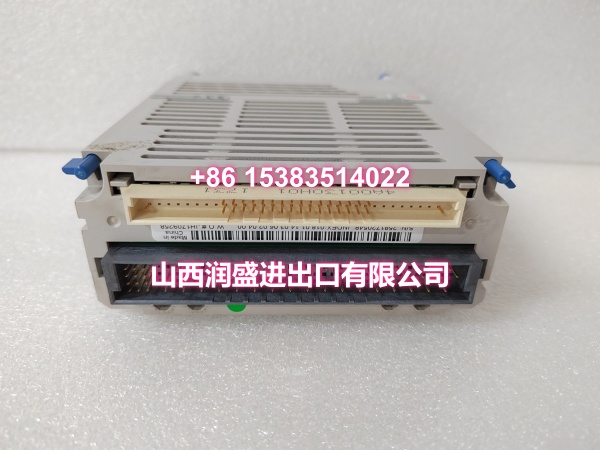
Description
Product Core Brief
- Model: 1C31234G01
- Brand: Westinghouse / Ovation platform lineage
- Series: Ovation contact input electronic module family
- Core Function: Reads 16 field contact states through a common return and passes isolated status data to the Ovation I/O bus.
- Product Type: Contact Input Electronic Module (DI EMOD)
- Key Specs: 16 channels | 48VDC on-card auxiliary power | Ground fault detection | 1000 V AC/DC channel to logic isolation
- Condition: New Original / New Surplus (always request label photos)
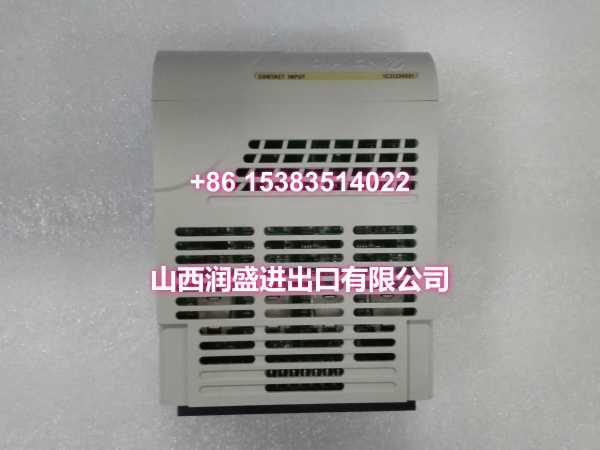
Product Introduction
Westinghouse 1C31234G01 is an Ovation contact input electronic module. It supplies on-card auxiliary power to 16 contact inputs with a common return and reports closed or open state to the I/O bus through opto isolation.
Its real value is ground fault detection. A single accidental ground on an input or return can be flagged before it silently fakes a closed contact. That one feature has saved more than one trip hunt in my career.
Key Technical Specifications
| Parameter | Value |
|---|---|
| Part Number | 1C31234G01 |
| Platform | Ovation DCS, Westinghouse heritage hardware |
| Module Class | Contact input electronic module |
| Channels | 16 contact inputs, common return |
| On-Card Auxiliary Power | 48 VDC, listed 42 V minimum to 55 V maximum |
| Propagation Delay | 7 ms maximum |
| Contact Bounce Rejection | Rejects under 3 ms, accepts over 7 ms |
| Closed Contact Current | 4 mA minimum to 8 mA maximum |
| Diagnostics | Internal module fault and ground fault detection |
| Dielectric Isolation | 1000 V AC/DC channel to logic |
| Module Power | 4.56 W typical, 4.75 W maximum |
| Operating Temperature | 0 to 60 degrees C |
| Storage Temperature | -40 to 85 degrees C |
| Paired Terminal / PMOD | Commonly listed with 1C31238H01 |
Quality Control Process
Contact input cards do not need firmware work. They need circuit and isolation checks.
- Housing and edge connector inspection. Look for burn marks near the opto couplers and oxidation on the edge fingers.
- Channel-by-channel continuity with a Fluke multimeter. Probe from each C column screw clamp through to the mating connector.
- Closed state simulation. Short the input to return and confirm the module reports closed on every one of the 16 points, not just a sample.
- Ground fault trigger test. Bond one input to ground through a low resistance and confirm the ground fault circuit activates. If it stays quiet, reject the board.
- Insulation verification using a Megger. Confirm channel to logic isolation holds.
- Anti-static bag with desiccant. Label the box with the paired terminal part so nobody mismatches it later.
I used to assume a card was fine if most channels worked. Wrong. One dead opto coupler can hide for years, then fail during a real trip.
Replacement Pitfall Guide
❗ Never bond the contact return to ground. Tying the return to earth creates a ground fault condition and can degrade common mode surge protection. It also makes an open contact look closed.
❗ Ignoring multiple ground faults. A single ground may not corrupt data. Two grounds, one on input and one on return, can make a channel appear closed when it is actually open. That is a safety problem, not a nuisance.
❗ Confusing it with the SOE card. 1C31233G04 is the sequence of event module, and both are often listed with 1C31238H01. If you need time stamped events, a plain contact input card will not give them to you.
❗ Believing every listing that calls this a controller or RTD card. Plenty of supplier pages mislabel it as a pitch controller, an RTD input card, or a Modbus gateway. It is a contact input EMOD. Verify against your rack drawing.
❗ Mixing voltage classes in one loop. Do not串 different voltage levels through the same contact circuit, and keep hardwired trip paths independent of communication links.
Keep these in mind and you’ll cut 90% of rework time.
Compatibility Matrix & Benchmarks
| Original Model | Replacement / Successor Model | Compatibility Level | Migration Notes |
|---|---|---|---|
| Westinghouse 1C31234G01 | 1C31238H01 | Needs Adaptation | Commonly paired terminal or PMOD, not a substitute for the EMOD |
| Westinghouse 1C31234G01 | 1C31233G04 | Needs Adaptation | SOE input module, use only when time stamped events are required |
| Westinghouse 1C31234G01 | 1C31147G01 | Needs Adaptation | Pulse input module, completely different signal type |
| Westinghouse 1C31234G01 | Refurbished same part | Direct | Run all 16 channels and the ground fault test before install |
| Westinghouse 1C31234G01 | Third party 24V DI module | Needs Adaptation | On-card 48V sensing and ground fault detection are lost |
Benchmark references
- Response target: propagation delay under 7 ms, with contact bounce under 3 ms rejected and changes over 7 ms accepted.
- Diagnostic target: ground fault detected when input or return impedance to ground drops below roughly 5 kohm.
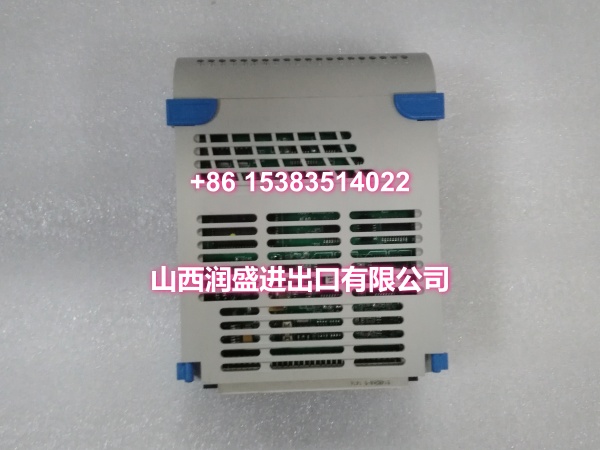
A practical note for procurement. This part shows up under Westinghouse, Emerson and generic Ovation branding, and listings often contradict each other on function. Ask for the nameplate photo, the paired terminal part number, and any bench record before you buy surplus stock.