Description
Product Core Brief
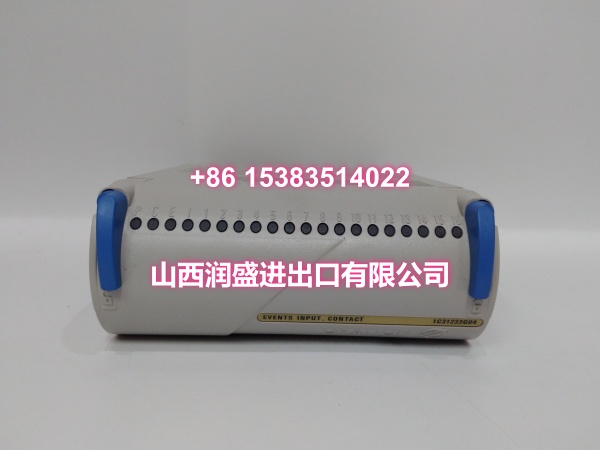
- Model: 1C31233G04
- Brand: Westinghouse / Emerson Ovation
- Series: Ovation Compact I/O, Sequence of Events family
- Core Function: Captures time tagged contact state changes so the DCS can reconstruct event order during upsets.
- Product Type: SOE digital input module
- Key Specs: 16 channels typical | Positive to C column, negative or common to B column | Works with matched base and terminal block
- Condition: New Surplus / New Old Stock, varies by lot
Note on naming. Many catalogs list this simply as an SOE card, while others lump it in with standard DI cards such as 1C31234G01. Those are not interchangeable in practice.
Product Introduction
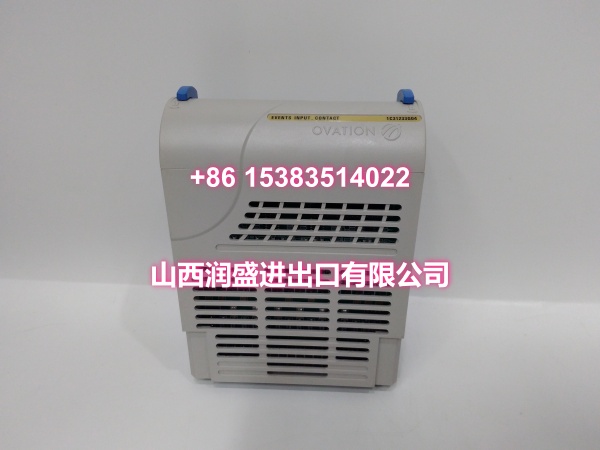
Westinghouse 1C31233G04 is an Ovation sequence of events digital input module. It watches field contacts and stamps each change with a time reference, letting engineers rebuild the order of trips, interlocks, and breaker actions after an outage.
Its value shows up during investigation, not during normal running. A plant without working SOE data guesses at root cause. With it, you usually find the first failed signal in minutes instead of shifting blame between operators and maintenance.
Key Technical Specifications
| Parameter | Value |
|---|---|
| Function | Sequence of events digital input |
| Host System | Ovation DCS |
| Channel Count | 16 typical per module |
| Field Signal | Dry contact or single ended voltage input |
| Terminal Convention | Positive to C column, negative or common to B column |
| Common Wiring | Shared commons must stay on the same module |
| Time Tagging | Controller and I/O time synchronization dependent |
| Status Indication | Module LEDs plus controller diagnostics |
| Isolation | Channel to logic isolation, per Ovation compact DI practice |
| Mounting | I/O base with matched terminal block |
| Environment | Conditioned control room cabinet, low dust |
| Common Industries | Power generation, combined cycle, biomass, utilities |
Quality Control Process
SOE cards get blamed for missing events that were really wiring or time sync problems, so we test in stages.
- Label and revision audit. Silk screen, date code, and revision must match. Refurbished stickers get rejected outright.
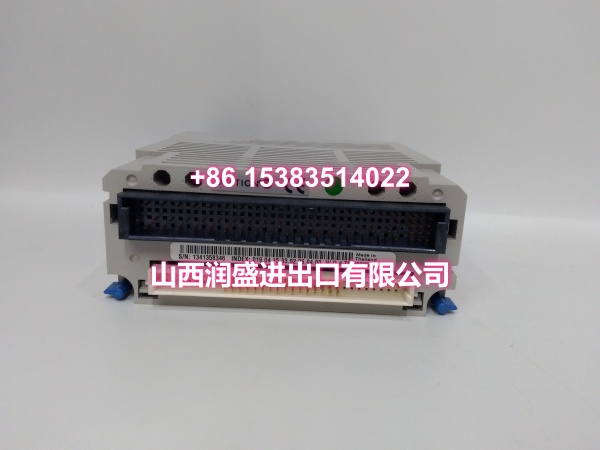
- Edge connector and pin inspection. Pushed pins cause dropped edges that look like lost SOE data. Checked under magnification.
- Rail short check. A Fluke multimeter confirms no short across backplane supply rails before power up.
- Contact bounce and debounce test. We pulse each channel with a signal generator and confirm the module rejects chatter yet captures a genuine transition.
- Time tag verification. The module is paired with a live controller so we can confirm events arrive in the correct order with usable timestamps, not scrambled ones.
- Ground fault check. We deliberately create a ground path to confirm fault detection reports instead of silently reading stuck inputs.
- ESD and moisture packaging. Anti-static shielding bag, desiccant, humidity indicator, rigid box.
One correction from my own experience. I once chased a phantom SOE failure for a day. The card was fine, the controller clock had drifted after a battery swap.
Replacement Pitfall Guide
❗ Treating it as a plain DI card. Standard DI modules such as 1C31234G01 do not give you usable event sequencing. Swapping one in kills your trip analysis.
❗ Splitting common wires across modules. Signals that share a common must stay on the same card, otherwise readings float and channels trigger randomly.
❗ Ignoring time synchronization. If the controller or I/O clock is not synced, timestamps are worthless even when the hardware is perfect. Verify sync after any controller or battery work.
❗ Mixing voltage classes in one loop. Never串 different voltage levels in a dry contact circuit, and keep hardwired trip paths independent of communication links.
❗ Shield grounding errors. Ground shields at the control cabinet side only and leave the field end floating, unless a specific design says otherwise.
❗ Trusting copied seller specs. Some listings call this an analog input module for DeltaV, or claim 48V internal contact supply with IP20 front panel ratings copied from unrelated hardware. Cross check against your Ovation I/O manual before buying.
Keep these in mind and you’ll cut 90% of rework time.
Compatibility Matrix & Benchmarks
| Original Model | Replacement / Successor Model | Compatibility Level | Migration Notes |
|---|---|---|---|
| 1C31233G04 | Same part, later date code | Direct | Confirm revision, firmware, and time sync after install |
| 1C31233G04 | 1C31233G01 | Needs Adaptation | Different voltage class handling, 24VDC or single ended 48VDC designs |
| 1C31233G04 | 1C31234G01 | Needs Adaptation | Compact contact input with on board supply, no SOE time tagging benefit |
| 1C31233G04 | Modern Ovation SOE or remote I/O SOE | Needs Adaptation | Database, terminal layout, and grounding review required |
| 1C31234G01 | 1C31238H01 PMOD pairing | Needs Adaptation | EMOD and PMOD must match as a set |
- Compact Ovation contact input designs typically reject contact bounce under 3ms and accept changes beyond 7ms, with propagation delay around 7ms maximum.
- SOE usefulness depends on controller clock sync and I/O scan behavior, not on the card alone.