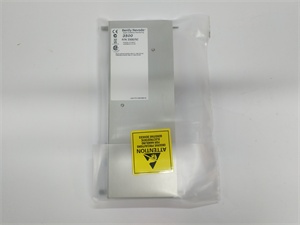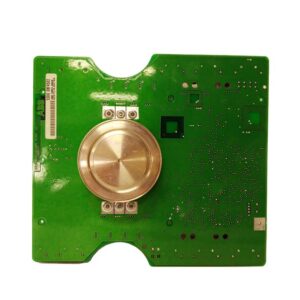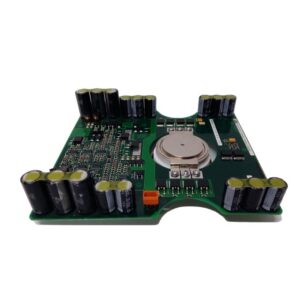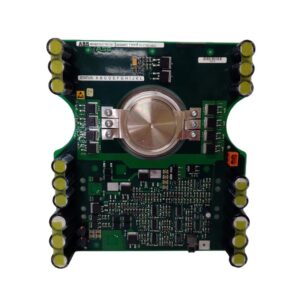
Description
Product Core Brief
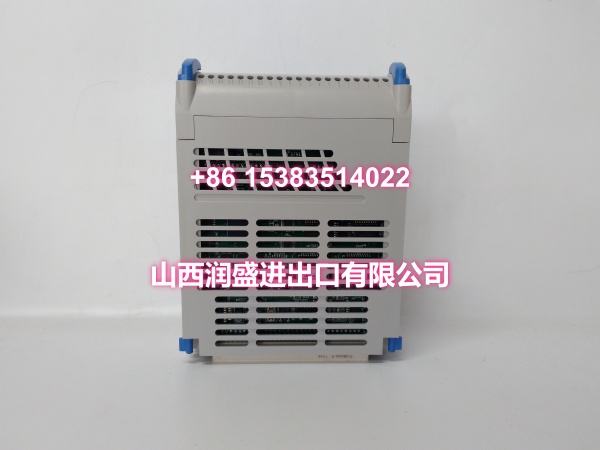
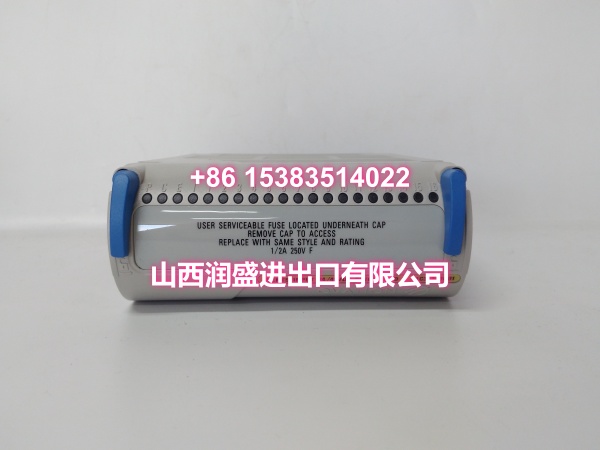
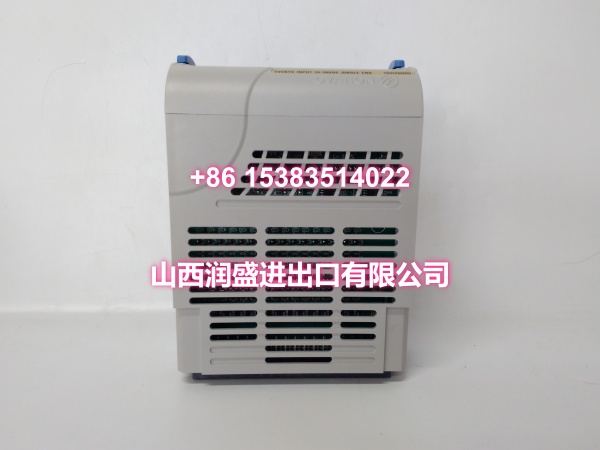
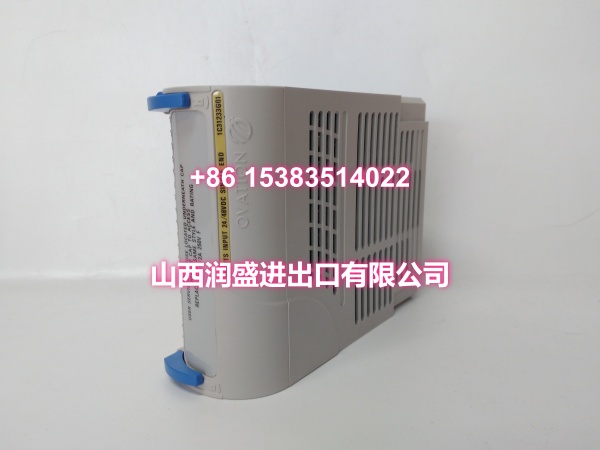
- Part: 1C31233G01
- Brand: Westinghouse / Emerson Ovation
- Most consistent identification: SOE E-Mod, listed as SOE 24 or 48VDC single ended, and also described as an SOE card for 24VDC or single ended 48VDC
- Sibling family: 1C31233G02 SOE 24 or 48VDC differential, 1C31233G03 SOE 120VDC differential, 1C31233G04 SOE 48VDC on board
- Core function: Captures fast digital state changes with time stamps so operators and engineers can reconstruct the sequence of events during a trip, turbine run back, or protection activation
- Condition: New Surplus / New Old Stock, varies by lot
Big correction before you spend budget. Several reseller pages are flat out wrong. One calls it a digital output module at 24V with a 30kHz output frequency and a 12.1 by 5.1 by 16.6cm body, which does not match an SOE input card. Another describes it as a general analog input converting current, voltage, RTD, and TC signals with IP67 protection, 10 megohm input impedance, and minus 40 to 70C range, which reads like copied generic transmitter text. Another only says it is an Ovation I/O module for field signal interfacing with automatic controller recognition, without any channel type, which is vague filler. The consistent grouping across Ovation module lists puts it in the SOE E-Mod family at 24 or 48VDC single ended. Confirm against your own Ovation I/O reference manual, rack BOM, and installed base before ordering.
Product Introduction
Westinghouse 1C31233G01 is the card that tells you what actually happened. Regular DI scanning can miss a contact that bounced for a few milliseconds, and during a turbine trip that gap is the difference between a fast root cause and weeks of guessing. SOE hardware records the order and timing of events, so engineers can see whether the protection fired first or the field device dropped first.
For system integrators, a failed SOE module is sneaky because the process usually keeps running. The plant does not feel it until a real trip happens and the event log is empty, scrambled, or out of order. Crews then blame the historian, the clock sync, or the logic, and miss a dead input stage, a bad common, or a card that stopped time stamping after a surge. Holding the correct SOE E-Mod turns a blind post trip investigation into a readable event sequence.
Key Technical Specifications
| Parameter | Value |
|---|---|
| Function | SOE event input electronic module |
| Host System | Ovation DCS, power, petrochemical, turbine applications |
| Input Type | Single ended digital, listed as 24 or 48VDC |
| Sibling Cards | 1C31233G02 24 or 48VDC differential, 1C31233G03 120VDC differential, 1C31233G04 48VDC on board |
| Core Duty | Time stamped capture of fast digital changes for trip and run back analysis |
| Wiring Practice | On Ovation SOE and DI wiring, positive to C column and negative or common to B column, with common signals kept on the same card |
| Mounting | Ovation I/O base with matching personality or base assembly |
| Status Indication | Front panel LEDs plus controller communication and channel status |
| Time Source | Controller or system time synchronization, must be verified after a swap |
| Environment | Conditioned control room cabinet, low dust, non condensing |
| Documentation | Ovation I/O reference manual, module combination list, rack BOM |
| Sourcing Risk | Legacy part, revision, voltage class and base pairing vary widely |
Do not trust copied specs claiming digital output duty, 30kHz output frequency, IP67 enclosure, analog current voltage RTD and TC support in one card, 10 megohm input impedance, or standalone Modbus communication for this part. Those come from unrelated listings.
Quality Control Process
SOE failures hide until a real trip, so testing focuses on timing and channel integrity, not just power up.
- Documentation cross check. We confirm the voltage class and single ended or differential design against Ovation documentation instead of trusting a reseller spare list.
- Label and revision audit. Silk screen, revision, and date code must match, and refurbished stickers get rejected.
- Edge connector and pin inspection. Pushed or corroded pins cause missed events that look like a logic problem. Checked under magnification.
- Rail short check. A Fluke multimeter confirms no short across supply paths before power up.
- Mate test with correct base. We install with the confirmed base and personality assembly, then verify the stack reports healthy instead of fault.
- Pulse injection per channel. We drive each channel with a fast pulse generator and confirm every transition is captured, not just the first one.
- Time stamp sequence check. We fire two channels in a known order and confirm the recorded sequence matches, which catches reversed or frozen time stamping.
- Bounce and debounce review. We verify the configured debounce does not swallow real fast events or record noise as an event.
- Clock sync verification. We confirm the module follows system time so post trip records line up with other systems.
- ESD and moisture packaging. Anti-static shielding bag, desiccant, humidity indicator, rigid box.
Replacement Pitfall Guide
❗ Buying by number only within the family. Single ended, differential, and on board builds are not interchangeable, and a wrong voltage class gives stuck or dead channels.
❗ Confusing SOE with plain DI. A regular DI card may show the final state but will not give you reliable event order during a fast trip sequence.
❗ Wiring the common wrong. On Ovation SOE and DI wiring the common belongs on the negative side, and signals sharing a common should stay on the same card, otherwise channels read stuck or ghost trigger.
❗ Ignoring clock sync after a swap. If the system time is not synchronized, the event log looks populated but is useless for correlating with other systems during a trip review.
❗ Overlooking surge and grounding paths. A grounded shield, shared ground loop, or blown surge element creates false events that bury the real one.
❗ Skipping debounce review. Too much debounce hides genuine fast events, too little floods the log with noise, and both destroy the value of SOE data.
❗ Assuming hot swap is safe. Many legacy Ovation racks are not designed for live card pulls on every I/O type, and a bad swap can drop a whole panel of points.
❗ Trusting digital output or analog all in one descriptions. Pages calling this a 24V digital output module with 30kHz frequency or an IP67 analog converter for RTD and TC are unreliable and should not drive your purchase.
Compatibility Matrix & Benchmarks
| Original Setup | Replacement Option | Compatibility Level | Migration Notes |
|---|---|---|---|
| 1C31233G01 | Same part, later date code | Direct | Confirm revision, base, and voltage class |
| 24 or 48VDC single ended build | 1C31233G02 differential | Not Recommended | Different input topology and wiring |
| 120VDC field signal | 1C31233G03 | Needs Verification | Match voltage class and isolation per manual |
| 48VDC on board build | 1C31233G04 | Needs Verification | Confirm base and wiring layout |
| Plain DI build used for trip review | 1C31233G01 SOE | Needs Adaptation | Add time sync, debounce, and event review process |
| Aging Ovation rack with hard to find SOE spares | Independent sequence of events recorder or protected DI gateway | Needs Adaptation | Clock sync, isolation, and trip review validation |
- Real SOE value depends on clock synchronization, debounce settings, grounding, and wiring far more than on the part number alone.
- If your rack is obsolete and SOE spares keep getting harder to find, adding an independent event recorder on critical protection signals usually costs less than a trip you cannot explain.